Recession And Gum Disease
Receding gums can uncover root surfaces where dentin has less protection than the enamel-covered crown.

Port Dover Family Dentistry
Tooth sensitivity treatment in Port Dover identifies why hot, cold, sweet, acidic or touch sensations hurt and matches care to the cause.
Let’s get you smiling
Tell us how we can help. Our team will follow up to confirm a time.
Severe or persistent tooth pain?
Call promptly when pain occurs without a trigger, lingers, wakes you, hurts to bite or is accompanied by swelling, fever or a bad taste.
Tooth sensitivity treatment in Port Dover
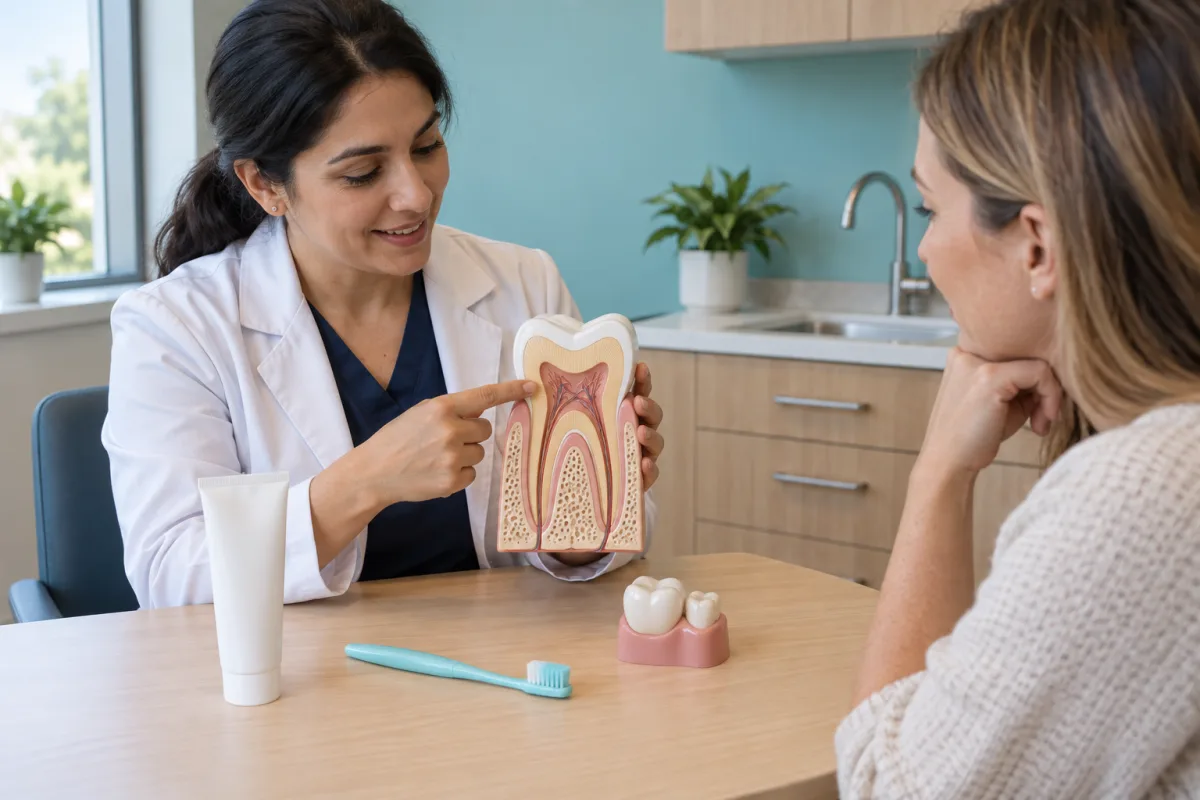
Enamel protects the tooth crown and cementum helps protect the root. Beneath them, dentin contains microscopic tubules that communicate with the inner tooth. When dentin is exposed, cold, heat, sweet, acidic, air or touch sensations can stimulate the tooth and cause a short sharp response.
Sensitivity may reflect exposed dentin, but decay, a cracked tooth, a worn filling, gum disease, recession, erosion, grinding or inflammation inside the tooth can feel similar. The pattern and examination determine whether home care is reasonable or treatment is needed.
Find the source first
Desensitizing toothpaste may help exposed dentin, but it cannot repair a cavity, crack, leaking restoration or diseased pulp. Persistent or one-tooth sensitivity deserves diagnosis.
Common contributors
Receding gums can uncover root surfaces where dentin has less protection than the enamel-covered crown.
Aggressive brushing, frequent acid exposure, grinding and some whitening products can increase sensitivity.
A cavity, worn filling, open margin or recent dental procedure can create a localized response.
A fracture or inflamed inner tooth may produce lingering, spontaneous or biting pain that needs prompt care.
Reflux, repeated vomiting or an eating disorder can expose teeth to stomach acid. This deserves compassionate dental care and appropriate medical support—not judgment.
Diagnose before treating
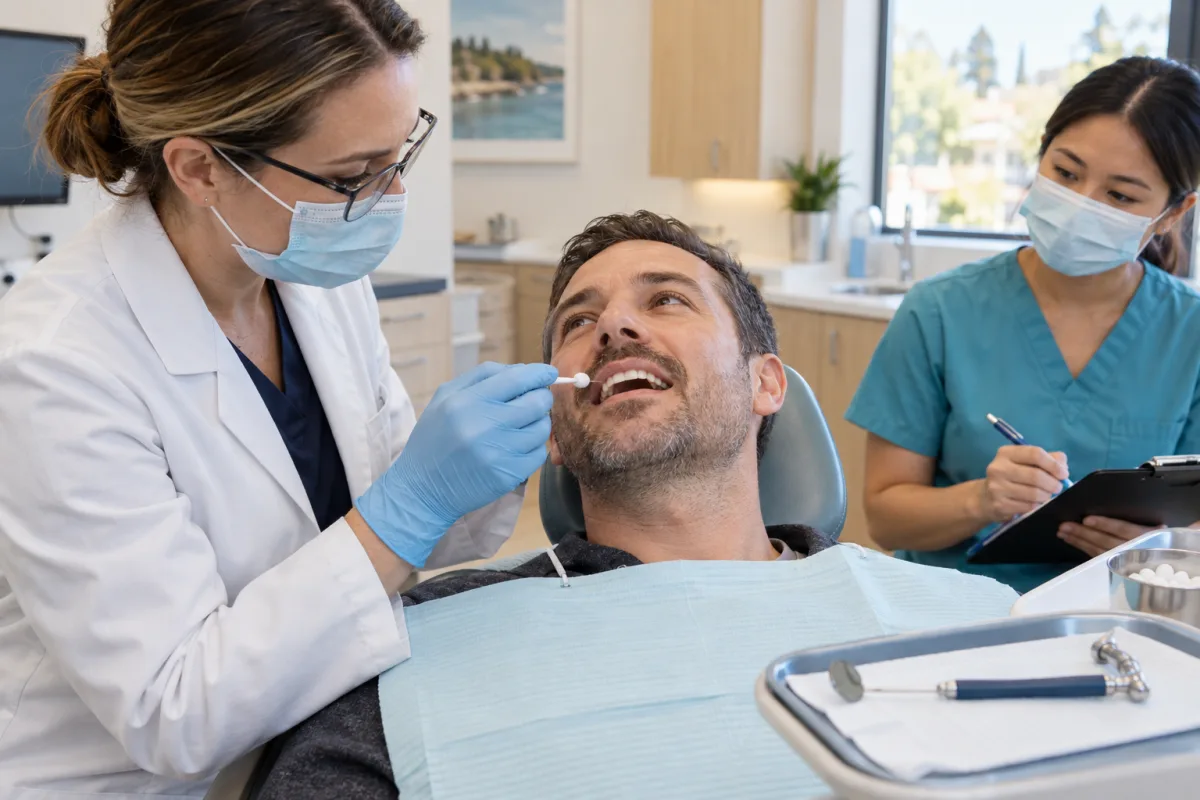
We ask which tooth hurts, what triggers it, whether pain lingers, and whether symptoms occur spontaneously, at night or during biting.
We look for recession, wear, decay, cracks, damaged restorations, gum inflammation and signs of clenching or grinding.
Cold, air, tapping, bite or pulp tests and X-rays may help compare teeth and locate the cause when clinically indicated.
The plan may involve desensitizing care, fluoride, bonding, restoration, gum treatment, bite protection, root canal treatment or referral.
Treatment varies by cause
For uncomplicated dentin hypersensitivity, repeated use of an appropriate fluoride desensitizing toothpaste can reduce the transmission of sensation. In-office fluoride or another desensitizing product may be considered, and a bonding material can sometimes cover a localized exposed surface.
When the source is structural or inflammatory, symptom control alone is not enough. A filling, crown, gum procedure, treatment for grinding or root canal treatment may be appropriate depending on decay, fracture, recession and the condition of the pulp.
Toothpaste, fluoride, desensitizing agents or bonding may help reduce exposed-dentin sensitivity.
Decay, cracks and defective restorations require a repair matched to the remaining tooth and pulp health.
Severe persistent inflammation or infection inside the tooth may require root canal treatment or another definitive plan.
The pain pattern offers clues
The duration, location and trigger do not provide a diagnosis on their own, but they help determine urgency and which tests are useful.
A short sharp sensation that stops with the trigger may occur with exposed dentin, recession or mild reversible irritation.
Pain that continues after hot or cold is removed may indicate deeper pulp inflammation and should be assessed promptly.
Biting or release pain can occur with a crack, restoration problem, inflamed ligament or another localized issue.
Pain without a trigger, waking from sleep, swelling, fever or facial swelling requires timely dental evaluation.
Do not place aspirin or household chemicals on the tooth or gum, and do not attempt to scale or repair the area with dental instruments at home.
Protect sensitive surfaces
Home measures can reduce irritation while the cause is assessed, but they do not replace treatment for decay, cracks, infection or gum disease.
Use a soft-bristled brush and light pressure twice daily. Scrubbing harder does not clean better and may worsen recession or wear.
Choose an appropriate fluoride product and use it consistently as directed; benefit often requires repeated applications.
Limit frequent acidic drinks and foods, avoid brushing immediately after acid exposure and discuss reflux or vomiting with a healthcare professional.
Return if pain becomes longer-lasting, localized, spontaneous, painful on biting or associated with swelling or illness.
Sensitivity assessment
We can identify the tooth and likely cause, rule out urgent problems and recommend care that matches the diagnosis.
Sensitive teeth questions
Brush gently with a soft brush and fluoride desensitizing toothpaste, clean between teeth carefully and reduce frequent acid exposure. Because decay, cracks and gum problems can mimic sensitivity, arrange an examination when symptoms persist or affect one tooth.
Early mineral loss can sometimes remineralize, but enamel that has physically worn away does not grow back. Exposed dentin, recession, decay, a crack or pulp inflammation may require professional care.
Stress may contribute indirectly through clenching, grinding, tobacco use, dietary changes or disrupted oral care. An examination should check for other causes rather than assuming stress is responsible.
Very hot or cold items and sweet, sticky or acidic foods can trigger symptoms. Frequent soda, citrus, wine, vinegar and similar acids can also contribute to erosion. Hard foods such as ice can crack teeth.
It usually needs repeated, consistent use rather than one application. Follow the product and dental instructions, and seek assessment if symptoms do not improve, worsen or have features such as lingering or spontaneous pain.
Recognized year after year
Best Dentists in Norfolk
Proudly recognized among Norfolk’s top-rated dental practices for six consecutive years.

2021 Winner

2022 Winner

2023 Winner

2024 Winner

2025 Winner

2026 Winner
Stories from our patients
Watch a patient’s experience and browse more five-star reviews from people who have visited our Port Dover dental clinic.
Patient video
A patient shares the welcoming atmosphere and positive experience they found at our Port Dover office.
Google reviews
Swipe or use the arrows
Read all reviewsOur community
Your next visit can start today
New patients and CDCP patients are welcome. Tell us how we can help and our Port Dover dental team will follow up with you.
Evening appointments Monday and Tuesday