
A Complete Smile
Carefully selected tooth colour, shape and arrangement create a natural appearance suited to your face.

Port Dover Family Dentistry
Full and partial dentures in Port Dover can comfortably replace missing teeth, restore your smile and support confident eating and speaking.
Let’s get you smiling
Tell us how we can help. Our team will follow up to confirm a time.
Dentures in Port Dover
Modern dentures can replace several missing teeth or a complete arch while supporting your appearance, speech and ability to enjoy a varied diet. Tooth shape, colour and arrangement are planned for your face and smile rather than selected as a one-size-fits-all appliance.
We provide full and partial dentures, assess existing dentures that feel loose or uncomfortable, and discuss implant-supported options when added stability may be helpful. The right design depends on your remaining teeth, gum and bone support, dexterity, health and priorities.
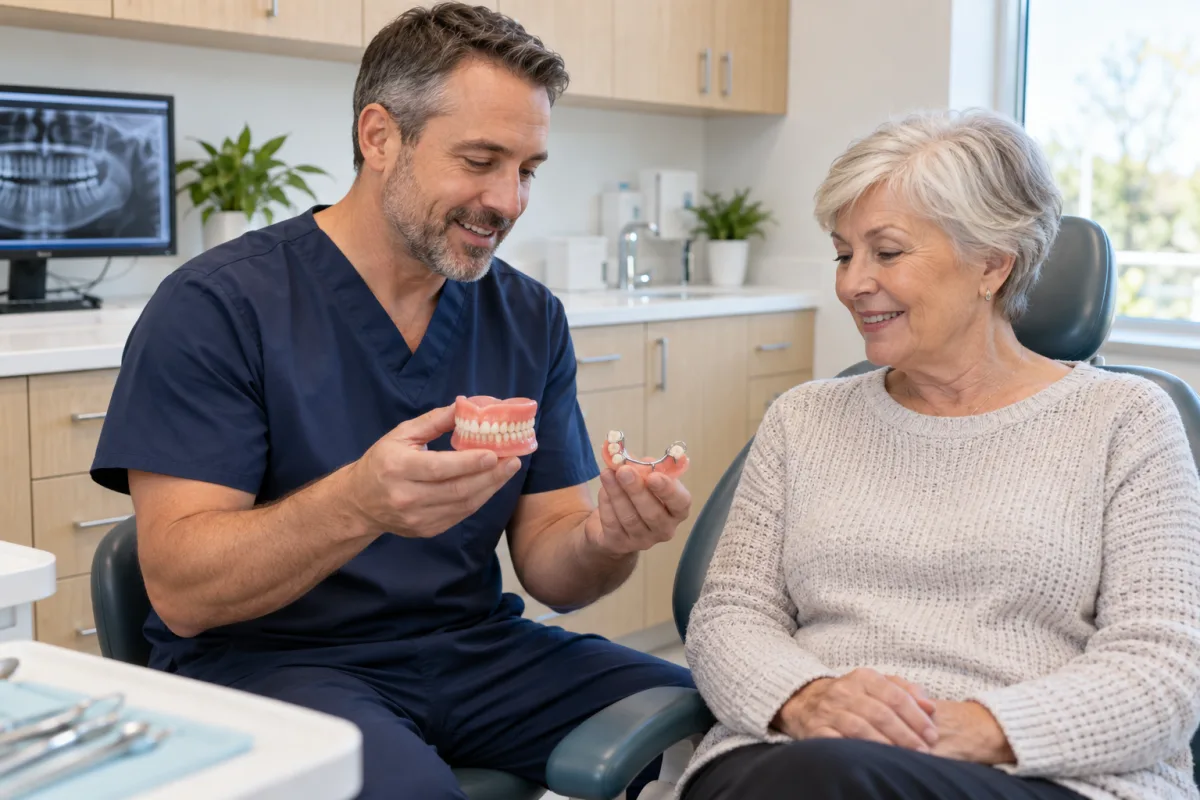
Comfortable tooth replacement
A well-planned denture should feel secure, support natural facial proportions and make daily speaking, smiling and eating more comfortable.
Designed around daily life
Carefully selected tooth colour, shape and arrangement create a natural appearance suited to your face.
Replacing missing teeth can improve chewing, although learning to use a new denture takes practice and gradual food changes.
A denture restores surfaces used by the lips and tongue, and speech usually adapts as you become accustomed to the appliance.
A complete denture can support the lips and cheeks where teeth and supporting tissues have been lost.
From assessment to final fit
Denture treatment usually involves several visits so fit, appearance and bite can be checked carefully before the appliance is completed.
We examine the gums, remaining teeth, bite, jaw relationship, saliva and existing appliances. Any extractions or other care are coordinated before the final design is confirmed.
Precise impressions or digital records capture your mouth. Measurements, tooth shade and trial arrangements help establish support, bite and a smile that suits you.
At delivery, we check pressure areas, stability, speech and bite. Follow-up adjustments are a normal part of adapting to a new denture and help protect comfort.
Daily denture care
Dentures collect plaque and food just as natural teeth do. Remove and clean them every day with a soft denture brush and a product intended for dentures, then clean your gums, tongue and any remaining teeth.
Unless we direct otherwise, remove dentures overnight so the tissues can rest. Keep most dentures moist in cool or lukewarm water when they are out of your mouth; hot water can distort them.

Clean dentures over a folded towel or basin of water to reduce the chance of damage if they are dropped.
Avoid abrasive household products, and ask before soaking a partial denture because some solutions can affect metal components.
Brush natural teeth normally and gently clean the gums and tongue with a soft brush or damp cloth.
Choosing the right design
Your remaining teeth, available support and desired stability determine which options are realistic. We compare benefits, limitations, maintenance and cost before you decide.
A full removable denture replaces all teeth in an upper or lower arch and rests on the gum and underlying ridge.
A removable partial replaces several teeth and uses the remaining teeth and tissues for support and retention.
An immediate denture can be inserted at the extraction visit so you are not without teeth, but healing changes mean adjustments or relining are expected.
Dental implants can add retention or support for suitable patients, improving stability while adding surgery, maintenance and cost.
Dry mouth, smoking, health conditions, limited dexterity and changes in jawbone support do not automatically rule out dentures, but they can affect comfort, care and the design we recommend.
Living comfortably with dentures
The mouth continues to change after teeth are lost, so even a well-made denture needs periodic professional review.
Begin with softer foods cut into smaller pieces, chew on both sides and practise difficult words aloud. Most people need time and a few adjustments before a new denture feels familiar.
Glue and do-it-yourself adjustments can damage the appliance or your mouth. Bring cracked, loose or uncomfortable dentures to us so the cause can be assessed properly.
Book an assessment for persistent sore spots, clicking, slipping, difficulty chewing or a change in your bite. A reline, repair or replacement may be appropriate.
Even without natural teeth, checkups help assess the fit and condition of the denture and examine the gums, tongue, jaw and other oral tissues.
Treatment costs
Full and partial dentures commonly range from about $900 to $3,500 or more depending on the design, materials and treatment required. A personal assessment is needed for a meaningful estimate.
Full dentures
$1,800–$3,500+
Implant-supported dentures
Around $30,000
Average for a full set; treatment varies widely
Your estimate reflects both the denture and the care needed to prepare and support your mouth.
Every situation is unique. After an oral examination, we can compare appropriate options and prepare a quote that reflects your specific treatment plan.
Your dentures lead dentist
Lead Dentist
Dr. Bukhari has offered denture care for more than 10 years and has helped hundreds of patients with complete dentures, partial plates and immediate dentures. His favourite part of denture treatment is seeing patients share their new smile with confidence.
Meet Dr. BukhariA comfortable fit starts here
Whether you need your first denture, a repair or a better-fitting replacement, we will examine your mouth and explain the choices clearly.
Helpful information
Yes. Dental bridges can replace one or more teeth in a suitable span, and dental implants can support a crown, bridge or denture. Each option has different health requirements, maintenance needs, costs and treatment timelines.
Many dentures last about five to ten years, but wear and ongoing changes in the gums and jaw may make relining or replacement necessary sooner. Regular assessments help determine whether the fit, bite and materials remain healthy.
Unless your dentist gives different instructions for a specific healing period, it is generally best to remove dentures overnight. This allows you to clean the appliance and mouth and gives the supporting tissues time to rest.
A denture should feel secure and comfortable without creating persistent sores. Upper dentures often use suction, lower dentures rest within moving muscles and partial dentures use remaining teeth for support. Contact us if your denture slips, clicks, hurts or affects eating.
Once you adapt, most foods can be enjoyed with care. Very hard or sticky foods and small particles such as popcorn can challenge a denture or irritate the tissues. Cut food into manageable pieces and chew evenly on both sides.
Many toothpastes are too abrasive for denture materials and can create scratches that hold plaque and stains. Use a soft denture brush and a cleaner intended for your appliance, following the instructions provided by your dental team.
Recognized year after year
Best Dentists in Norfolk
Proudly recognized among Norfolk’s top-rated dental practices for six consecutive years.

2021 Winner

2022 Winner

2023 Winner

2024 Winner

2025 Winner

2026 Winner
Stories from our patients
Watch a patient’s experience and browse more five-star reviews from people who have visited our Port Dover dental clinic.
Patient video
A patient shares the welcoming atmosphere and positive experience they found at our Port Dover office.
Google reviews
Swipe or use the arrows
Read all reviewsOur community
Your next visit can start today
New patients and CDCP patients are welcome. Tell us how we can help and our Port Dover dental team will follow up with you.
Evening appointments Monday and Tuesday