
A Complete Appearance
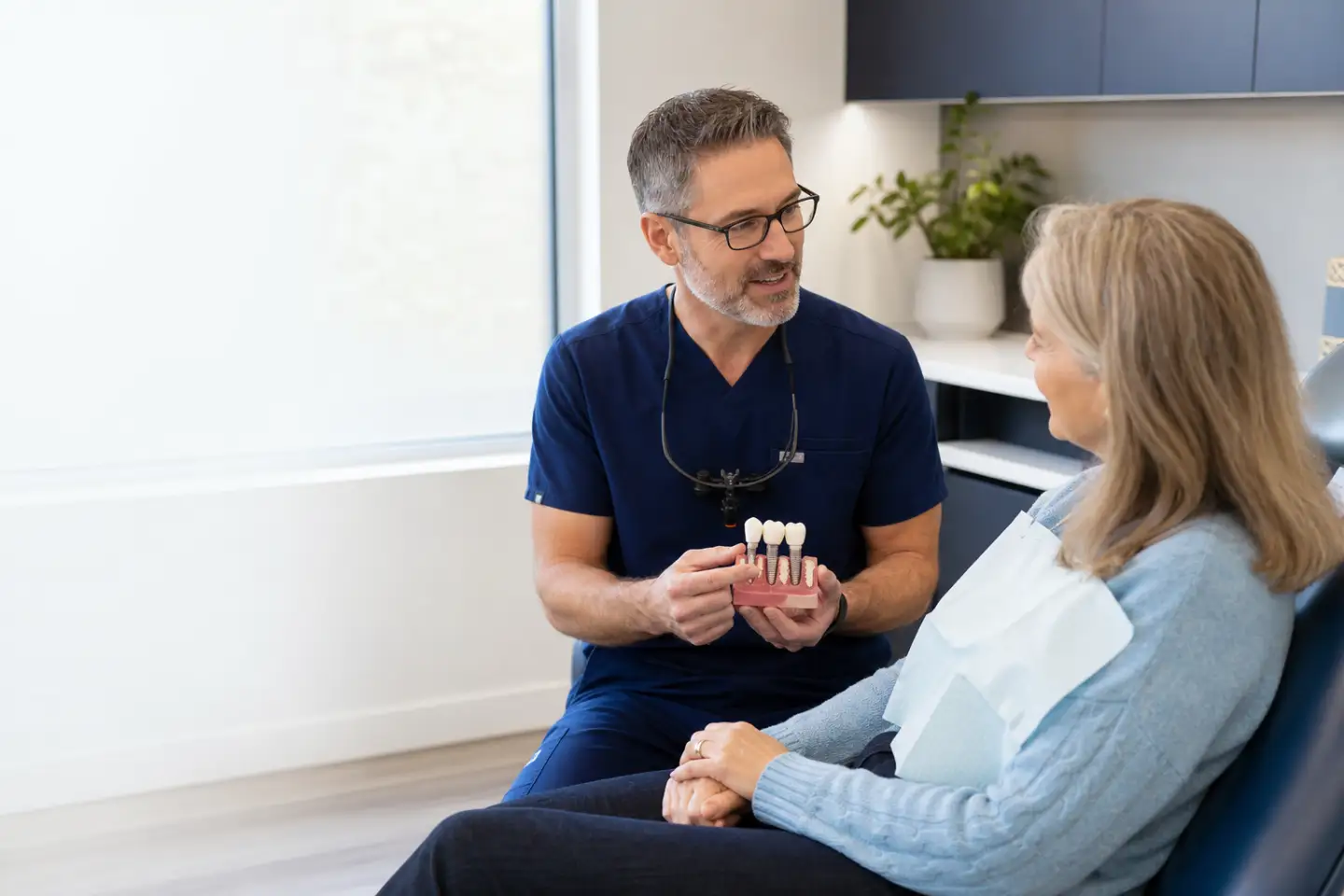
Replacement teeth are shaped and shaded to create a natural transition across the missing-tooth space.
Port Dover Family Dentistry
Dental bridges in Port Dover replace one to three missing teeth with a custom-made restoration that supports comfortable function and a complete smile.
Let’s get you smiling
Tell us how we can help. Our team will follow up to confirm a time.
Dental bridges in Port Dover
A custom dental bridge can replace one to three missing teeth with a fixed restoration supported by prepared teeth or dental implants. Unlike a removable partial denture, a bridge is designed to remain in place during eating, sleeping and daily cleaning.
Replacing the gap can improve appearance and function and help limit unwanted movement of neighbouring teeth. The supporting teeth, bite, gums and cleaning access all need to be assessed before a bridge is recommended.
Restore a complete smile
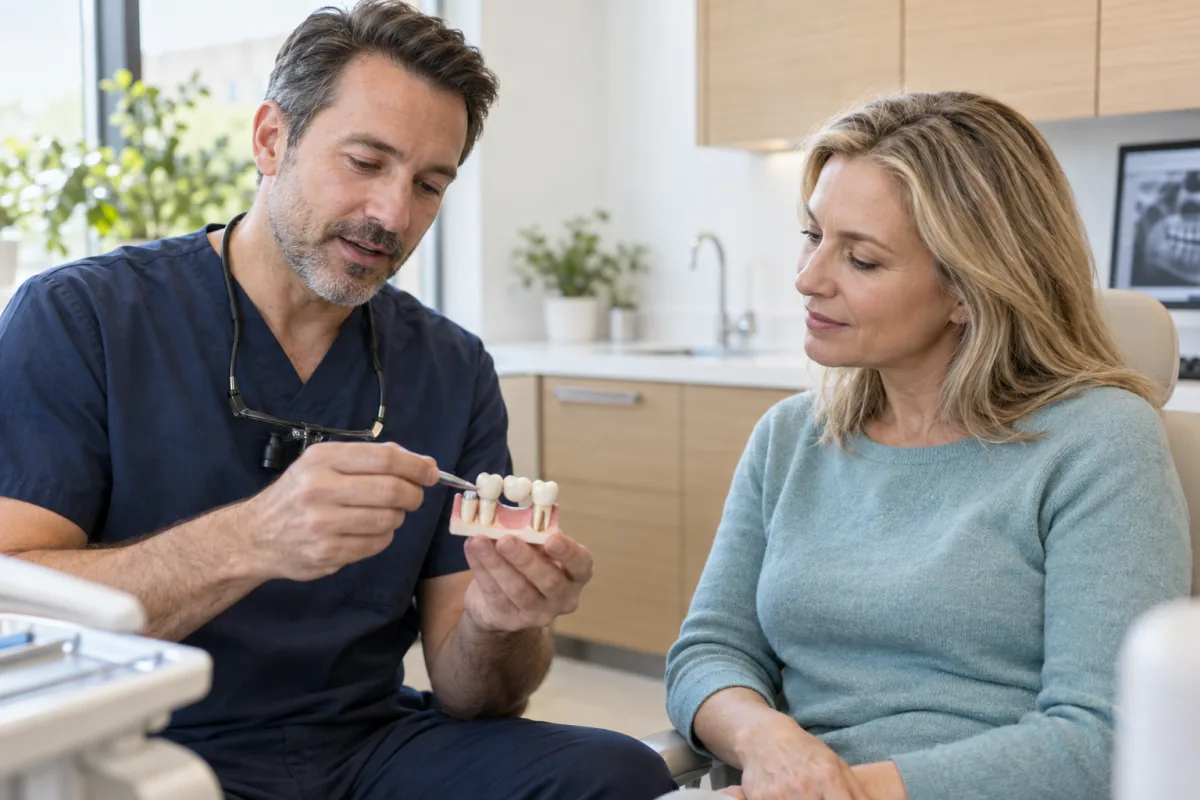
A bridge is custom designed to span a missing-tooth space and blend with the surrounding teeth while restoring a stable surface for speaking and chewing.
Rebuild confidence and function
The value of a bridge extends beyond filling the visible space. Its design must support comfort, cleaning and the way the entire bite works.
Replacement teeth are shaped and shaded to create a natural transition across the missing-tooth space.
Restoring the gap can improve contact with opposing teeth and make eating or speaking feel more natural.
Filling the space can help reduce unwanted drifting or tilting of nearby teeth into the gap.
A cemented or implant-supported bridge stays in place and does not need to be removed for sleep or routine cleaning.
What to expect
A conventional bridge commonly involves two appointments, although timing and steps vary with the bridge design and condition of the supporting teeth.
We examine the missing-tooth space, supporting teeth, gums and bite, and use diagnostic images when needed. Bridge, implant and removable options can be compared before treatment begins.
For a tooth-supported bridge, the supporting teeth are shaped and a detailed impression or scan is recorded. A temporary restoration protects the area while the custom bridge is made.
The completed bridge is checked for shade, contour, contact and bite before it is securely attached. We then show you how to clean beneath and around it.
Fit affects long-term comfort
A well-designed bridge needs accurate contact with the supporting teeth and a bite that distributes pressure comfortably. The replacement tooth should also leave practical access for daily cleaning beneath it.
At the fitting appointment, we check appearance, stability and function before the bridge is finalized.

The replacement teeth are designed to suit the size, colour and shape of the surrounding smile.
Supporting teeth or implants must be able to carry the forces placed on the bridge.
Space and contours beneath the bridge need to allow floss threaders or other recommended tools to pass.
Choosing a replacement option
The best choice depends on the number and location of missing teeth, the condition of nearby teeth and bone, your cleaning ability and your priorities.
Bridges are commonly considered for one or several adjacent missing teeth when suitable support is available.
The teeth or implants carrying the bridge must be stable, and the surrounding gums need to be manageable.
A bridge may be practical when neighbouring teeth already require crowns, while untouched healthy teeth deserve careful consideration.
Dental implants and removable partial dentures have different advantages, treatment requirements, costs and maintenance needs.
A tooth-supported bridge replaces the visible gap but does not replace the missing roots. Bone beneath the gap may still change over time, so the complete area should be monitored.
Caring for a bridge
The bridge itself cannot decay, but the teeth and gums supporting it remain vulnerable to plaque, cavities and inflammation.
Brush normally and clean beneath the replacement tooth every day using a floss threader, interdental brush or another tool recommended for your bridge design.
Contact the office if the bridge feels loose, painful or different when you bite. Avoid hard or sticky foods on the area until it can be assessed.
Treatment costs
Bridge fees vary widely because every gap, support tooth and restoration design is different.
Without insurance
$2,000–$3,000+
With insurance
$800–$1,200+
These ranges are general estimates and do not replace a personalized treatment quote.
The final estimate reflects the design and clinical work required for a stable, cleanable result.
An oral examination is required to compare treatment options and provide an accurate estimate. If you have dental insurance, we can provide an estimate to submit so you can understand expected out-of-pocket costs before deciding on care.
Helpful information
A fixed bridge is cemented to prepared teeth or attached to implants and is designed to remain in place. A removable partial denture replaces teeth and supporting gum-coloured areas and is taken out for cleaning and usually for sleep.
A cantilever bridge is supported from only one side of the missing-tooth space. It is used less often because it can place greater force on the supporting tooth, particularly toward the back of the mouth.
A conventional bridge commonly requires two appointments, often with a temporary restoration between visits. Appointment length and total timing depend on the supporting teeth, bridge design and laboratory work.
Bridges may be made from porcelain, ceramic materials such as zirconia, metal alloys or combinations of materials. The appropriate choice depends on the bridge location, biting forces, appearance and design.
A crown covers and strengthens a damaged tooth. A bridge uses connected crowns or implant attachments to support one or more replacement teeth across a gap.
No. A crown requires support from a prepared tooth, a restored root or a dental implant. A missing-tooth space needs a replacement supported by a bridge, implant or removable prosthesis.
Yes. Zirconia can be used for some dental bridges. Suitability depends on the location, span, available space, biting forces and appearance requirements.
A bridge can last many years with careful cleaning and regular assessment, but it may eventually need repair or replacement. Longevity varies with oral hygiene, biting forces, support-tooth health and materials.
Contact a dentist promptly if a bridge feels loose or uncomfortable. Avoid chewing hard or sticky foods on the area until the bridge can be evaluated and repaired or replaced if necessary.
Recognized year after year
Best Dentists in Norfolk
Proudly recognized among Norfolk’s top-rated dental practices for six consecutive years.

2021 Winner

2022 Winner

2023 Winner

2024 Winner

2025 Winner

2026 Winner
Stories from our patients
Watch a patient’s experience and browse more five-star reviews from people who have visited our Port Dover dental clinic.
Patient video
A patient shares the welcoming atmosphere and positive experience they found at our Port Dover office.
Google reviews
Swipe or use the arrows
Read all reviewsOur community
Your next visit can start today
New patients and CDCP patients are welcome. Tell us how we can help and our Port Dover dental team will follow up with you.
Evening appointments Monday and Tuesday