Breathing Pauses
A partner may notice repeated pauses, gasping, choking or abrupt awakenings during sleep.
Port Dover Family Dentistry
Sleep apnea care in Port Dover includes dental screening and custom oral appliances for suitable adults after medical diagnosis and treatment planning.
Let’s get you smiling
Tell us how we can help. Our team will follow up to confirm a time.
Sleep apnea treatment in Port Dover
Sleep apnea repeatedly interrupts breathing during sleep. Loud snoring, witnessed pauses, gasping, morning headaches, unrefreshing sleep and daytime sleepiness can be warning signs, but symptoms alone cannot determine whether apnea is present or which type it is.
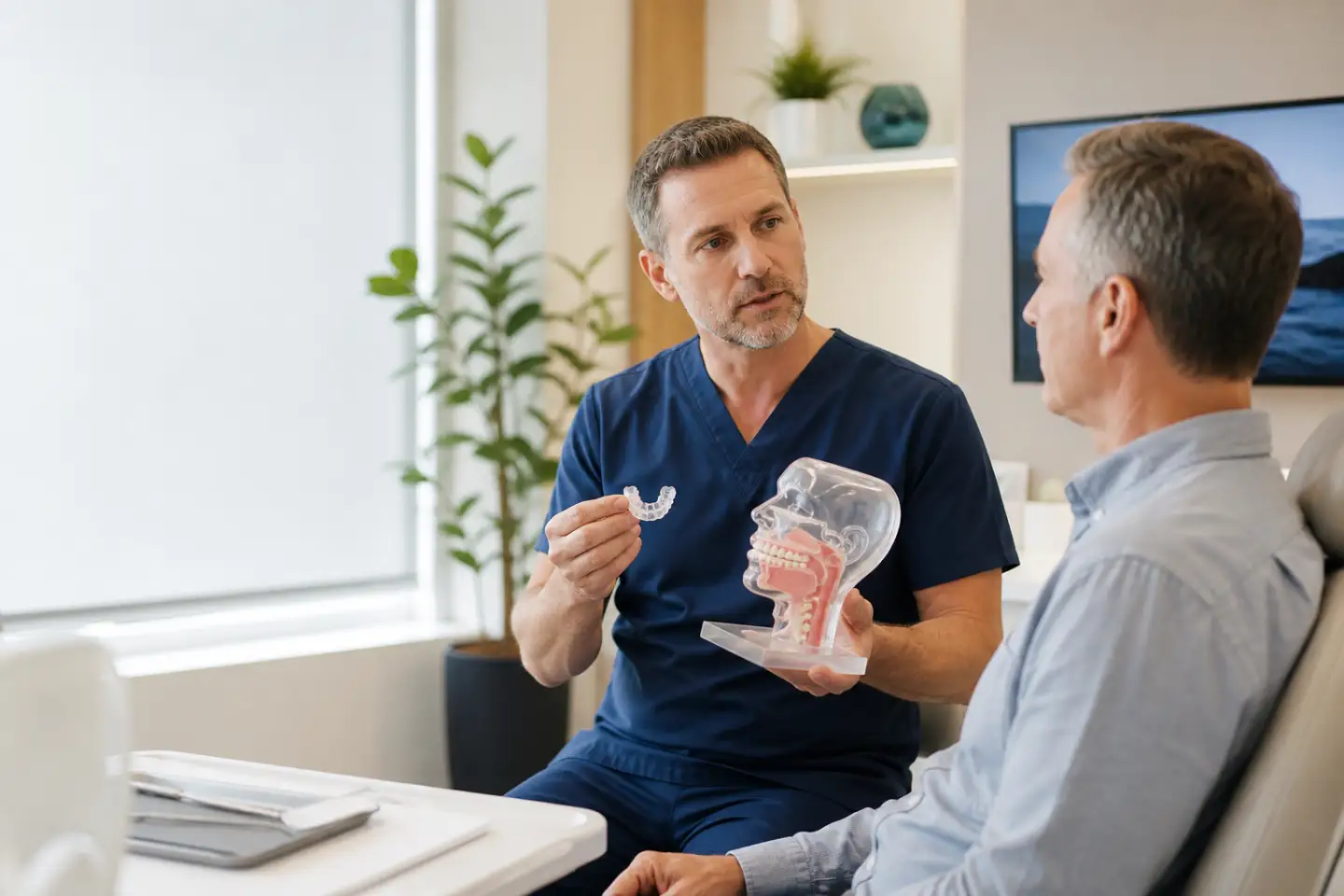
A dentist can screen for oral and airway factors and provide a custom oral appliance for an appropriate adult. A medical provider establishes the diagnosis—often using objective sleep testing—and coordinates the overall treatment plan.
Snoring is not a diagnosis
Primary snoring and obstructive sleep apnea can sound similar. Medical assessment is important before treating snoring so a breathing disorder is not missed.
Do not drive if you are dangerously sleepy. Seek urgent medical care for severe breathing difficulty, chest pain, fainting, confusion or another acute medical concern.
Symptoms worth discussing
A partner may notice repeated pauses, gasping, choking or abrupt awakenings during sleep.
Persistent snoring is common in obstructive sleep apnea, although not everyone who snores has apnea.
Restless sleep, frequent waking, dry mouth or morning headaches may occur even when you do not remember waking.
Sleepiness, brain fog, irritability, memory difficulty and reduced concentration can affect work, driving and relationships.
Untreated obstructive sleep apnea is associated with cardiovascular and metabolic health risks. Tell healthcare providers about a diagnosis, particularly before surgery, anesthesia or sedation.
Diagnosis, fitting and follow-up
A qualified medical sleep provider confirms the type and severity of sleep apnea and discusses appropriate therapies, including positive airway pressure.
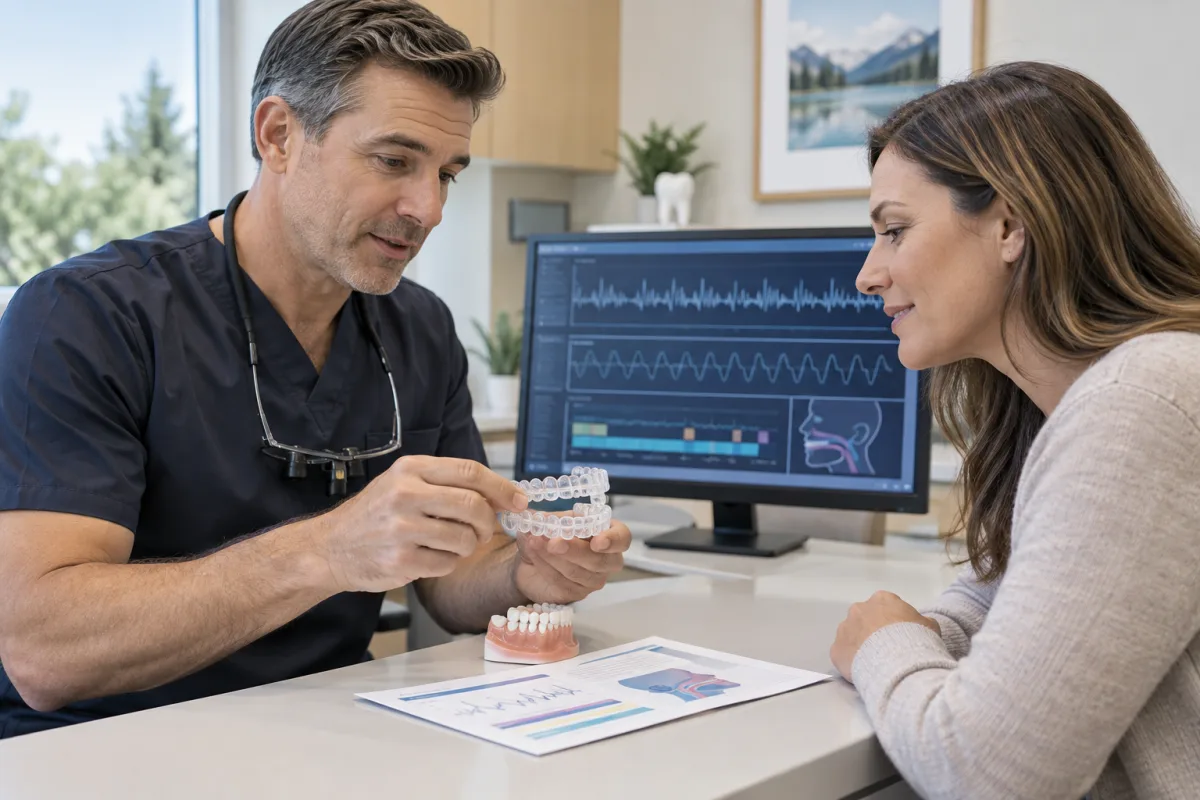
We review teeth, gums, jaw joints, bite, airway-related anatomy and whether the dentition can support a custom appliance.
Records are used to make a custom device. Advancement is adjusted gradually to balance airway benefit, comfort and jaw health.
The medical sleep provider may arrange follow-up sleep testing. Ongoing dental reviews monitor symptoms, fit, wear, bite and side effects.
A treatment option for selected adults
Most dental sleep appliances gently hold the lower jaw forward during sleep to help keep the upper airway open. For adults with obstructive sleep apnea, oral appliance therapy may be considered when prescribed within a medical sleep plan—often when CPAP is not tolerated or an alternate therapy is preferred.
A custom, adjustable appliance is fitted to the patient and monitored by a qualified dentist. It does not treat central sleep apnea, and symptom improvement alone does not prove that breathing events are adequately controlled.
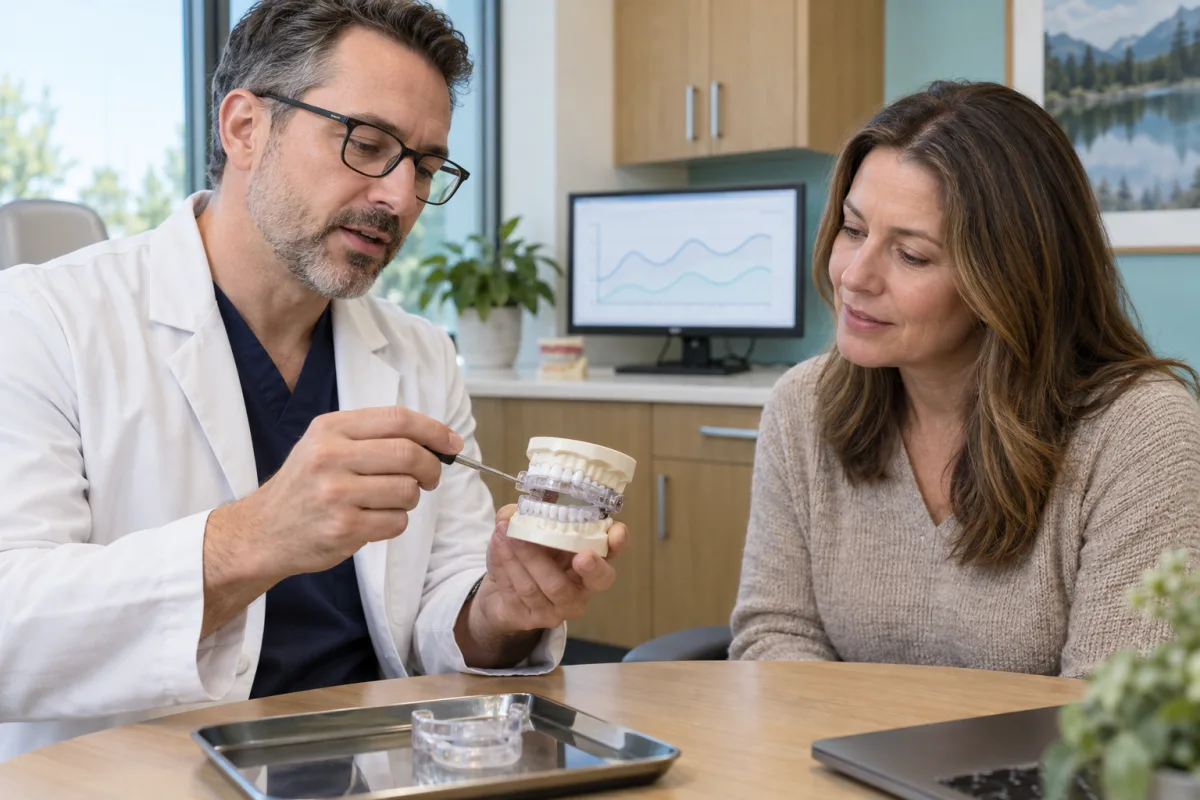
Individual records and gradual titration support fit, comfort and a clinically guided jaw position.
Objective follow-up testing may be needed to confirm that treatment is controlling breathing interruptions.
Regular reviews look for jaw discomfort, tooth movement, bite changes, gum concerns and appliance wear.
Treatment is diagnosis-specific
No single treatment is best for everyone. The medical sleep provider weighs breathing results, symptoms, anatomy, preferences and related health conditions.
CPAP or another PAP mode uses pressurized air to keep the airway open and is commonly used for obstructive sleep apnea.
A custom titratable device may be suitable for selected adults with obstructive sleep apnea or medically diagnosed primary snoring.
Weight management when appropriate, smoking cessation, alcohol or sedative review and positional therapy may complement prescribed care.
Nasal, throat, jaw, neuromuscular or central causes may require physician-led treatment or specialist assessment.
Do not stop CPAP or replace a prescribed therapy with a store-bought device without discussing the change with the medical sleep provider managing your condition.
Living with an appliance
Oral appliance therapy is an ongoing treatment, not a one-time product purchase.
Use the device on the schedule agreed with the dental and medical sleep teams and report persistent intolerance.
Clean the appliance with the recommended products, allow it to dry and protect it from heat, pets and damage.
Temporary morning stiffness can occur. Report persistent jaw pain, tooth discomfort, looseness or a changing bite.
Return for appliance checks and the medical reassessment or sleep testing recommended to confirm continuing effectiveness.
Coordinated sleep care
We can assess whether your mouth and jaw are suitable for oral appliance therapy and coordinate with the medical provider managing your sleep health.
Sleep apnea and oral appliance questions
Possible signs include loud frequent snoring, witnessed breathing pauses, gasping, choking, restless sleep, morning headaches, waking unrefreshed and daytime sleepiness or concentration problems. These symptoms require medical assessment rather than self-diagnosis.
A dentist can screen for risk and oral or airway factors, but a qualified medical provider makes the diagnosis, often using objective sleep testing. Dental care then works within that treatment plan.
No. CPAP uses pressurized air to keep the airway open. A dental appliance changes the lower-jaw or tongue position. CPAP generally controls breathing events more reliably, while a custom appliance may be appropriate for selected adults.
Yes. Weight is only one risk factor. Airway and jaw anatomy, enlarged tissues, nasal obstruction, age, health conditions and nervous-system factors can also contribute.
It may reduce snoring in an appropriate patient, but quieter sleep does not prove that apnea is controlled. Follow-up with the medical sleep provider—and objective testing when recommended—checks effectiveness.
Report persistent jaw-joint or muscle pain, tooth pain, looseness, gum irritation, bite changes, appliance damage or a return of sleep symptoms. Early adjustment can help protect comfort and oral health.
Recognized year after year
Best Dentists in Norfolk
Proudly recognized among Norfolk’s top-rated dental practices for six consecutive years.

2021 Winner

2022 Winner

2023 Winner

2024 Winner

2025 Winner

2026 Winner
Stories from our patients
Watch a patient’s experience and browse more five-star reviews from people who have visited our Port Dover dental clinic.
Patient video
A patient shares the welcoming atmosphere and positive experience they found at our Port Dover office.
Google reviews
Swipe or use the arrows
Read all reviewsOur community
Your next visit can start today
New patients and CDCP patients are welcome. Tell us how we can help and our Port Dover dental team will follow up with you.
Evening appointments Monday and Tuesday