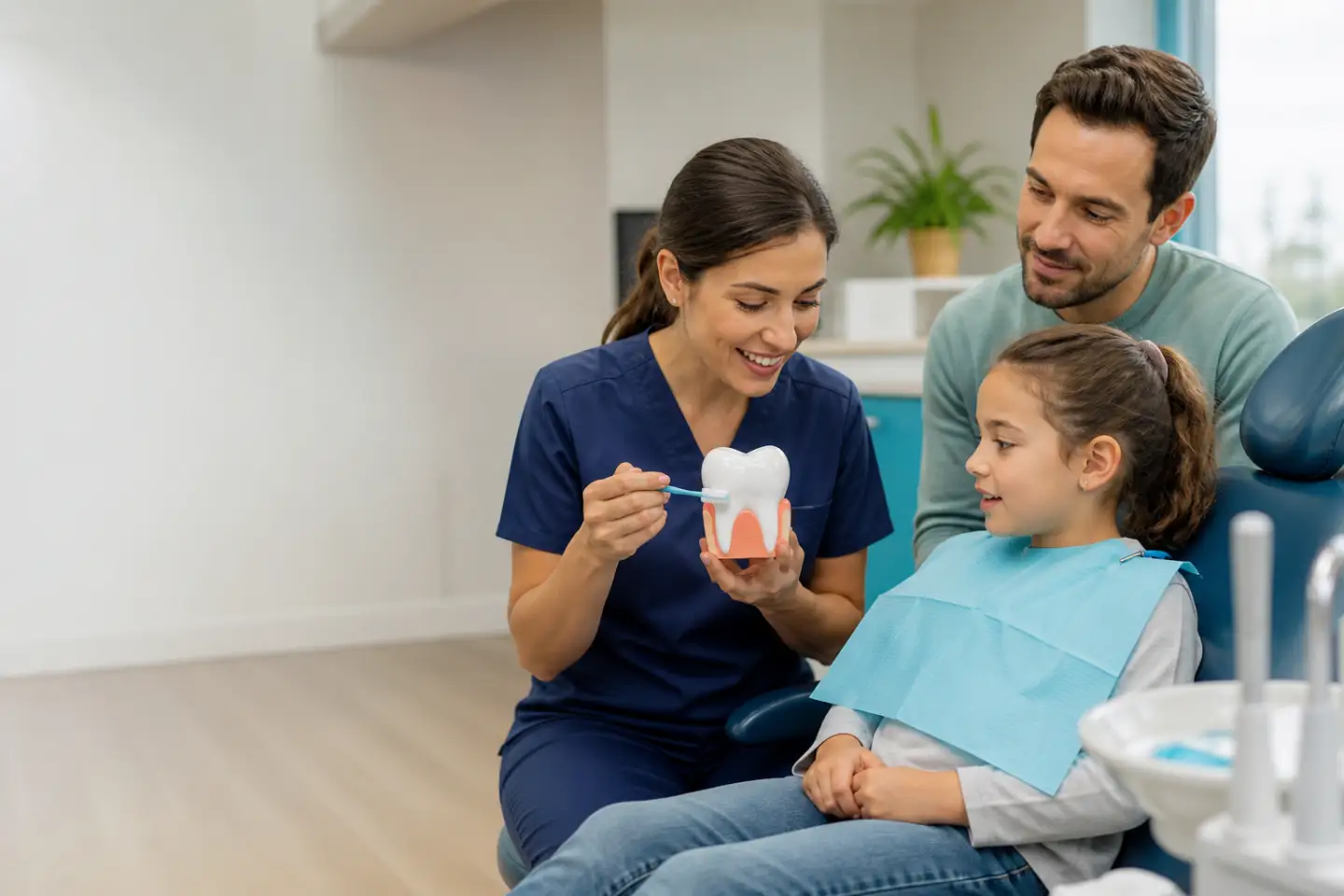
Strengthen Enamel
Professional fluoride can replenish minerals lost during early acid attacks and make enamel more resistant to future decay.
Port Dover Family Dentistry
Sealants and fluoride treatment in Port Dover help strengthen children’s enamel, protect hard-to-clean molars and reduce the risk of cavities.
Let’s get you smiling
Tell us how we can help. Our team will follow up to confirm a time.
Preventive care for growing smiles
Fluoride treatment and dental sealants work in different ways to help protect developing teeth. Fluoride supports remineralization and makes enamel more resistant to acid, while a sealant creates a physical barrier over deep grooves where plaque and food can collect.
Neither treatment is automatic for every child. Recommendations are based on the teeth present, the shape of their chewing surfaces, fluoride exposure, oral hygiene and individual risk of decay.
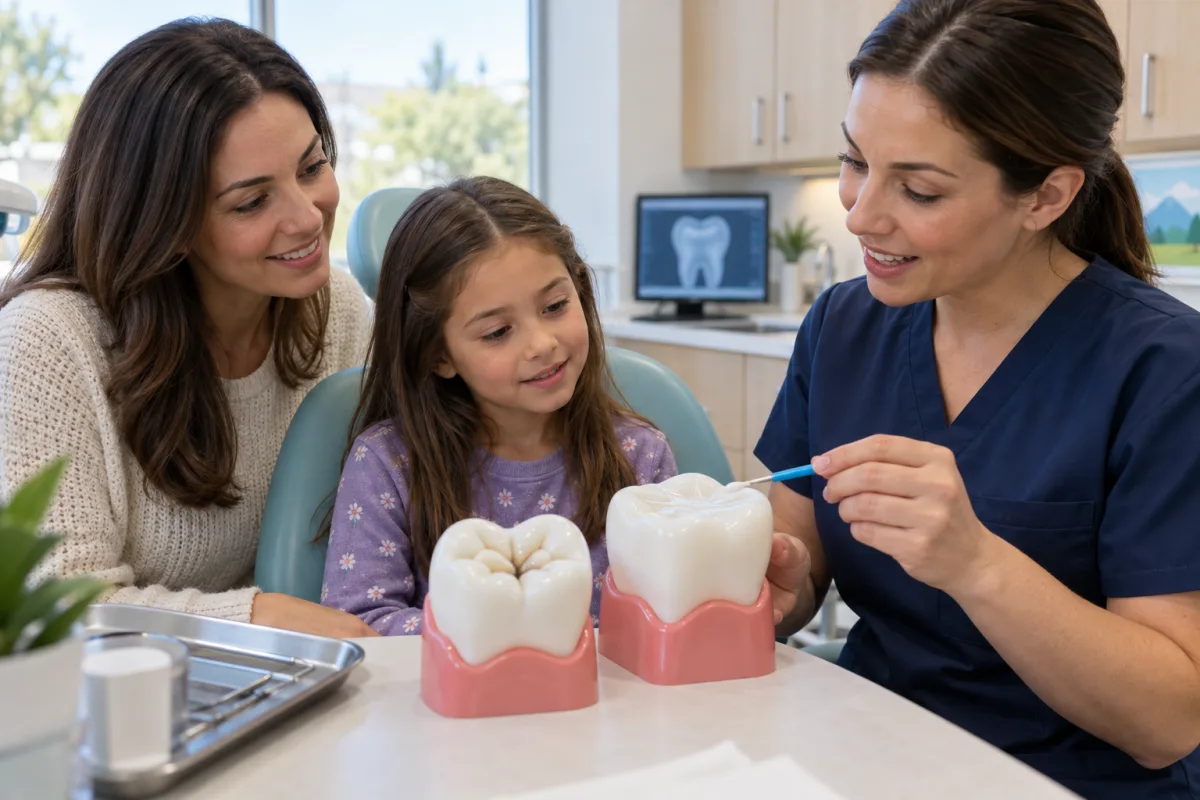
Two kinds of protection
Fluoride strengthens vulnerable enamel; sealants shield selected pits and grooves that are difficult to clean.
Simple preventive protection
Sealants and fluoride complement brushing, flossing, healthy food choices and regular dental examinations. They do not replace daily care.
Professional fluoride can replenish minerals lost during early acid attacks and make enamel more resistant to future decay.
A sealant flows into selected pits and fissures on the chewing surface, creating a smoother barrier against trapped plaque and food.
Permanent molars can be assessed soon after they erupt, when their grooves may be difficult for children to clean thoroughly.
Appropriate prevention may lower the chance that an at-risk surface will later need a filling or more extensive restorative care.
What to expect
Both treatments are usually brief, but the material, preparation and aftercare are not the same.
We review decay history, enamel, fluoride exposure, home care and the shape and eruption of each tooth before recommending treatment.
A professional fluoride product is placed on the visible enamel in the form selected for your child. The application itself takes only a few minutes.
The tooth is cleaned and kept dry, its surface is prepared, and sealant material is flowed into the grooves without drilling or freezing.
The sealant is hardened when required and the bite is checked. At later visits, we examine the material for wear, chips or areas needing repair.
A close look at sealants
Sealants are commonly considered for molars with deep pits and fissures. After the tooth is cleaned and dried, a mild conditioning material prepares the enamel, then the sealant is placed into the grooves and hardened.
No drilling or local anaesthetic is normally needed for an uncomplicated sealant. The finished surface is checked so the child’s bite feels natural and comfortable.
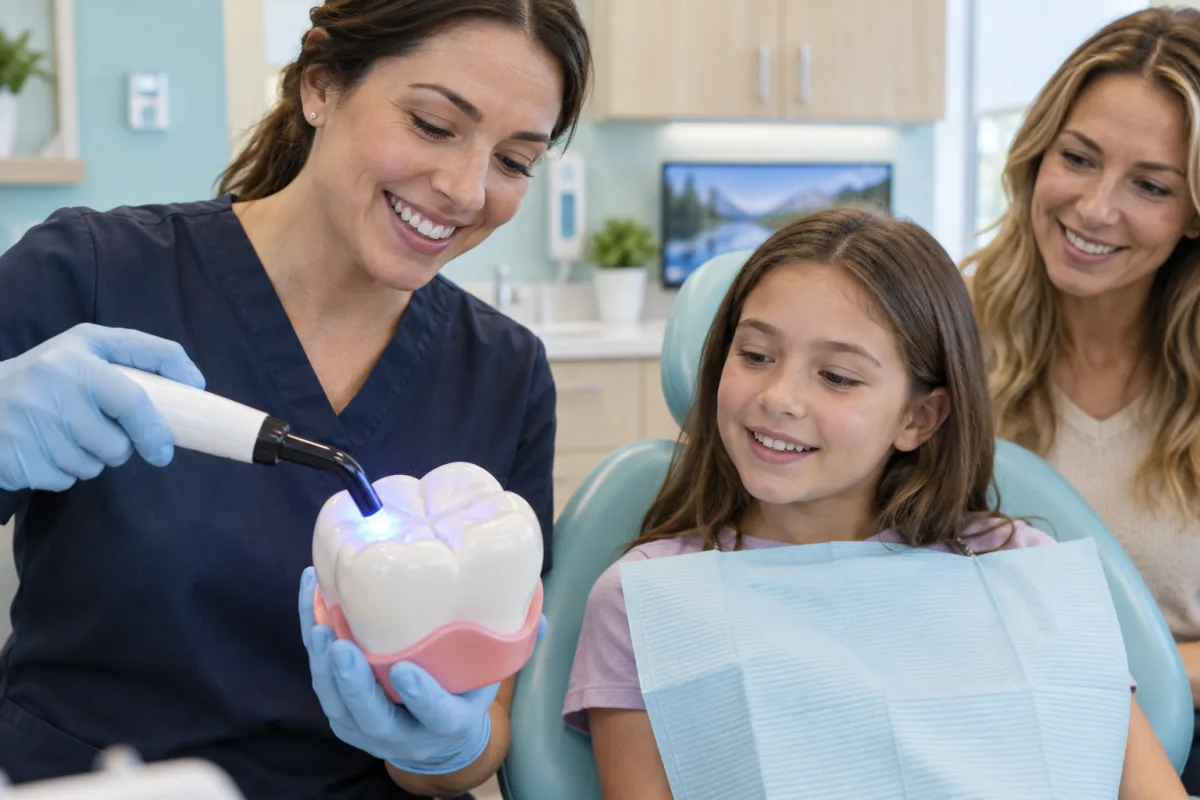
Sealants can be used on suitable primary or permanent teeth when an individual assessment shows benefit.
The material is placed directly on the prepared chewing surface and may be hardened with a curing light.
A worn or chipped area can often be repaired after the tooth and remaining sealant are reassessed.
Different needs, different tools
Fluoride acts across enamel surfaces, while sealants are placed on selected chewing surfaces. Your child may benefit from one, both or neither at a particular visit.
Fluoride can support remineralization when acid has begun weakening enamel before a cavity forms.
Decay history, oral hygiene, diet, fluoride exposure and health factors help determine whether professional fluoride is appropriate.
Permanent molars can be evaluated as soon as they appear, especially when grooves are deep or hard to brush.
Sealants may also be considered for selected primary teeth or other susceptible surfaces after diagnosis by the dentist.
The Canadian Dental Association supports appropriate fluoride use and selective sealant placement based on cavity-risk assessment and diagnosis.
After preventive treatment
Aftercare can differ between fluoride products, while sealants need routine observation over time.
Follow the specific eating, drinking and brushing instructions provided for the product used. If the team advises waiting 30 minutes, allow that time for the treatment to remain on the enamel.
Your child can usually use the tooth normally once the material is set. Let us know if the bite feels persistently uneven or uncomfortable.
Brush twice daily, clean between touching teeth and moderate frequent sugary or acidic snacks and drinks.
Sealants can last for years, sometimes up to 10, but retention varies. Routine visits allow worn or chipped areas to be repaired when appropriate.
Prevention tailored to your child
We can assess your child’s enamel, newly erupted teeth and individual cavity risk during a routine visit.
Fluoride and sealant questions
Some professional fluoride products need time to remain on the enamel. Follow the instructions given for the specific product used; when the dental team advises waiting 30 minutes, doing so helps avoid washing the material away too soon.
Fluoride is a naturally occurring mineral that helps prevent tooth decay. Professional treatment is selected and applied according to a child’s age, total fluoride exposure and cavity risk. Appropriate use matters, especially for young children who may swallow fluoride products.
Sealant is a protective coating bonded to selected pits and grooves, most often on molars. It helps keep bacteria, plaque and food from settling into areas that are difficult to brush.
Sealants can last for several years and sometimes up to 10 years, but retention varies. Brushing, flossing and routine checks remain important, and worn or chipped areas may be repaired.
Recognized year after year
Best Dentists in Norfolk
Proudly recognized among Norfolk’s top-rated dental practices for six consecutive years.

2021 Winner

2022 Winner

2023 Winner

2024 Winner

2025 Winner

2026 Winner
Stories from our patients
Watch a patient’s experience and browse more five-star reviews from people who have visited our Port Dover dental clinic.
Patient video
A patient shares the welcoming atmosphere and positive experience they found at our Port Dover office.
Google reviews
Swipe or use the arrows
Read all reviewsOur community
Your next visit can start today
New patients and CDCP patients are welcome. Tell us how we can help and our Port Dover dental team will follow up with you.
Evening appointments Monday and Tuesday