
Persistent Tooth Pain
A deep ache, throbbing pain or discomfort that interrupts sleep may indicate inflammation inside or around the tooth.
Port Dover Family Dentistry
Root canal treatment in Port Dover can relieve pain, remove infection and help save your natural tooth with a gentle, comfort-focused procedure.
Let’s get you smiling
Tell us how we can help. Our team will follow up to confirm a time.
Root canal treatment in Port Dover
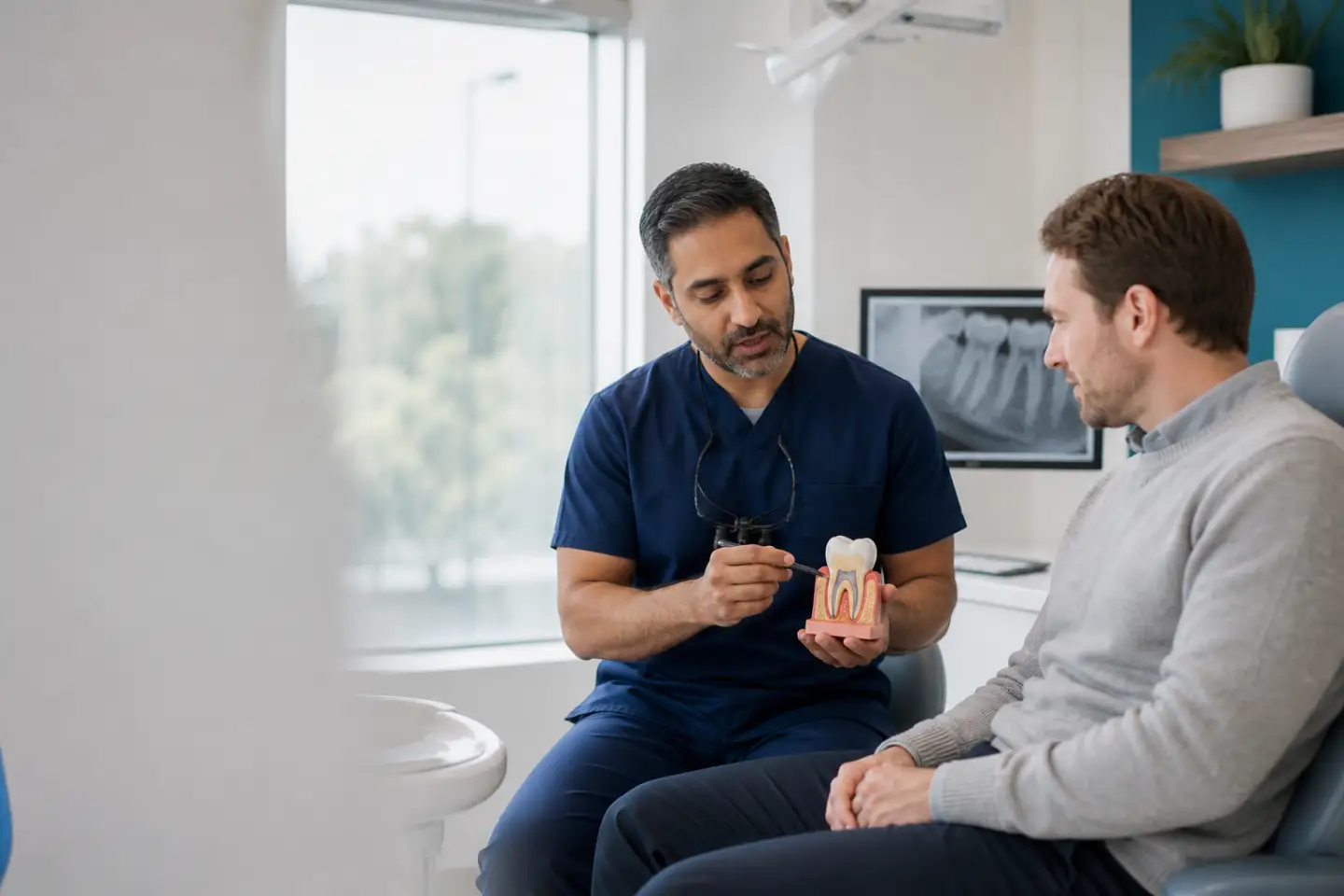
Inside every tooth is soft tissue called pulp. Deep decay, a crack, trauma or a leaking restoration can allow the pulp to become inflamed or infected. Root canal treatment removes the damaged tissue, disinfects the canal space and seals the tooth so it can continue to function.
Saving the tooth helps maintain your bite and avoids the gap, bone changes and replacement decisions that follow an extraction. Treatment commonly takes one or two visits, and local anesthetic is used to keep you comfortable throughout the procedure.
Relief that protects your smile
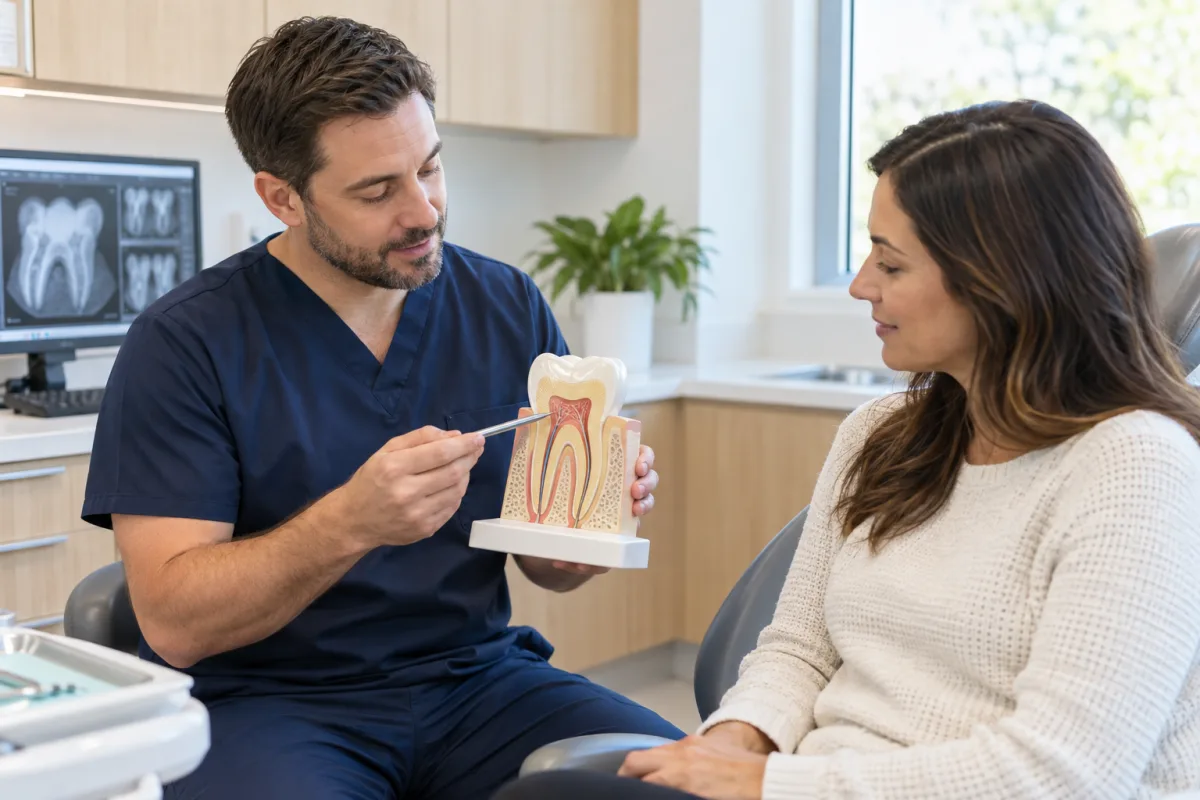
Root canal treatment addresses the source inside the tooth—relieving inflammation or infection while preserving the natural structure whenever it can be predictably restored.
Changes worth checking
Symptoms vary, and some infected teeth cause little discomfort. A clinical examination and dental X-ray are needed to determine the cause.
A deep ache, throbbing pain or discomfort that interrupts sleep may indicate inflammation inside or around the tooth.
Pain from hot or cold that lingers after the source is removed can be associated with damaged pulp.
Swollen tissue, drainage or a recurring pimple-like bump near a tooth may signal infection.
A darkened tooth or new pain when biting can follow trauma, a crack or changes in the tissues around the root.
What to expect
The number and length of visits depend on the tooth, canal anatomy, infection and whether a general dentist or endodontist should provide care.
We examine the tooth, test the pulp and review appropriate X-rays. You will understand the diagnosis, whether the tooth can be restored and the alternatives before treatment begins.
After the tooth is thoroughly numb, a protective rubber dam isolates it. A small opening provides access so inflamed or infected tissue can be removed and the canals can be shaped and disinfected.
The canals are filled and sealed. A temporary or permanent filling closes the access, and many back teeth later need a crown to protect the remaining structure from fracture.
Precise, comfort-focused care
The symptoms that bring someone in are usually caused by inflamed tissue or pressure from infection—not by the treatment itself. Careful freezing, isolation and controlled instruments allow the source to be treated while you remain comfortable.
Complex canal anatomy, retreatment or difficult access may be referred to an endodontist. The goal is always the same: disinfect the tooth thoroughly and create a durable seal.
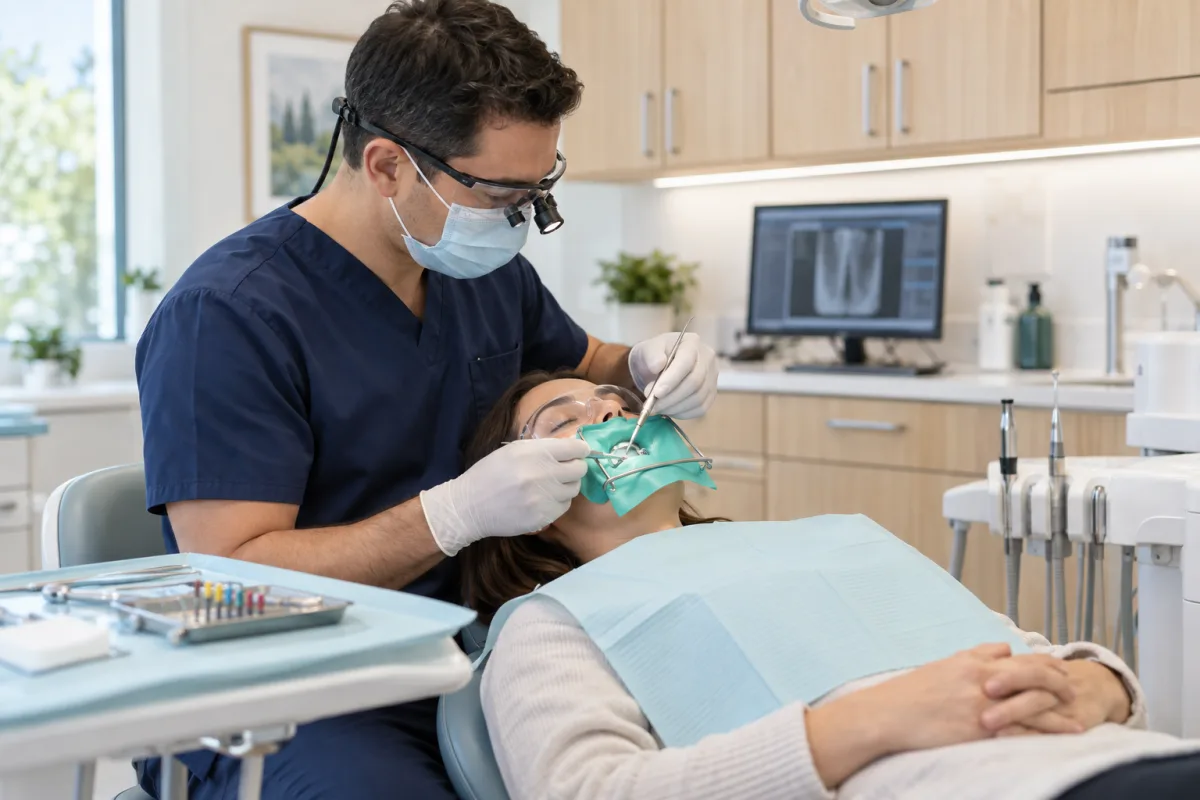
We test the area after local anesthetic and pause if you feel anything sharp during treatment.
A rubber dam keeps the tooth clean and prevents treatment materials from entering the mouth.
The final filling or crown is planned to protect the remaining tooth during everyday biting and chewing.
Understanding the alternatives
When pulp tissue is irreversibly damaged, the source must be removed through root canal treatment or extraction. Antibiotics may be appropriate for spreading infection or specific health concerns, but they do not clean the canal system.
Removes the damaged pulp, disinfects and seals the canals, and keeps the natural tooth when enough sound structure remains.
Removes the tooth and the infection source, but leaves a space that may affect chewing, tooth position and future replacement planning.
An endodontist may be recommended for complex anatomy, retreatment, difficult access or a tooth requiring advanced diagnostic support.
Observation is appropriate only when the diagnosis and risk allow it. An active infection or irreversibly inflamed pulp will not heal simply by waiting.
An abscess can spread beyond the tooth. Seek prompt dental care for swelling, fever or worsening pain, and emergency medical help for difficulty breathing or swallowing.
After root canal treatment
Some tenderness is common after treatment, especially if the tissues around the root were already inflamed.
Avoid chewing until normal feeling returns so you do not bite your cheek or tongue. Follow the medication guidance provided for your health history.
If the tooth has a temporary restoration, avoid very hard or sticky foods on that side and contact us if the filling comes out or the tooth fractures.
Do not delay the recommended filling or crown. A root-filled tooth can remain vulnerable to leakage or fracture until it has durable coverage.
Contact us for increasing swelling, fever, a bite that remains high, severe pain that does not improve, or the return of previous symptoms.
Treatment costs
Root canal fees vary with the tooth, number and shape of canals, infection and case complexity. Preserving a restorable tooth can also avoid the separate cost of extraction and tooth replacement.
With typical insurance coverage
$200–$500+
Estimated out-of-pocket expense
Without insurance
$600–$1,200+
Depending on case complexity
After a thorough examination, we can prepare an estimate for you to submit to your insurance provider. Coverage is determined by your plan.
The fee reflects the anatomy of the tooth and the clinical work needed to disinfect and restore it predictably.
An accurate quote cannot be provided over the phone because the tooth must be examined and imaged first. We will explain the expected fees and restoration sequence before treatment proceeds.
Do not wait on a possible infection
We will assess the source, explain whether root canal treatment is appropriate and help you choose the next step with confidence.
Helpful information
Common causes include deep decay, a crack or chip, trauma, repeated dental treatment, or leakage around a filling or crown. Any of these can inflame or infect the pulp inside the tooth.
Local anesthetic is used to numb the tooth and surrounding tissues, and treatment is intended to relieve the source of pain. Pressure or vibration may be noticeable, but you should not feel sharp pain. Tell us immediately if you are uncomfortable.
Antibiotics can help when infection is spreading beyond the tooth or when your health history indicates them, but they cannot remove damaged pulp or disinfect the enclosed canals. Definitive treatment is usually root canal therapy or extraction.
Treatment usually takes one or two visits. A straightforward tooth may take about 30 to 60 minutes, while a molar or complex case may require around 90 minutes or more. Your dentist will estimate timing after examining the tooth.
Many plans contribute to root canal treatment, but deductibles, annual limits and coverage percentages vary. We can provide an estimate for submission to your insurer after the tooth has been assessed.
Molars and premolars commonly need crowns because they absorb strong chewing forces and often have substantial missing structure. Some front teeth can be restored with a bonded filling. The recommendation depends on the tooth’s condition and function.
Recognized year after year
Best Dentists in Norfolk
Proudly recognized among Norfolk’s top-rated dental practices for six consecutive years.

2021 Winner

2022 Winner

2023 Winner

2024 Winner

2025 Winner

2026 Winner
Stories from our patients
Watch a patient’s experience and browse more five-star reviews from people who have visited our Port Dover dental clinic.
Patient video
A patient shares the welcoming atmosphere and positive experience they found at our Port Dover office.
Google reviews
Swipe or use the arrows
Read all reviewsOur community
Your next visit can start today
New patients and CDCP patients are welcome. Tell us how we can help and our Port Dover dental team will follow up with you.
Evening appointments Monday and Tuesday