Healthy Primary Teeth
Removing plaque and tartar helps protect baby teeth while they support chewing, speech and space for permanent teeth.
Port Dover Family Dentistry
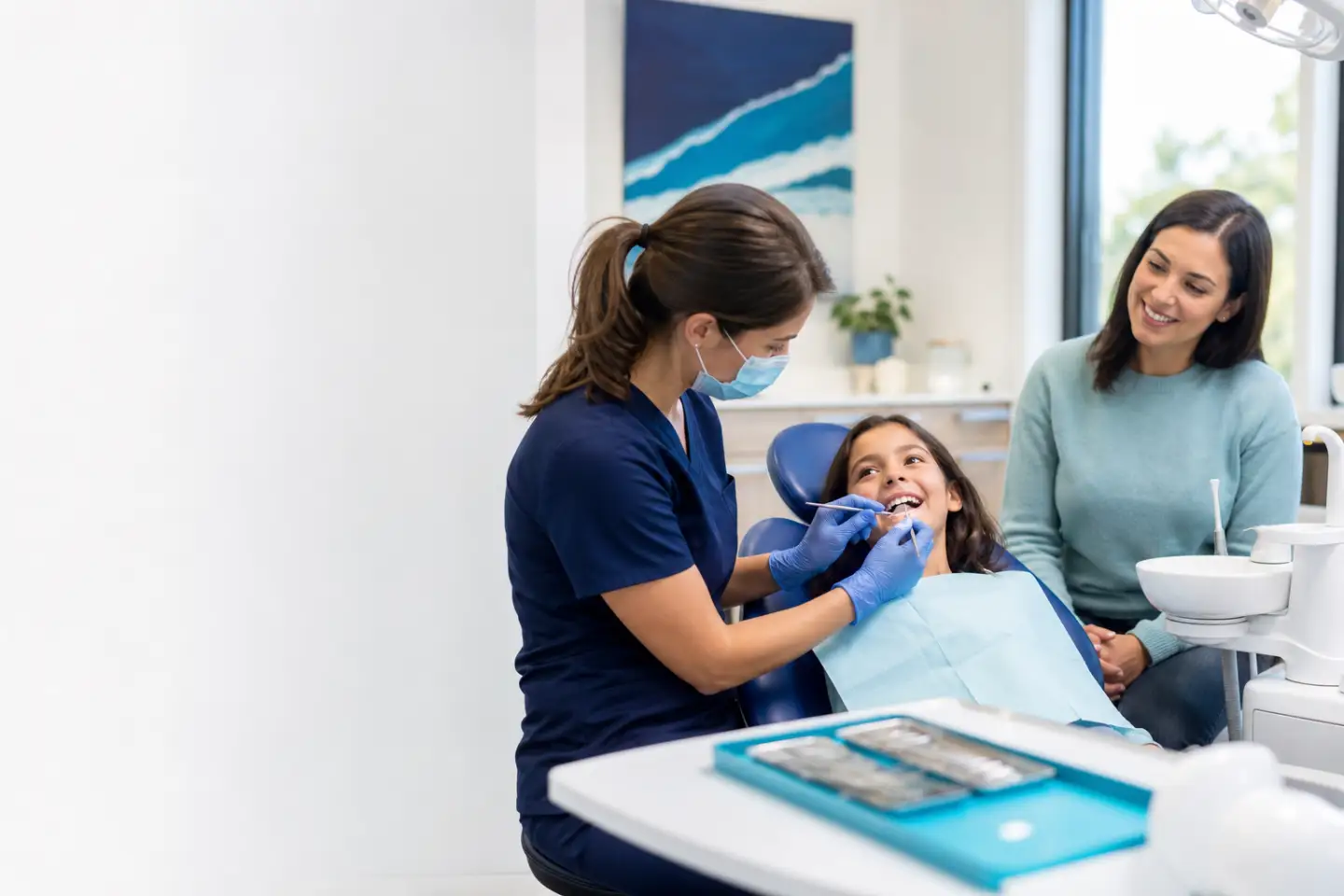
Gentle teeth cleanings for kids in Port Dover remove plaque, help prevent cavities, monitor dental development and build healthy lifelong habits.
Let’s get you smiling
Tell us how we can help. Our team will follow up to confirm a time.
Teeth cleanings for kids in Port Dover
Children need regular dental visits just as adults do. Professional cleanings remove plaque, tartar and bacteria that can contribute to cavities, gum inflammation and persistent bad breath, including buildup in places that home brushing may miss.
The hygienist and dentist also check the gums, monitor baby teeth that are erupting or shedding, follow developing adult teeth and share personalized techniques for home care. The pace and approach are matched to your child’s comfort.
Healthy habits start early
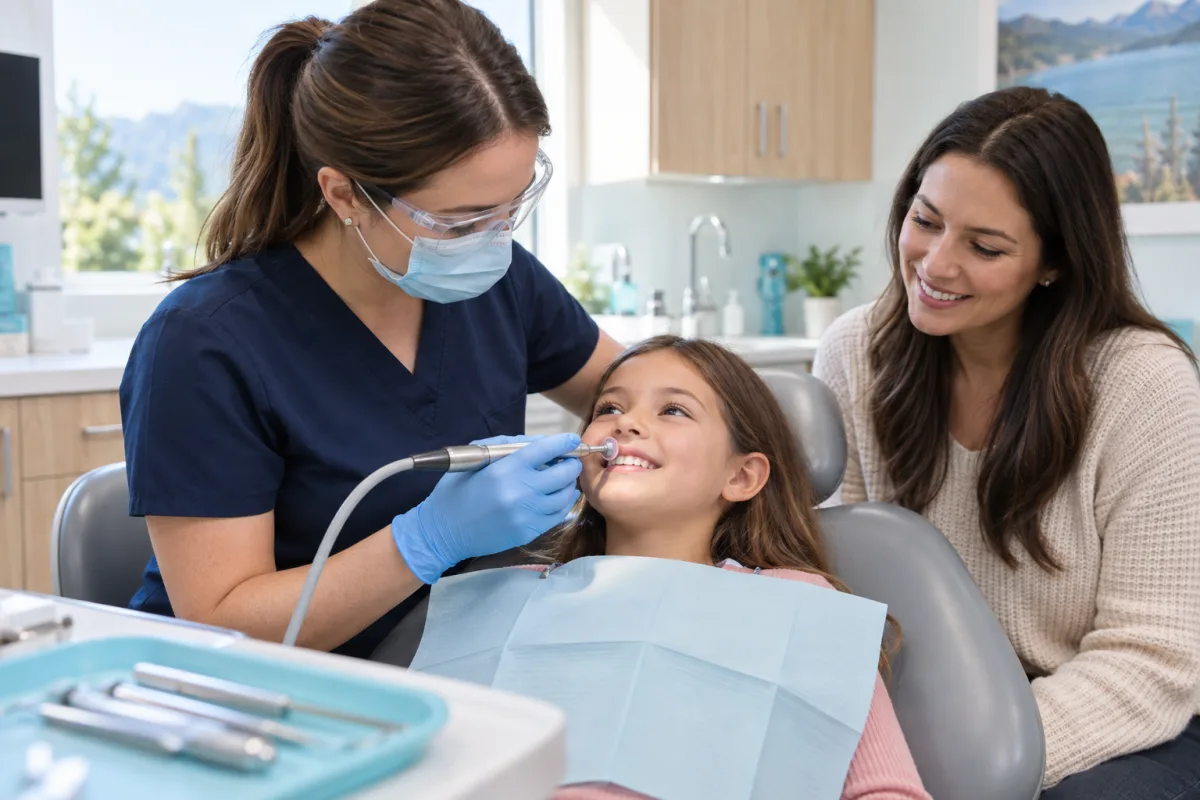
Regular cleanings help control buildup, support comfortable gums and give children repeated opportunities to practise lifelong oral-health habits.
Preventive care for growing smiles
A cleaning is more than polishing teeth. It combines professional plaque removal, developmental monitoring and practical coaching for the child and family.
Removing plaque and tartar helps protect baby teeth while they support chewing, speech and space for permanent teeth.
Newly erupted permanent teeth can be checked and cleaned while children are still learning to reach every surface.
We look for inflammation and teach age-appropriate flossing and gum-care techniques.
Routine visits help us follow eruption, shedding, alignment and other milestone changes over time.
Gentle, familiar visits can build trust and make it easier for children to ask questions or explain a concern.
Children learn how their daily choices affect their mouths while parents receive guidance on the supervision still needed.
A comfortable, age-appropriate visit
We review your child’s history first, use kid-friendly explanations and adjust the visit to their oral health and comfort.
We discuss recent changes or concerns, explain the tools and determine whether X-rays or additional preventive care may be clinically useful.
The hygienist gently removes plaque and hardened tartar from tight spaces and along the gumline, then polishes the teeth as appropriate.
The dentist assesses the teeth, gums, bite and development, reviews any images and discusses fluoride, sealants or treatment only when indicated.
Clean teeth and healthy gums
Plaque is a soft, sticky bacterial film that begins forming as soon as teeth appear. When it is not removed, it can harden into tartar that a toothbrush cannot take off at home. Tight contacts and the gumline are common trouble spots.
Children can develop gum inflammation just as adults can. After cleaning, we demonstrate brushing and interdental techniques that match the child’s current dexterity and show parents where help is still needed.
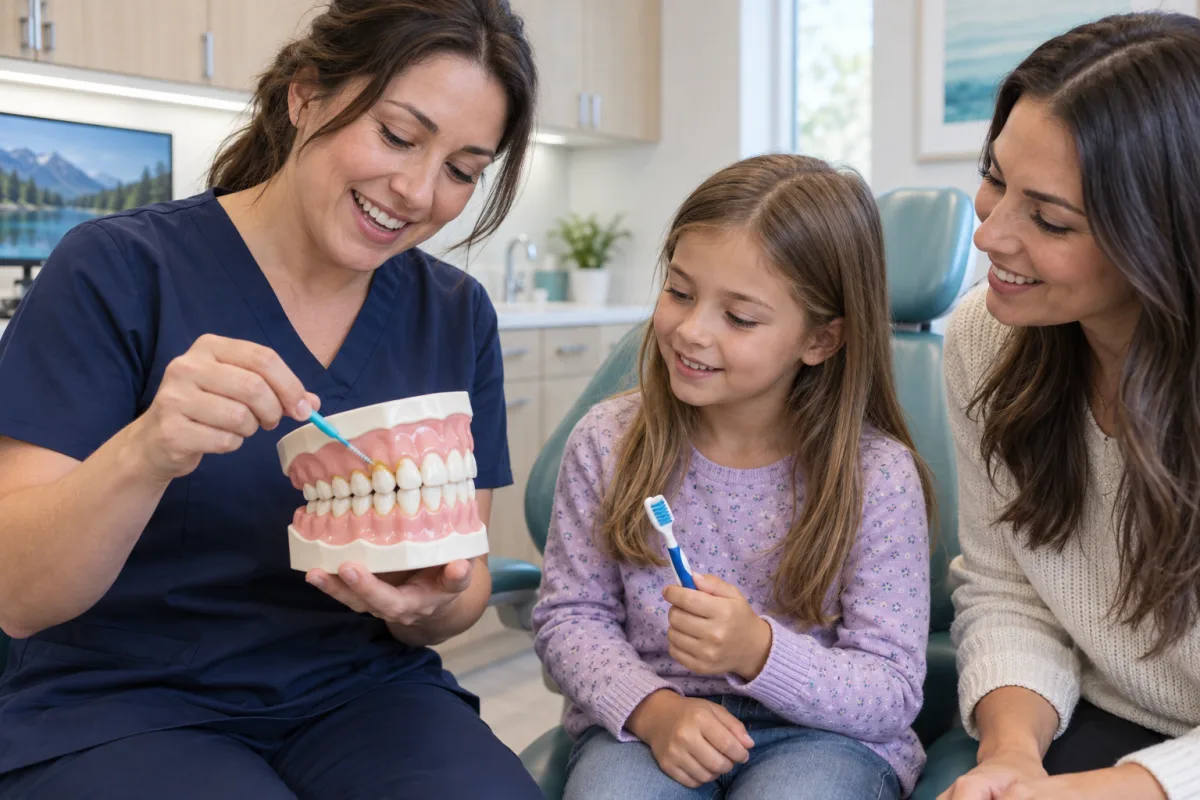
Daily brushing and cleaning between touching teeth disrupt soft buildup before it hardens.
Specialized instruments are used to remove hardened deposits safely and thoroughly.
Gentle technique around the gums helps control inflammation and supports developing teeth.
Do not wait for the next cleaning
Young children do not always know what dental discomfort feels like or how to describe it. Changes in eating, behaviour or the appearance of the mouth deserve attention.
Frequently touching or cupping the face, protecting the mouth, or resisting anyone approaching the teeth may signal discomfort.
Swelling, redness, discolouration or fever alongside a dental concern should be assessed promptly.
Avoiding hot, cold, hard or chewy foods, refusing raw vegetables or meat, or chewing only on one side can be a clue.
Irritability, withdrawal, disrupted sleep or a sudden change in appetite may accompany pain or sensitivity.
If you suspect pain, swelling or infection, schedule an assessment rather than waiting for the next routine cleaning.
Daily home care
Professional cleanings support—but do not replace—consistent care at home.
Clean teeth as soon as they appear with an age-appropriate toothbrush and the amount of fluoride toothpaste recommended for your child.
Brush twice daily and begin daily flossing or another interdental method when neighbouring teeth touch.
Fluoride toothpaste, fluoridated water where available and professional treatment when recommended can strengthen enamel.
Moderate juice, pop, candy and repeated snacking, especially near bedtime, and choose water between meals.
Let children see adults brush and floss consistently, and continue helping or supervising until they have the dexterity to clean thoroughly.
Treatment costs
Routine cleanings and exams are preventive services, and many insurance plans provide substantial coverage. Actual benefits depend on the individual policy.
With typical dental insurance
$0–$50
Per visit, depending on coverage
Without dental insurance
$120–$300+
Especially for a first or overdue visit
Many plans cover pediatric cleanings about every six months, although frequency limits, deductibles and exceptions may apply.
An exact quote cannot be provided without understanding your child’s individual needs.
We can provide a personalized estimate or itemized quote after assessment. Insurance reimbursement is determined by the plan, not the dental office.
Gentle preventive care
We combine careful plaque removal, developmental monitoring and practical home-care coaching at a child-friendly pace.
Helpful information for parents
Children commonly have their teeth cleaned and examined about every six months. A dentist may recommend visits as often as every three months for a child with higher cavity or gum risk. The appropriate interval is individualized, and we recommend not going longer than a year without professional guidance.
Do not wait. Schedule an assessment when you notice pain, swelling, injury, eating changes or another concern. Early care can address a problem while it is still smaller.
Clues include touching or protecting the face, swelling or redness, fever with a dental concern, avoiding hot, cold, hard or chewy foods, chewing on one side, disrupted sleep and changes in mood or appetite.
Most children’s cleanings take about 30 minutes to one hour, depending on oral-health needs and comfort. More time may be helpful when a child has questions or needs extra reassurance.
Begin when teeth first appear, brush twice daily with an age-appropriate amount of fluoride toothpaste, clean between touching teeth, moderate sugary and acidic foods and drinks, and model good oral hygiene. Continue helping until your child can clean thoroughly.
Aftercare depends on the professional fluoride product used. Follow the instructions from your dental team; if they advise waiting 30 minutes, allow that time before your child eats or drinks.
Recognized year after year
Best Dentists in Norfolk
Proudly recognized among Norfolk’s top-rated dental practices for six consecutive years.

2021 Winner

2022 Winner

2023 Winner

2024 Winner

2025 Winner

2026 Winner
Stories from our patients
Watch a patient’s experience and browse more five-star reviews from people who have visited our Port Dover dental clinic.
Patient video
A patient shares the welcoming atmosphere and positive experience they found at our Port Dover office.
Google reviews
Swipe or use the arrows
Read all reviewsOur community
Your next visit can start today
New patients and CDCP patients are welcome. Tell us how we can help and our Port Dover dental team will follow up with you.
Evening appointments Monday and Tuesday