
Repeated Gum Infection
A partly erupted tooth can trap plaque and food beneath a gum flap, leading to recurrent pain, swelling or pericoronitis.

Port Dover Family Dentistry
Wisdom teeth extraction in Port Dover begins with examination and X-rays to decide whether monitoring, routine removal or surgical referral is appropriate.
Let’s get you smiling
Tell us how we can help. Our team will follow up to confirm a time.
Wisdom-tooth pain or swelling?
Call for assessment if you have pain, a bad taste, gum swelling, difficulty opening, fever or recurring symptoms behind the last molar.
Wisdom teeth extraction in Port Dover
Wisdom teeth are the third permanent molars at the back of the mouth. They often emerge from the late teens into the twenties, although development and timing vary, and some people do not form all four.
A healthy, fully erupted, well-positioned tooth that can be cleaned may be monitored. Removal is considered when examination and imaging identify pain, recurrent infection, decay, gum disease, damage to the neighbouring tooth, cystic change or another defined problem.
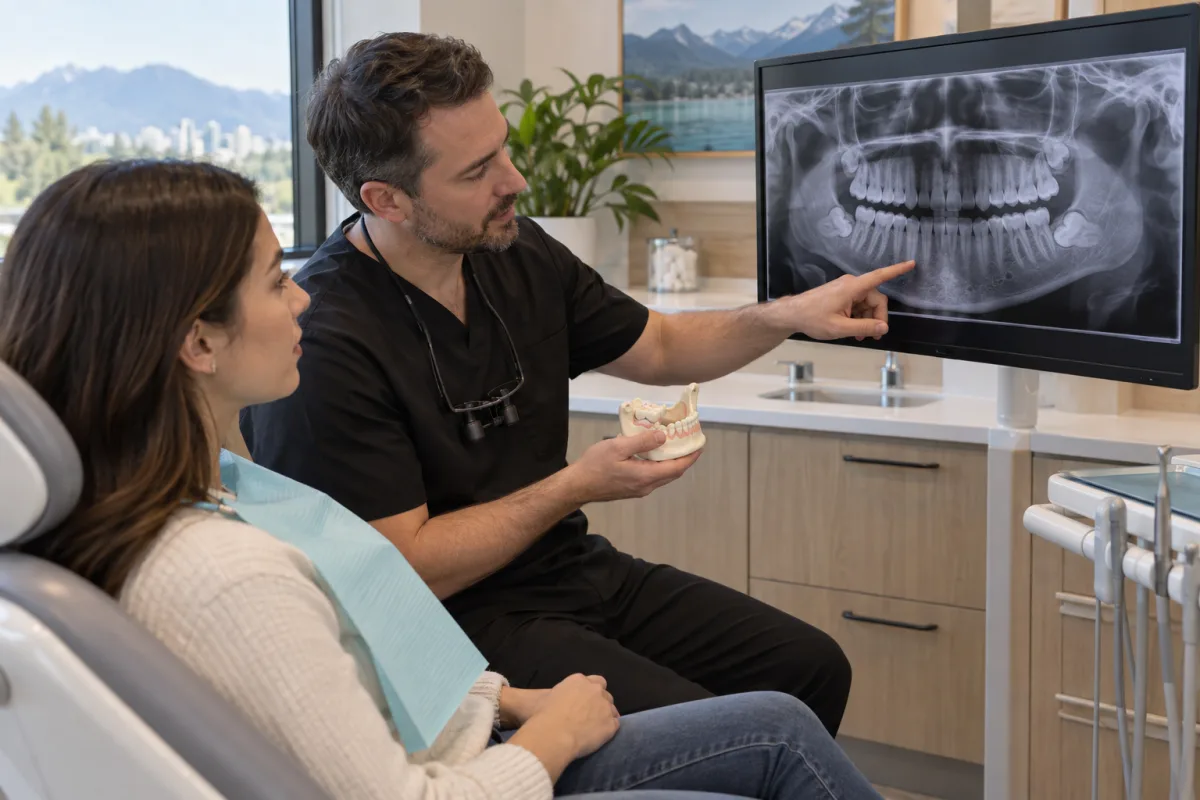
Assessment guides the decision
An impacted tooth is not automatically diseased. Position, symptoms, cleaning access, current damage, future risk, age, health and surgical complexity all belong in the discussion.
Go to an emergency department or call 911 for breathing or swallowing difficulty, rapidly spreading face or neck swelling, uncontrolled bleeding, confusion or severe systemic illness.
Reasons to consider removal
A partly erupted tooth can trap plaque and food beneath a gum flap, leading to recurrent pain, swelling or pericoronitis.
Limited access can allow cavities or periodontal damage in the wisdom tooth or the second molar beside it.
An angled or impacted tooth can contact the neighbouring molar and contribute to root or structural damage.
In uncommon cases, tissue around an unerupted tooth can develop a cyst or another pathologic change.
Symptoms behind the last molar can also come from another tooth, the jaw joint or soft tissues. Diagnosis should precede extraction.
Plan the safest approach
We review symptoms, mouth opening, teeth and gums. X-rays show tooth position, root shape, bone and relationships to nearby teeth, nerves and sinuses.
The dentist explains monitoring, simple extraction, surgical removal or referral, including expected benefits, limitations and material risks.
Local anesthetic is used for pain control. Sedation or general anesthesia may be considered separately based on complexity, health and the care setting.
Written aftercare covers bleeding, clot protection, eating, cleaning, activity, medication and when to contact the office.
Simple or surgical
A fully erupted and accessible wisdom tooth may be removed similarly to another routine extraction. A tooth partly or fully covered by gum or bone may require an incision, controlled bone removal, sectioning of the tooth and stitches.
Lower wisdom-tooth roots may lie close to nerves that supply sensation to the lip, chin and tongue; upper teeth can be near the sinus. Imaging helps estimate these relationships. A complex position or health factor may make specialist care or a modified procedure more appropriate.

Root shape and proximity to the lower-jaw nerves influence risk discussion and surgical planning.
The amount of tooth visible and bone coverage help determine whether removal is routine or surgical.
Medical conditions, medications, anxiety and procedure complexity affect preparation, anesthesia and referral decisions.
Early healing
Some soreness, swelling, bruising and jaw stiffness can occur and should gradually improve. Your procedure-specific written instructions take priority.
Mild early oozing is common. Use the directed firm pressure and contact the office if active bleeding does not settle.
Pain should trend toward improvement. New or increasing throbbing pain with bad taste or breath several days later may be dry socket.
Worsening swelling, fever, pus, bad taste, increasing difficulty opening or feeling unwell requires prompt advice.
Report new or persistent numbness, tingling or altered sensation of the lip, chin or tongue after lower-tooth surgery.
Seek emergency medical care for breathing or swallowing difficulty, rapidly spreading swelling or uncontrolled bleeding.
Protect the extraction site
Avoid activities that can disturb the socket during the early healing period and follow the cleaning schedule provided.
Do not use straws, smoke, vape, spit forcefully, probe the socket or rinse vigorously during the restricted period.
Begin with cool or lukewarm soft foods as directed and avoid hard, crunchy, seedy or very hot items while the site is vulnerable.
Continue oral hygiene away from the site and begin gentle rinsing only when the dental team instructs you to do so.
Take only medications reviewed for you. Do not stop prescribed aspirin, anticoagulants or other medicines without instructions from the appropriate clinician.
Plan with clear information
The fee depends on tooth position, number of teeth, surgical complexity, anesthesia or sedation and whether specialist care is needed.
With insurance
$100–$200+
Simple single-tooth patient portion estimate
Without insurance
$200–$600+
Simple extraction estimate per tooth
These are broad estimates only, not a quote or guarantee of coverage. Impacted or surgical teeth, sedation and specialist care may cost more.
An examination and appropriate X-rays are needed before an individualized estimate can be prepared.
The office can provide a treatment estimate for submission to your insurance provider. Confirm benefit limits and reimbursement directly with your insurer.
Wisdom-tooth assessment
We can examine the area, review the X-ray findings and explain whether routine care, surgical treatment or referral is appropriate.
Wisdom-tooth questions
No. Healthy, fully erupted, well-positioned wisdom teeth that can be cleaned may be monitored. Removal is considered when a tooth causes pain, infection, decay, gum disease, neighbouring-tooth damage, cystic change or another defined concern.
Local anesthetic is used to numb the area. You may feel pressure or movement but should report sharp pain. Soreness, swelling, bruising and stiffness afterward vary with the procedure and usually improve over time.
Follow the instructions for your procedure. Patients commonly begin with cool or lukewarm soft foods after the initial gauze period and avoid straws and hard, crunchy, seedy or very hot items during early healing.
Dry socket occurs when the protective blood clot is lost or does not form properly. Increasing throbbing pain, bad taste or bad breath a few days after extraction needs dental assessment; the socket may require cleaning and a soothing dressing.
It depends on tooth position, number removed, surgical complexity, health and work demands. Some people resume light activity within a few days, while swelling, bruising or stiffness may take up to two weeks to settle.
Referral may be appropriate for deep impaction, complex roots, close proximity to nerves or the sinus, limited access, significant health considerations or a need for a different anesthesia setting.
Recognized year after year
Best Dentists in Norfolk
Proudly recognized among Norfolk’s top-rated dental practices for six consecutive years.

2021 Winner

2022 Winner

2023 Winner

2024 Winner

2025 Winner

2026 Winner
Stories from our patients
Watch a patient’s experience and browse more five-star reviews from people who have visited our Port Dover dental clinic.
Patient video
A patient shares the welcoming atmosphere and positive experience they found at our Port Dover office.
Google reviews
Swipe or use the arrows
Read all reviewsOur community
Your next visit can start today
New patients and CDCP patients are welcome. Tell us how we can help and our Port Dover dental team will follow up with you.
Evening appointments Monday and Tuesday