
Patient video
Welcoming and Wonderful Practice
A patient shares the welcoming atmosphere and positive experience they found at our Port Dover office.
★★★★★
Port Dover Family Dentistry
Not every wisdom tooth needs removal. Port Ryerse patients can have theirs assessed, compare options and plan recovery with our Port Dover dental team.
Let’s get you smiling
Tell us how we can help. Our team will follow up to confirm a time.
Caring for Port Ryerse patients at our Port Dover office
Every dental service for Port RyerseAssess before you remove
Wisdom teeth are the third molars, usually arriving in the late teens or twenties. Some come in fully and cause no trouble. Others are impacted, partially erupted or angled toward neighbouring teeth, which can lead to pain, infection, decay or damage. Deciding whether to remove them depends on their position, symptoms and risk of future problems.
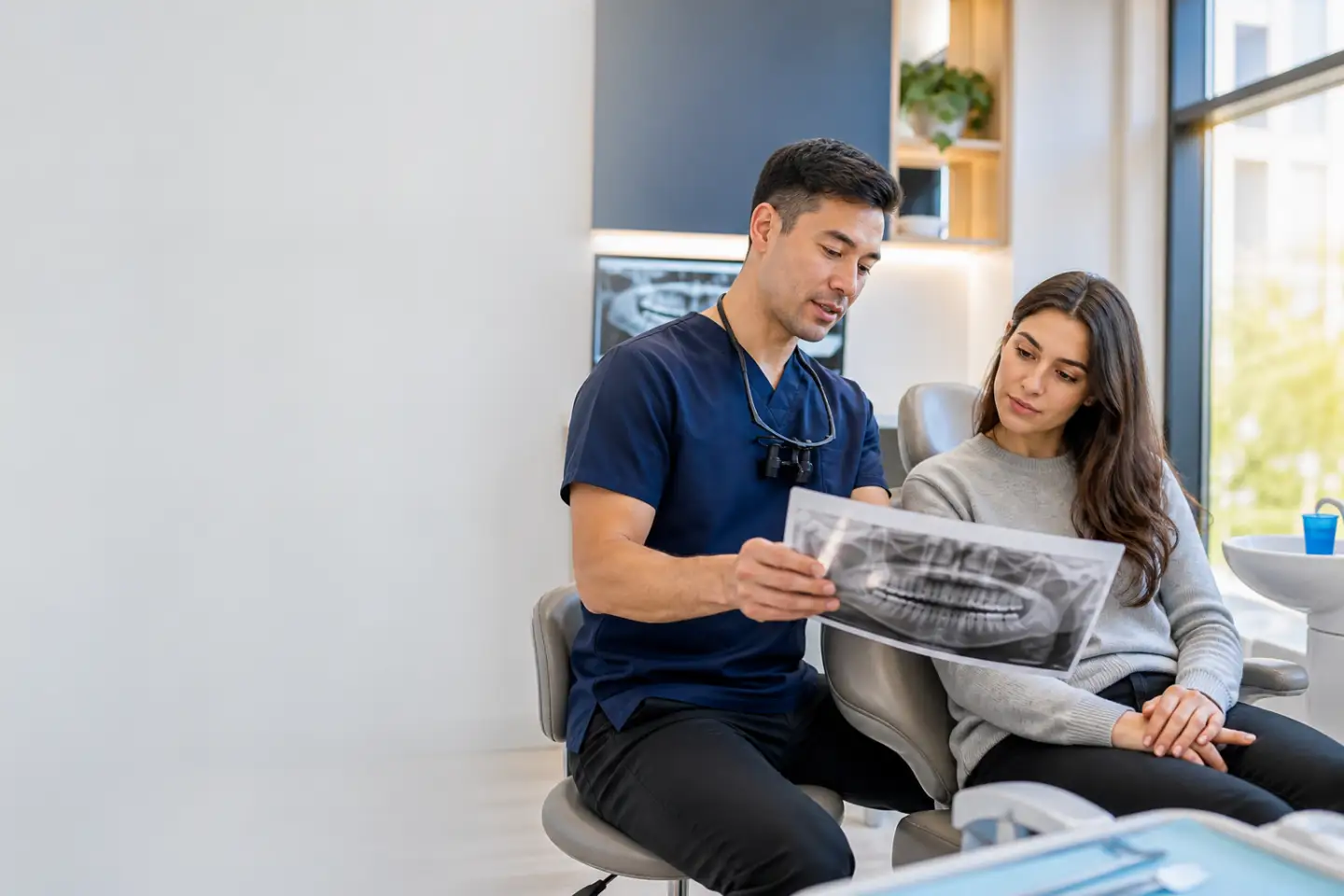
Patients from Port Ryerse, including teens home for the summer, can have wisdom teeth assessed at our Port Dover office. The dentist will review X-rays, discuss whether removal is advised and explain whether it can be done there or would be referred to an oral surgeon.
Should they come out
Repeated infections around a partly erupted tooth, decay that cannot be treated, damage to the neighbouring molar, cysts and crowding linked to orthodontic plans are common reasons for removal. Pain and swelling at the back of the mouth often prompt the assessment.
Wisdom teeth that are fully erupted, healthy, functional and easy to clean may be kept. Some impacted teeth without symptoms or signs of disease may be monitored with periodic X-rays. The dentist will explain the risks and benefits of removal versus monitoring for each tooth.
Assessment
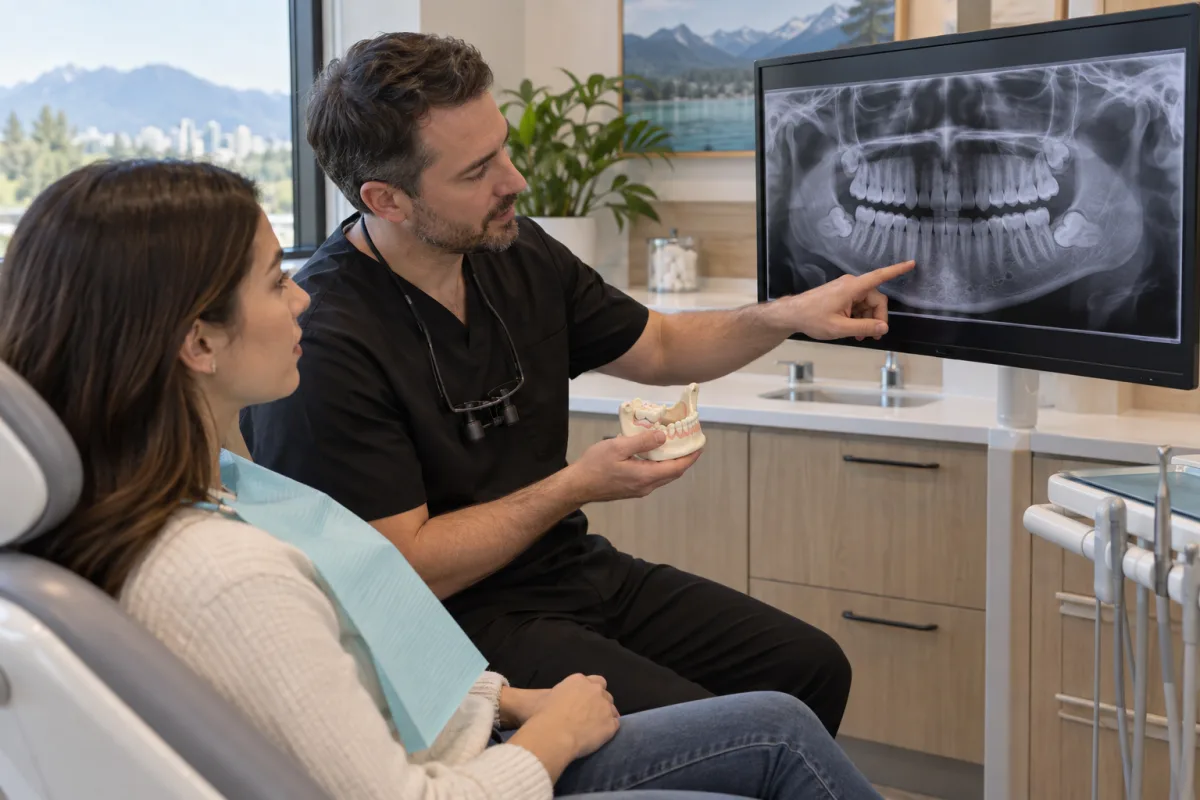
A panoramic X-ray or other imaging shows the position of each wisdom tooth, its roots and its relationship to nerves and sinuses. The dentist also examines the gums and neighbouring teeth for inflammation, decay or damage. These findings guide recommendations.
Share your full medical history, medications and allergies. Some conditions affect healing or anaesthesia. Age matters too, as roots develop further over time and recovery can be quicker in younger patients. The dentist will consider all of this when advising on timing.
The procedure
Local anaesthetic numbs the area. Some patients choose sedation for comfort, depending on availability and suitability. If sedation is used, you will need someone to drive you home. Follow pre-procedure instructions on eating, drinking and medications carefully.
Fully erupted wisdom teeth may be removed much like other teeth. Impacted teeth may require an incision, removal of some bone or sectioning the tooth. Stitches may be placed. Complex cases may be referred to an oral surgeon. Ask what to expect before the day.
Recovery
Swelling and discomfort are common, often peaking in the first couple of days. Use cold compresses, take recommended pain relief and eat soft foods. Avoid straws, smoking, spitting and vigorous rinsing early on to protect the blood clot. Gentle salt-water rinses may be advised after the first day.
Contact the office if pain worsens after the first few days, bleeding does not slow, swelling increases, fever develops or you notice numbness that persists. These may indicate dry socket, infection or other issues needing attention.
Planning your appointment
Call our Port Dover office to book an assessment, and mention any pain or swelling at the back of your mouth. Recent X-rays from another office can be useful to send ahead.
If removal is planned, arrange time to rest and a driver if sedation will be used.
Before you book
Have a question about your situation? Our team can help you plan a visit.
No. Healthy, functional wisdom teeth that are easy to clean may be kept. Removal is considered when they cause problems or have a high risk of future issues.
Many people have wisdom teeth assessed in their late teens or early twenties, when roots are less developed. However, timing depends on individual circumstances.
Many people feel better within a few days to a week, though complete healing takes longer. Surgical removals may need more recovery time. Follow aftercare instructions carefully.
Local anaesthetic is typically used, and sedation may be an option depending on the case. Deeper sedation or general anaesthesia may require referral to an oral surgeon.
Dry socket occurs when the blood clot is lost, exposing bone and causing increasing pain a few days after extraction. Contact the office if this occurs so it can be treated.
When a tooth cannot be saved, removal may be the best choice. Port Ryerse patients can learn about planning, aftercare and replacement options in Port Dover.
When a painful or infected tooth cannot be saved, urgent removal may be advised. Port Ryerse patients can call our Port Dover office to discuss options first.
Recognized year after year
Best Dentists in Norfolk
Proudly recognized among Norfolk’s top-rated dental practices for six consecutive years.

2021 Winner

2022 Winner

2023 Winner

2024 Winner

2025 Winner

2026 Winner
Stories from our patients
Watch a patient’s experience and browse more five-star reviews from people who have visited our Port Dover dental clinic.
Patient video
A patient shares the welcoming atmosphere and positive experience they found at our Port Dover office.
Google reviews
Swipe or use the arrows
Read all reviewsYour next visit can start today
New patients and CDCP patients are welcome. Tell us how we can help and our Port Dover dental team will follow up with you.
Evening appointments Monday and Tuesday