
Patient video
Welcoming and Wonderful Practice
A patient shares the welcoming atmosphere and positive experience they found at our Port Dover office.
★★★★★

Port Dover Family Dentistry
Sharp twinges from cold drinks or brushing can have several causes. Vittoria patients can learn how sensitivity is assessed and which treatments may bring relief.
Let’s get you smiling
Tell us how we can help. Our team will follow up to confirm a time.
Caring for Vittoria patients at our Port Dover office
Browse all dental services for VittoriaEase the twinge
Tooth sensitivity is a short, sharp pain triggered by cold, heat, sweets, acidic foods or even brushing. It often happens when the protective enamel wears down or gums recede, exposing the dentin underneath, which contains tiny channels leading to the nerve. Sensitivity can also signal a cracked tooth, decay or a leaking filling, so it should not be dismissed if it persists.
If you are from Vittoria and dealing with sensitive teeth, the dentist at our Port Dover office can look for the cause. You will hear whether the sensitivity seems to come from exposed roots, enamel wear, decay or a crack, and which treatments, from special toothpaste to restorations, are likely to help in your particular case.
Possible causes
Gum recession exposes root surfaces, which lack the protective enamel covering of the crown. Brushing too hard, grinding and acidic foods or drinks can wear enamel, exposing dentin. Recent whitening or dental work can also cause temporary sensitivity. Identifying these causes helps the dentist recommend the right approach rather than guessing. Note any recent changes.
Sensitivity confined to one tooth, especially when biting or lingering after hot or cold, may point to a crack, decay or a problem with a filling. These need proper treatment rather than simply masking the symptoms. The dentist will examine the tooth carefully and may take X-rays to rule out these possibilities. Do not ignore it.
Assessment
Note which teeth are sensitive, what triggers the twinge and how long it lasts. Mention whether it is new or has been present for a while, and whether anything changed recently, such as a new toothpaste, whitening or dental work. Describe your brushing habits and whether you grind or clench your teeth. Diet details matter too.
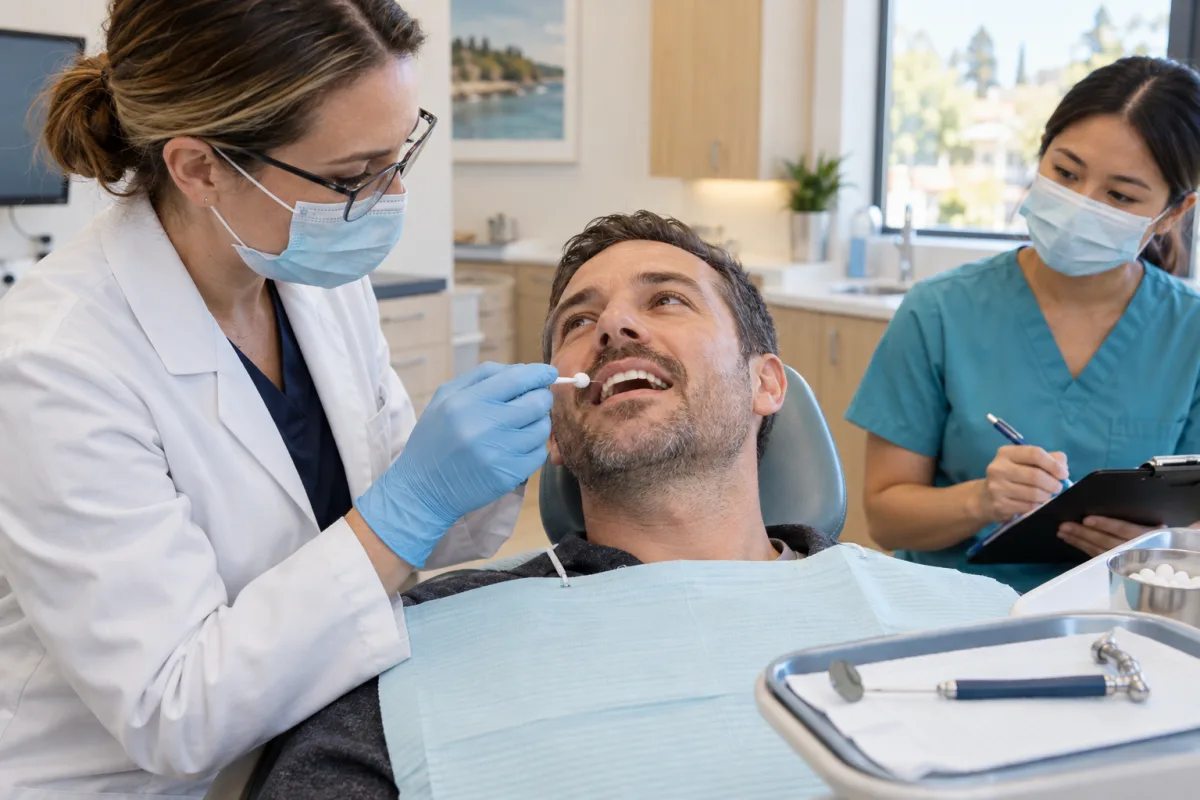
The dentist will examine your teeth and gums, check for recession, wear, cracks and decay, and may test individual teeth with air or cold. X-rays may be suggested if decay or nerve problems are suspected. You will be told what was found and how it explains your symptoms. Ask which teeth are most affected and why.
Treatment
Desensitizing toothpaste used consistently for several weeks can reduce sensitivity for many people. Professional fluoride varnish or desensitizing agents applied in the office may provide additional relief. Switching to a soft-bristled brush and gentler technique can help prevent further wear. The dentist will suggest what suits you. Rubbing a little desensitizing paste onto sensitive spots before bed is one tip some people find helpful.
Exposed roots may be covered with bonding. Cracked teeth, decay or failing fillings need appropriate restorations. Severe gum recession may benefit from referral for gum grafting. If the nerve is inflamed, root canal treatment may be discussed. The dentist will explain why a particular treatment is recommended. Simpler measures are usually tried first, with restorations reserved for teeth that need them.
Prevention
Brush gently with a soft brush and fluoride toothpaste, using small circular motions rather than scrubbing. Avoid brushing immediately after acidic foods or drinks; rinse with water first and wait a little. Limiting frequent acidic snacks and drinks helps protect enamel. Sipping sparkling water, citrus drinks or sports drinks slowly over a long time is harder on teeth than finishing them with a meal. Using a straw can help too.
If you grind or clench, a night guard may protect enamel from wear. Regular checkups allow the dentist to monitor gum recession, enamel wear and any new problems. Report sensitivity that worsens, spreads or becomes constant, as these changes may need further assessment. Keep using desensitizing toothpaste even after symptoms ease, since stopping can let sensitivity return. Small habits add up.
Planning your appointment
Call our Port Dover office and describe which teeth are sensitive and what triggers the discomfort. Mention any recent dental work or whitening so the team can plan the assessment appropriately.
Bring the toothpaste and toothbrush you use, and note whether sensitivity is getting better, worse or staying the same. List any recent dental work.
Before you book
Have a question about your situation? Our team can help you plan a visit.
Sudden sensitivity can result from gum recession, enamel wear, recent whitening, a cracked tooth or decay. If it persists or affects one tooth, have it assessed so the cause can be identified and treated. Note what triggers it.
For many people, desensitizing toothpaste reduces sensitivity when used consistently for several weeks. It works best for exposed dentin and may not resolve sensitivity caused by cracks or decay. If there is no improvement after a few weeks, book an assessment.
Yes. Sensitivity in one tooth, pain when biting or lingering pain after hot or cold may indicate a crack, decay or nerve problem. These need professional assessment. Early attention often means a simpler fix and a better chance of keeping the tooth.
Whitening can cause temporary sensitivity. Using a desensitizing toothpaste before and after may help. If sensitivity is severe, the dentist can adjust the whitening approach. Sensitivity from whitening is usually temporary and fades once treatment ends.
Gentle brushing with a soft brush, limiting acidic foods and drinks, using fluoride toothpaste and wearing a night guard if you grind can help reduce sensitivity over time. Regular checkups help catch gum recession early.
Pain when biting or a twinge on release can point to a cracked tooth. Vittoria patients can learn how cracks are found and repaired at our Port Dover office.
Prevention keeps teeth and gums healthier between visits. Vittoria patients can learn how hygiene visits and daily habits work together, guided from Port Dover.
Recognized year after year
Best Dentists in Norfolk
Proudly recognized among Norfolk’s top-rated dental practices for six consecutive years.

2021 Winner

2022 Winner

2023 Winner

2024 Winner

2025 Winner

2026 Winner
Stories from our patients
Watch a patient’s experience and browse more five-star reviews from people who have visited our Port Dover dental clinic.
Patient video
A patient shares the welcoming atmosphere and positive experience they found at our Port Dover office.
Google reviews
Swipe or use the arrows
Read all reviewsYour next visit can start today
New patients and CDCP patients are welcome. Tell us how we can help and our Port Dover dental team will follow up with you.
Evening appointments Monday and Tuesday