
Patient video
Welcoming and Wonderful Practice
A patient shares the welcoming atmosphere and positive experience they found at our Port Dover office.
★★★★★
Port Dover Family Dentistry
Sharp twinges from cold, heat or sweets can have several causes. Learn how sensitivity is assessed in Port Dover and which treatments may bring relief.
Let’s get you smiling
Tell us how we can help. Our team will follow up to confirm a time.
Caring for Townsend patients at our Port Dover office
Every dental service for TownsendRelief from sharp twinges
Tooth sensitivity is a sharp, short pain triggered by cold drinks, hot foods, sweets, acidic foods or even breathing in cold winter air. It often happens when the protective enamel wears down or gums recede, exposing the dentin underneath. But sensitivity can also signal a cavity, a cracked tooth or a worn filling, so it is worth having checked.
If sensitivity is bothering you in Townsend, our Port Dover office can help identify the cause. The dentist will examine your teeth and gums, ask when the sensitivity happens and recommend treatment that targets the underlying problem rather than just masking the discomfort for a while.
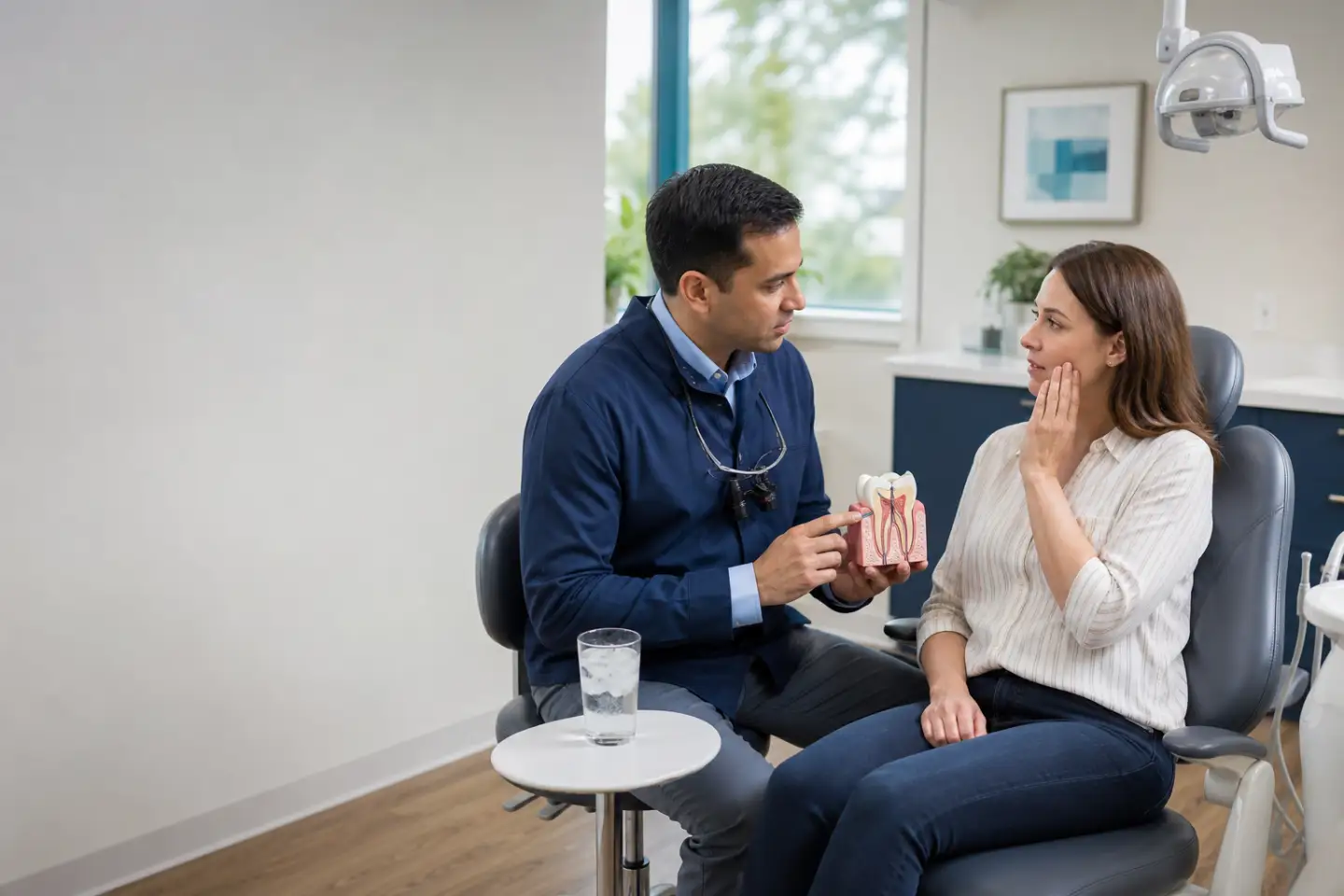
Identify triggers
Cold water, ice cream, hot coffee, sweet or sour foods, brushing and cold air on a winter walk are among the most common triggers. Sensitivity may affect a single tooth or a whole side of the mouth. Pay attention to how long the twinge lasts, because a brief zing that fades in seconds is quite different from pain that lingers well after the trigger has gone.
Sensitivity across many teeth often relates to enamel wear or receding gums. Sensitivity confined to one tooth is more likely to point to a cavity, a crack or a problem with a filling. Pain that lingers, throbs or wakes you at night may suggest the nerve is inflamed. Sharing these details helps the dentist narrow down the cause far more quickly.
Find the cause
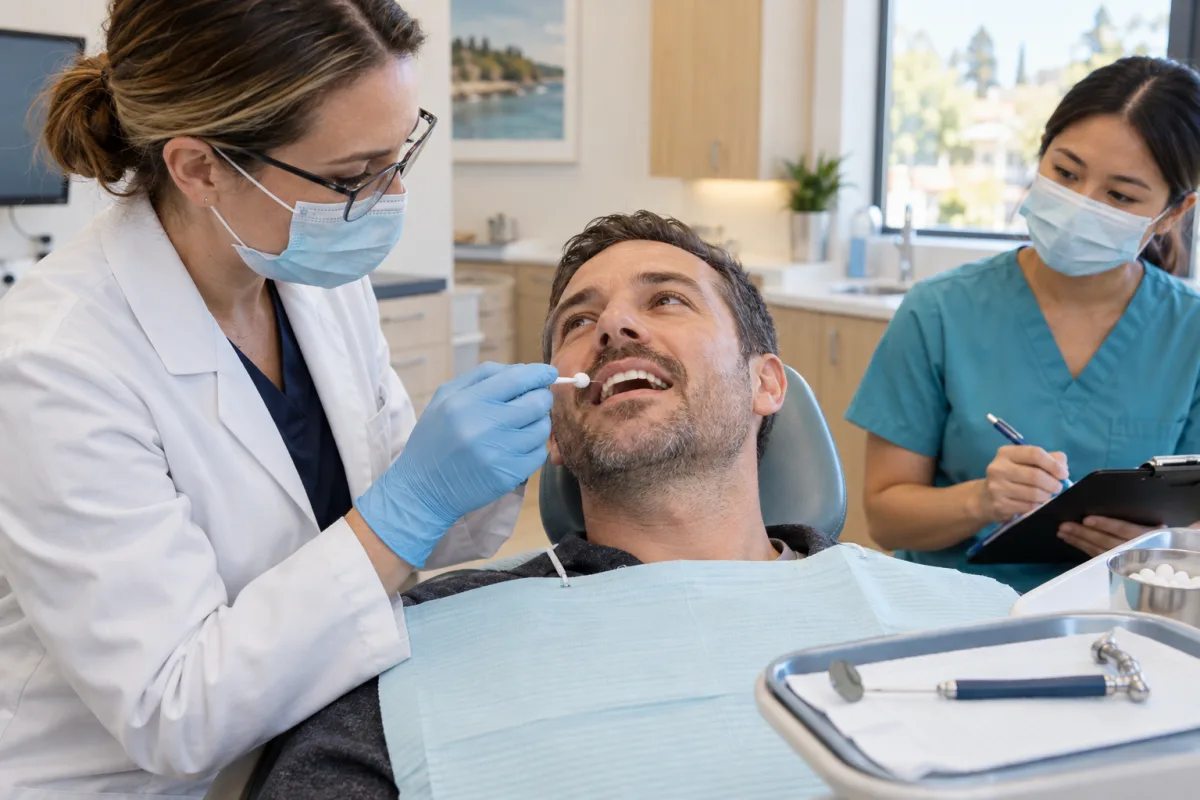
The dentist will check for receding gums, worn enamel near the gumline, cavities, cracks and fillings that have started to leak. A short puff of air, a cold test or gentle tapping can show which teeth respond and how strongly. X-rays help reveal decay between teeth or under fillings, along with other problems that cannot be seen on the surface.
Brushing too hard, using a hard-bristled brush, grinding at night, frequent acidic drinks such as pop or citrus, recent whitening and acid reflux can all contribute to sensitivity. The dentist will ask about these habits and conditions, so the plan can tackle the cause as well as the symptom and keep the problem from simply returning a few months later.
Treatment options
A desensitizing toothpaste used every day can gradually reduce sensitivity over a few weeks, and it works best when left on the teeth rather than rinsed straight off. The dentist may also paint fluoride varnish or a desensitizing agent onto sensitive spots, or cover exposed root surfaces with bonding. These approaches suit sensitivity that comes from exposed dentin.
When a cavity, crack or failing filling is behind the problem, repairing the tooth usually resolves the sensitivity. For significant gum recession, gum grafting by a specialist may sometimes be suggested. If the nerve is inflamed and does not settle, root canal treatment may be needed. The dentist will explain which option fits your situation and why.
Preventing sensitivity
Switch to a soft-bristled toothbrush and use gentle, small movements along the gumline instead of scrubbing back and forth. An electric toothbrush with a pressure sensor can help if you tend to press hard. Use desensitizing toothpaste as recommended, spit rather than rinse afterwards, and give it a few weeks of consistent use before judging whether it helps.
Cut back on acidic foods and drinks, and sip water after having them. Wait a while before brushing after something acidic, since enamel is temporarily softer. If you grind your teeth at night, ask about a night guard. Contact the office if sensitivity becomes stronger, starts lasting longer or turns into a constant ache, as that may signal something more.
Planning your appointment
Call our Port Dover office at 519-583-2929 and describe your sensitivity, including which teeth are affected and what sets it off. The team can arrange an exam to find the cause and talk through relief.
Note how long the sensitivity has been present, any recent whitening or dental work, and the products you have already tried at home.
Before you book
Have a question about your situation? Our team can help you plan a visit.
Sudden sensitivity may be caused by a cavity, a cracked tooth, recent dental work, whitening or gums that have pulled back. If it is new or limited to one tooth, have it checked to rule out a problem that needs treatment rather than just a different toothpaste.
For many people it does, especially when sensitivity comes from exposed dentin. It usually takes a few weeks of daily use to make a difference. If it does not help, the dentist can look for other causes, such as decay or a cracked tooth.
Sometimes. Sensitivity can point to a cavity, a crack or an inflamed nerve. Pain that lingers, throbs or is limited to one tooth should be assessed by the dentist promptly, rather than managed at home for weeks.
Yes. Whitening often causes temporary sensitivity, which usually fades once treatment stops. The dentist can suggest ways to reduce it, such as using desensitizing toothpaste beforehand or changing how long and how often the whitening gel is worn.
No. Brushing too hard can wear enamel and push the gums back, which makes sensitivity worse. Use a soft brush and a gentle technique instead. The hygienist can show you how to clean thoroughly without causing damage to the teeth or gums.
Pain on biting or a tooth that feels split may mean a crack. Townsend residents can have cracked teeth assessed in Port Dover and compare repair options.
Prevention keeps teeth and gums healthier for longer. See how hygiene visits, home routines and risk-based advice fit together for Townsend patients.
Recognized year after year
Best Dentists in Norfolk
Proudly recognized among Norfolk’s top-rated dental practices for six consecutive years.

2021 Winner

2022 Winner

2023 Winner

2024 Winner

2025 Winner

2026 Winner
Stories from our patients
Watch a patient’s experience and browse more five-star reviews from people who have visited our Port Dover dental clinic.
Patient video
A patient shares the welcoming atmosphere and positive experience they found at our Port Dover office.
Google reviews
Swipe or use the arrows
Read all reviewsYour next visit can start today
New patients and CDCP patients are welcome. Tell us how we can help and our Port Dover dental team will follow up with you.
Evening appointments Monday and Tuesday