
Patient video
Welcoming and Wonderful Practice
A patient shares the welcoming atmosphere and positive experience they found at our Port Dover office.
★★★★★

Port Dover Family Dentistry
A jolt from cold lake water, ice cream or winter air can signal sensitive teeth. Long Point patients can find the cause and relief options in Port Dover.
Let’s get you smiling
Tell us how we can help. Our team will follow up to confirm a time.
Caring for Long Point residents, cottagers and visitors at our Port Dover office
Browse every dental service for Long PointFind the trigger, then the fix
Tooth sensitivity is a short, sharp twinge triggered by cold, heat, sweets, acidic foods or even air. It usually happens when the protective enamel wears thin or gums recede, exposing the dentin beneath, which contains tiny channels leading to the nerve. Sensitivity can also signal a crack, a leaking filling or decay, so it is worth having persistent symptoms checked rather than simply putting up with them.
Long Point patients bothered by sensitivity can book an assessment at our Port Dover office. The dentist will look for the cause and suggest treatments that match it.
Common causes
Brushing too hard, grinding, acidic foods and drinks, and reflux can wear enamel. Gum recession from brushing habits or gum disease exposes root surfaces, which lack enamel protection. Whitening products can also cause temporary sensitivity.
Cavities, cracked teeth, worn or leaking fillings and recent dental work can cause sensitivity. If one tooth is very sensitive or pain lingers after the trigger is gone, it may suggest a problem that needs treatment beyond desensitizing toothpaste.
Assessment
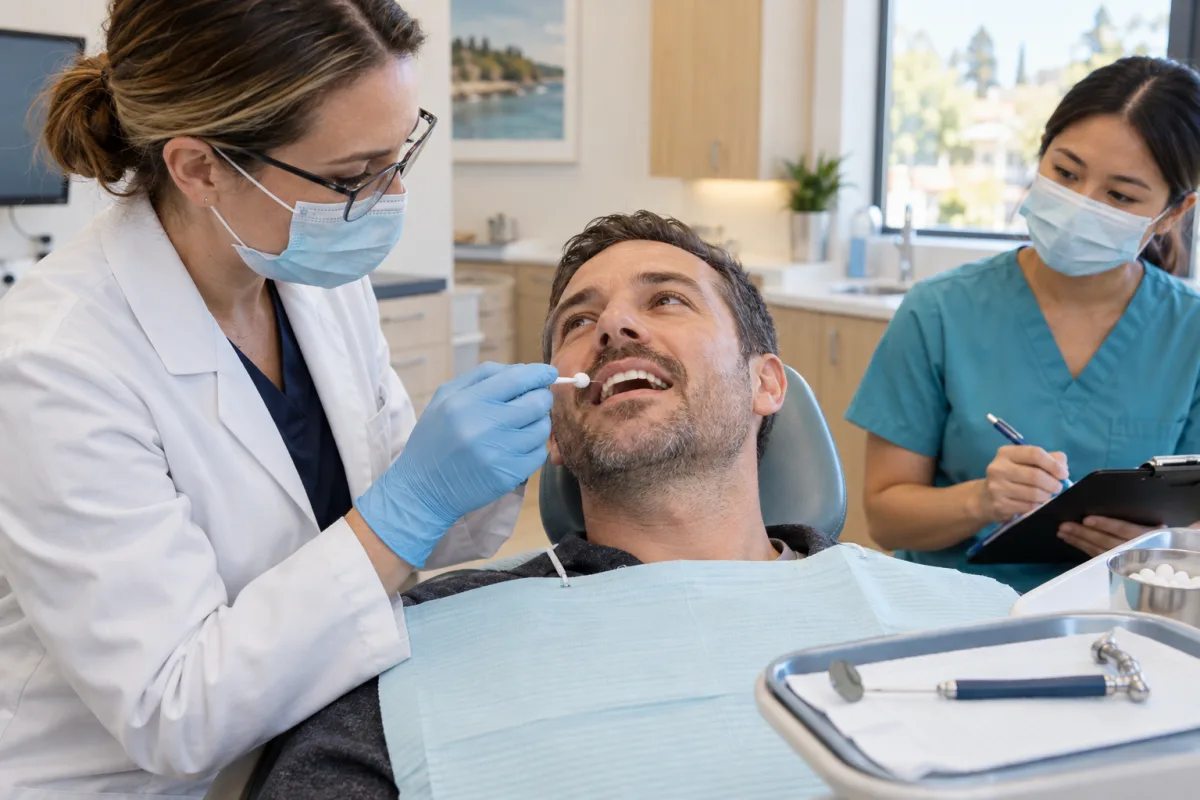
The dentist asks which teeth are sensitive, what triggers them and how long the pain lasts. They examine teeth for wear, recession, cracks and decay, and may test teeth with cold or air. X-rays can reveal hidden decay or problems around fillings.
If sensitivity is generalized, it may relate to enamel wear or recession. If it is limited to one tooth or lingers, a crack, cavity or nerve problem may be involved. The dentist explains findings and recommends treatment based on what is found.
Treatment options
Desensitizing toothpaste used consistently for several weeks can reduce sensitivity for many people. Switching to a soft toothbrush and gentle technique helps protect enamel and gums. Limiting acidic drinks and rinsing with water afterward also helps.
Fluoride varnish, bonding agents or sealants can be applied to sensitive areas. If recession is significant, gum grafting may be discussed. Cracks, cavities or leaking fillings are treated directly. A night guard may help if grinding is wearing enamel.
Prevention
Use a soft brush with gentle pressure, and avoid brushing immediately after acidic foods or drinks. Drink water regularly, especially during long summer days outdoors. If you grind, ask about a night guard. Use fluoride toothpaste to strengthen enamel.
Report changes in sensitivity, especially if one tooth becomes more sensitive or pain lingers. Regular checkups allow the dentist to monitor recession and wear. Early attention usually means simpler treatment.
Planning your appointment
Call our Port Dover office to book an assessment if sensitivity persists or affects eating and drinking. Mention which teeth are sensitive and what triggers them.
Note how long the twinge lasts after a trigger, and bring a list of any whitening or desensitizing products you have used.
Before you book
Have a question about your situation? Our team can help you plan a visit.
Sudden sensitivity can result from enamel wear, gum recession, a crack, a cavity or recent dental work. An assessment helps identify the cause and the right treatment.
For many people, yes, when used consistently for several weeks. It works best for general sensitivity from exposed dentin. Persistent or one-tooth sensitivity should be checked.
Yes, whitening can cause temporary sensitivity. It usually fades after treatment. The dentist can suggest ways to reduce it, such as sensitivity toothpaste or shorter sessions.
Sometimes. Sensitivity to sweets or lingering pain may suggest decay. The dentist will examine and may take X-rays to determine whether a cavity is present.
Receded gums do not grow back on their own. Treatment can reduce sensitivity and prevent further recession. Gum grafting may be considered in some cases.
A sharp twinge when biting or releasing can point to a crack. Long Point patients can have a cracked tooth examined and repairs explained in Port Dover.
Prevention keeps more teeth healthy for longer. Long Point patients can work with our Port Dover hygiene team on cleanings, home routines and personal risk.
Recognized year after year
Best Dentists in Norfolk
Proudly recognized among Norfolk’s top-rated dental practices for six consecutive years.

2021 Winner

2022 Winner

2023 Winner

2024 Winner

2025 Winner

2026 Winner
Stories from our patients
Watch a patient’s experience and browse more five-star reviews from people who have visited our Port Dover dental clinic.
Patient video
A patient shares the welcoming atmosphere and positive experience they found at our Port Dover office.
Google reviews
Swipe or use the arrows
Read all reviewsYour next visit can start today
New patients and CDCP patients are welcome. Tell us how we can help and our Port Dover dental team will follow up with you.
Evening appointments Monday and Tuesday