Composite Filling
For a small to moderate repair, colour-matched resin replaces a decayed or damaged area and bonds directly to the prepared tooth.

Port Dover Family Dentistry
Repair damaged or decayed teeth with natural-looking tooth-coloured restorations in Port Dover, carefully matched to your smile and bite.
Let’s get you smiling
Tell us how we can help. Our team will follow up to confirm a time.
Tooth-coloured restorations in Port Dover
Tooth-coloured restorations rebuild areas affected by decay, chips, wear or an old restoration while closely matching surrounding enamel. Depending on the size and location of the problem, treatment may involve composite resin, bonding, an inlay, an onlay or a ceramic crown.
The right restoration is selected for more than appearance. We consider how much healthy tooth remains, the pressure placed on the tooth, the location in your bite and the material needed for dependable function.
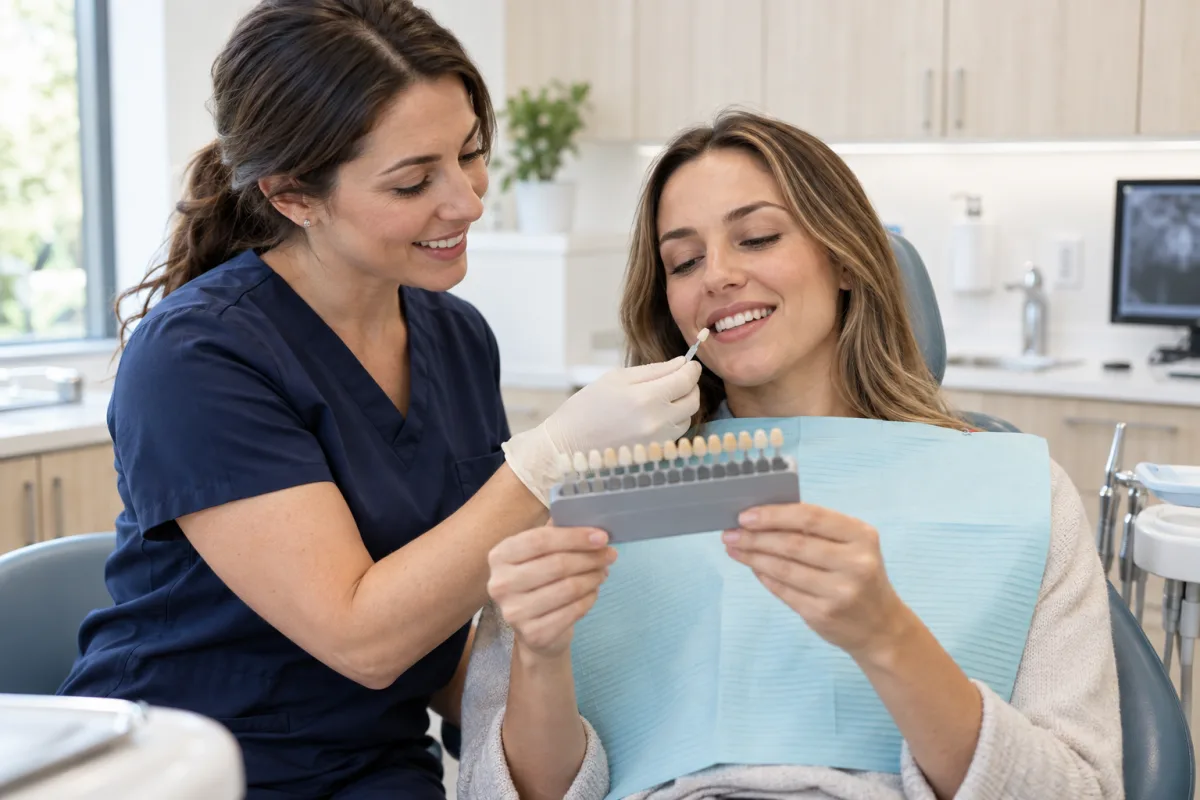
Colour meets function
A natural-looking restoration should fit your tooth, complement its shade and withstand the everyday work of biting and chewing.
Personalized restorative care
Your examination shows how much support the tooth needs. We recommend the most conservative option that can predictably restore its health, shape and function.
For a small to moderate repair, colour-matched resin replaces a decayed or damaged area and bonds directly to the prepared tooth.
Composite resin can rebuild a small chip, smooth an irregular edge or close a limited space when a minor shape correction is needed.
A custom restoration may rebuild a larger area while preserving more natural tooth structure than a full crown.
A crown provides greater coverage for a weakened or extensively restored tooth, protecting it and re-establishing its shape.
Careful from shade to finish
The exact appointments depend on whether the restoration is shaped directly in the mouth or custom-made outside it.
We examine the tooth and may take an X-ray to understand the extent of decay, cracks or an old restoration. The shade is selected before treatment when appropriate.
The damaged area is removed conservatively. A direct restoration may be placed in one visit, while a custom-made restoration can require preparation and a separate placement appointment.
We shape and polish the restoration, then check how your teeth meet. Good home care and routine examinations help us monitor its edges, surface and function.
The tooth determines the design
A small filling and a full crown do very different jobs. The amount and quality of remaining enamel and dentin, the position of any crack or decay, and the force carried by the tooth guide how much coverage is needed.
Direct composite is shaped in the tooth during the visit. Ceramic inlays, onlays and crowns are custom-made from detailed records and may offer broader support when the repair is larger.
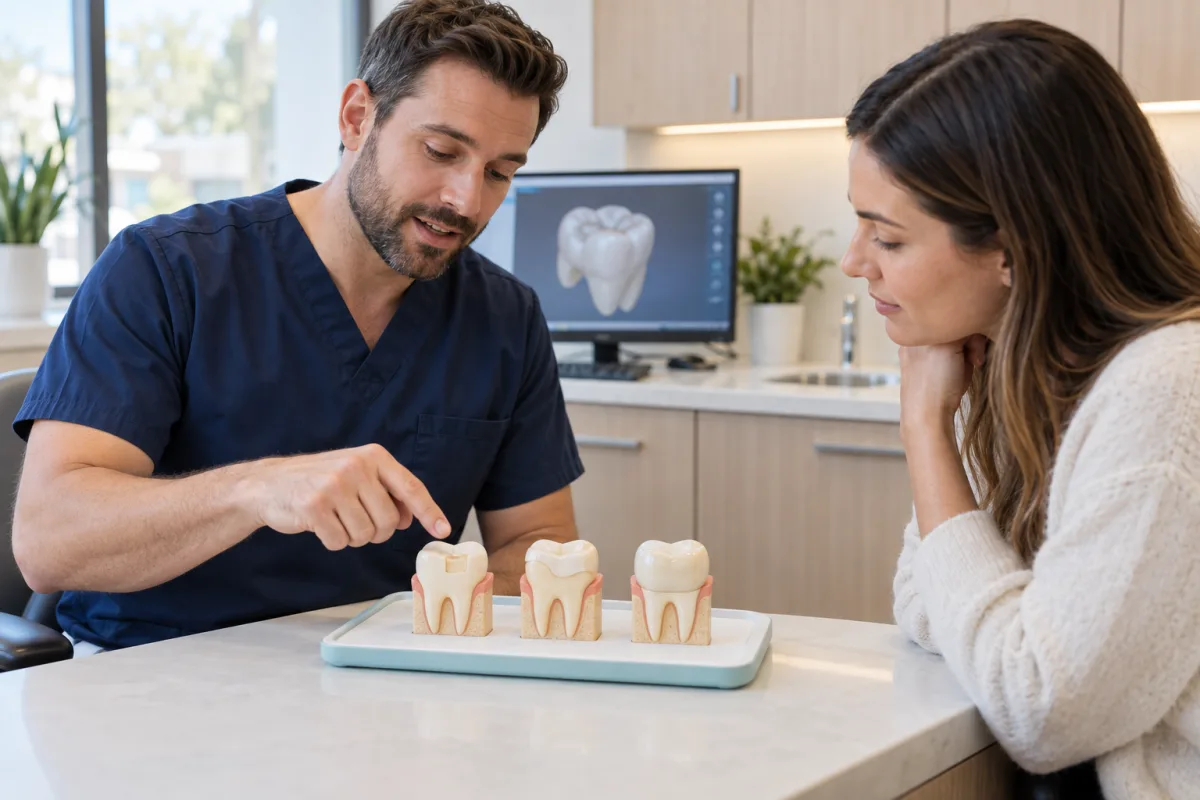
The preparation should remove damage while retaining sound tooth structure whenever possible.
Composite and ceramic differ in strength, repairability, polish, staining and how they are made.
Contacts with neighbouring and opposing teeth are refined so the restoration works comfortably.
Reasons a tooth may need repair
Tooth-coloured materials are used for both cosmetic and restorative care. The underlying problem determines what treatment can safely accomplish.
A cavity must be cleaned and restored to protect the remaining tooth, even when the repair is designed to blend naturally.
Bonding or another restoration may rebuild missing structure when simple reshaping would remove too much enamel.
A visible filling or crown is replaced when health, function or prognosis justifies treatment—not for colour alone unless you choose cosmetic care.
An inlay, onlay or crown may provide broader support when too little sound tooth remains for a predictable filling.
Whitening changes natural tooth colour but does not lighten composite or ceramic. If whitening is part of your plan, completing it before final shade matching may create a more consistent result.
Protecting your restoration
No restoration lasts forever. Lifespan depends on size, bite pressure, grinding, diet, oral hygiene and regular professional care.
Brush twice daily, floss around the restored tooth and attend routine hygiene visits to protect the tooth and gums.
Tell us if the restoration feels high, rough or loose, or if you notice pain when biting. A night guard may be recommended for grinding.
Composite can develop surface stain or lose polish over time, especially with tobacco, coffee, tea or red wine. Ceramic resists staining better but still needs cleaning.
Cost and longevity
Cost depends on the tooth involved, the size and depth of the repair, the material selected and whether a direct or laboratory-made restoration is needed.
Dental insurance may cover a portion when treatment is required because of decay, damage or function, but coverage levels and material limitations vary.
The recommended design is based on the complete clinical picture.
An examination can identify the cause and show whether a filling, bonding, inlay, onlay or crown is appropriate. Your insurer determines final coverage.
Repair a tooth naturally
We can assess the tooth, explain the suitable materials and recommend the most conservative predictable option.
Restoration questions
No. They are used to restore teeth affected by decay, damage or wear. Their colour is an aesthetic benefit, but the primary goal may be to protect the tooth and restore function.
A filling is shaped directly in the tooth. An inlay is custom-made to fit within the chewing surface, while an onlay also covers one or more weakened cusps. The amount of remaining tooth structure helps determine the choice.
We select a shade and shape intended to blend with neighbouring teeth. Natural enamel varies in colour and translucency, so exact matching can be more complex in highly visible areas.
Composite resin can develop surface staining or lose polish over time, especially with tobacco, coffee, tea or red wine. Ceramic materials resist staining better but still require regular cleaning.
Whitening changes natural tooth colour but does not lighten composite or ceramic restorations. If whitening is part of your plan, completing it before final shade matching may produce a more consistent result.
Recognized year after year
Best Dentists in Norfolk
Proudly recognized among Norfolk’s top-rated dental practices for six consecutive years.

2021 Winner

2022 Winner

2023 Winner

2024 Winner

2025 Winner

2026 Winner
Stories from our patients
Watch a patient’s experience and browse more five-star reviews from people who have visited our Port Dover dental clinic.
Patient video
A patient shares the welcoming atmosphere and positive experience they found at our Port Dover office.
Google reviews
Swipe or use the arrows
Read all reviewsOur community
Your next visit can start today
New patients and CDCP patients are welcome. Tell us how we can help and our Port Dover dental team will follow up with you.
Evening appointments Monday and Tuesday