
Patient video
Welcoming and Wonderful Practice
A patient shares the welcoming atmosphere and positive experience they found at our Port Dover office.
★★★★★
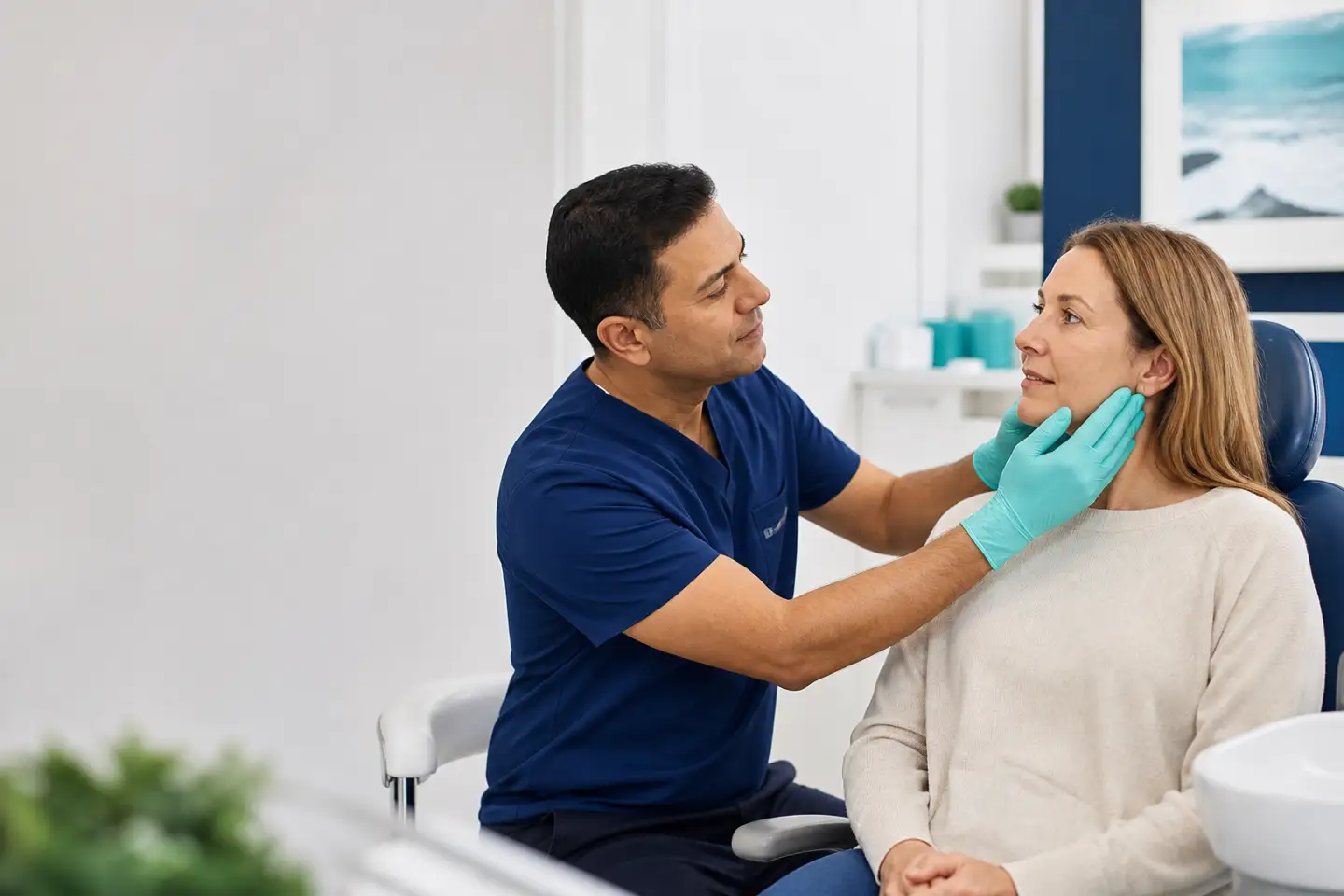
Port Dover Family Dentistry
Jaw pain, clicking or limited opening may involve the TMJ. Vittoria patients can learn how jaw problems are assessed and which conservative options may help.
Let’s get you smiling
Tell us how we can help. Our team will follow up to confirm a time.
Caring for Vittoria patients at our Port Dover office
Browse all dental services for VittoriaRelief for a sore jaw
The temporomandibular joints connect your lower jaw to your skull, just in front of the ears. Problems with these joints or the surrounding muscles can cause jaw pain, clicking or popping, headaches, ear discomfort and difficulty opening or closing the mouth. Grinding, clenching, injury, arthritis and stress are among the many possible contributors to these symptoms.
If you live in Vittoria and have ongoing jaw discomfort, the dentist at our Port Dover office can examine your jaw, bite and teeth to look for likely contributors. You will hear what the findings suggest and which conservative options might help, along with when referral to a physician, physiotherapist or other specialist may be worthwhile.
Know the symptoms
Pain in the jaw, face, temples or around the ears is common, often worse after chewing or in the morning. Clicking, popping or grating sounds when opening may occur, though sounds without pain are not always a concern. Some people notice limited opening, a jaw that catches or locks, or a change in how their teeth fit together. Keep a note of patterns to share.
A jaw that suddenly locks open or closed, severe pain after an injury, swelling, fever or numbness should be assessed promptly. Facial pain can sometimes relate to other conditions, so new or severe symptoms may need medical evaluation. Call the office to discuss your symptoms, or seek emergency care if the situation seems serious. Do not force a locked jaw.
Assessment
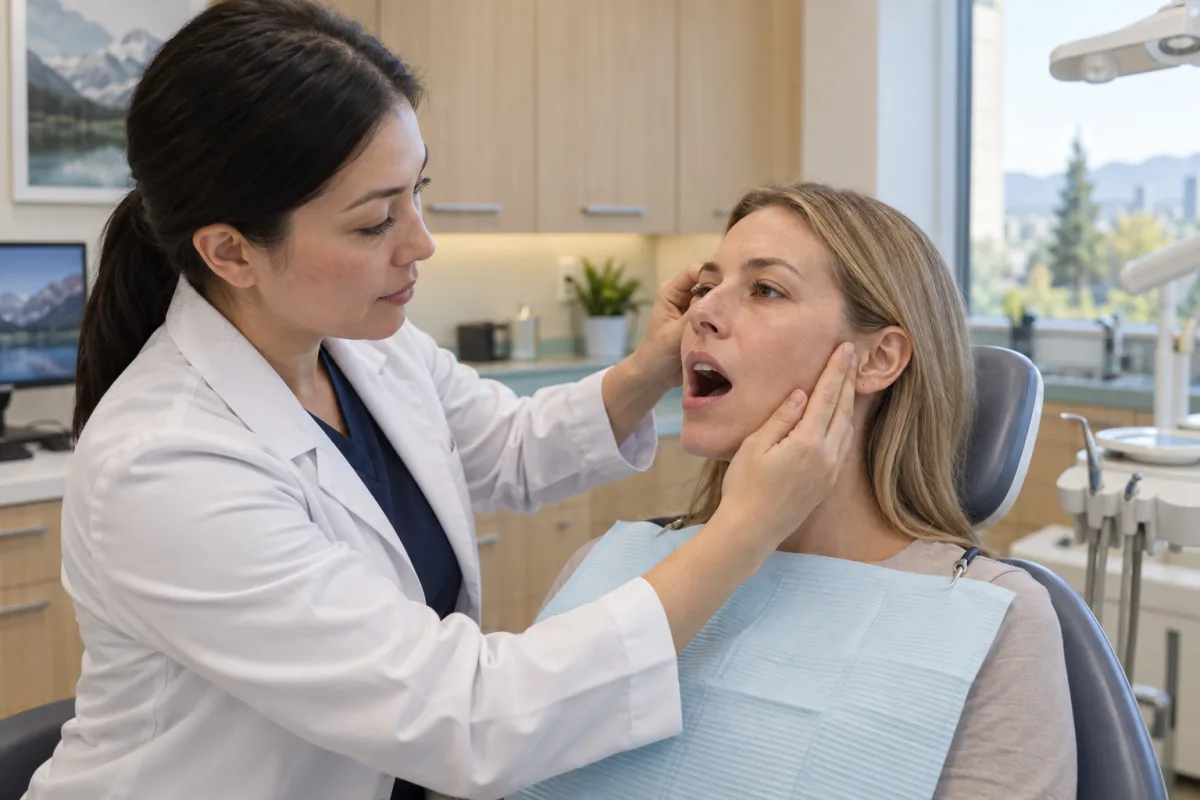
The dentist will ask about your symptoms, when they started and what makes them better or worse. They will feel the jaw muscles and joints, listen for sounds, measure how wide you can open and observe jaw movement. Your teeth and bite are checked for signs of grinding or uneven contact that might contribute to strain.
Grinding, clenching, stress, poor sleep, posture, past injury and arthritis can all play a role. X-rays or other imaging may be suggested in some cases. Understanding the likely contributors helps guide treatment. Sometimes several factors combine, and addressing more than one gives better results than focusing on a single cause. Ask how each factor might be tackled.
Treatment options
Eating softer foods, avoiding gum and wide yawning, applying warm or cold compresses and gentle jaw exercises may help. Becoming aware of daytime clenching and relaxing the jaw, with lips together and teeth apart, can reduce strain. Stress management and good sleep habits may also make a difference. Ask the dentist which measures suit your situation.
A custom oral appliance worn at night may be recommended to reduce strain from grinding or clenching. Physiotherapy, medication prescribed by a physician or referral to a specialist may be suggested for persistent or complex cases. The dentist will explain the reasoning behind each recommendation and what improvement to expect. Progress is often gradual over weeks.
Ongoing management
Keep a record of your symptoms and what seems to trigger or relieve them. Follow-up visits allow the dentist to assess progress and adjust the plan. If an appliance was provided, bring it to appointments so its fit can be checked. Report any worsening of symptoms, new locking or changes in your bite. Notes help.
Stress, poor sleep and clenching during concentration often trigger flare-ups. Continuing self-care strategies, even when symptoms improve, can help prevent recurrence. If you notice symptoms returning, return to soft foods and gentle exercises, and contact the office if they do not settle within a reasonable time. Managing jaw symptoms is often a long-term partnership between you and your care providers.
Planning your appointment
Call our Port Dover office and describe your jaw symptoms, including pain, clicking, locking or headaches. Mention how long they have lasted so the team can arrange an appropriate assessment appointment.
Bring notes on when symptoms occur, any night guard you use and details of previous treatment, injuries or imaging related to your jaw.
Before you book
Have a question about your situation? Our team can help you plan a visit.
Clicking without pain or limited movement is common and not always a concern. Clicking with pain, locking or difficulty opening should be assessed. The dentist can examine the jaw and explain whether treatment or monitoring is appropriate for your situation.
For some people, especially those who grind or clench, a custom appliance can reduce strain on the jaw. It is not a cure for every TMJ problem. The dentist will explain whether an appliance suits your symptoms and what results to expect.
Many TMJ symptoms improve with time and conservative care. Some people have recurring flare-ups. Ongoing self-care and attention to triggers can help manage symptoms. Persistent or severe problems should be assessed so other causes can be ruled out.
Surgery is rarely needed. Most TMJ problems respond to conservative approaches such as self-care, appliances and physiotherapy. If symptoms are severe or do not improve, referral to a specialist may be discussed to explore further options.
Stress can lead to clenching and muscle tension, which may contribute to jaw pain. Managing stress, improving sleep and relaxing the jaw during the day may help. The dentist can suggest practical strategies to reduce the strain on your jaw.
Waking with a sore jaw or worn teeth? Vittoria patients can learn how grinding and clenching are assessed and managed at our Port Dover dental practice.
A custom night guard is shaped to your teeth to cushion clenching and grinding. Vittoria patients can learn about fitting, comfort and care in Port Dover.
Recognized year after year
Best Dentists in Norfolk
Proudly recognized among Norfolk’s top-rated dental practices for six consecutive years.

2021 Winner

2022 Winner

2023 Winner

2024 Winner

2025 Winner

2026 Winner
Stories from our patients
Watch a patient’s experience and browse more five-star reviews from people who have visited our Port Dover dental clinic.
Patient video
A patient shares the welcoming atmosphere and positive experience they found at our Port Dover office.
Google reviews
Swipe or use the arrows
Read all reviewsYour next visit can start today
New patients and CDCP patients are welcome. Tell us how we can help and our Port Dover dental team will follow up with you.
Evening appointments Monday and Tuesday