
Patient video
Welcoming and Wonderful Practice
A patient shares the welcoming atmosphere and positive experience they found at our Port Dover office.
★★★★★
Port Dover Family Dentistry
Jaw pain, clicking or trouble opening wide can stem from the jaw joints or muscles. Normandale residents can learn how our Port Dover team assesses TMJ concerns.
Let’s get you smiling
Tell us how we can help. Our team will follow up to confirm a time.
Caring for Normandale residents and seasonal visitors at our Port Dover office
See every dental service for NormandaleJaw joints and muscles
The temporomandibular joints connect your lower jaw to your skull and allow you to talk, chew and yawn. Problems with these joints or the surrounding muscles can cause pain, clicking, popping, locking, headaches and earaches. Clenching, grinding, stress, injury, arthritis and bite issues may all play a role. Often several factors contribute together.
If you are in Normandale and dealing with jaw pain or restricted movement, our Port Dover dentist can examine your joints, muscles and bite. We will discuss possible contributors and conservative options, and suggest referral when another professional could help.
Symptoms
Aching in the jaw, face, temples or around the ears is common. Pain may worsen with chewing or in the morning after clenching overnight. Clicking or popping sounds when opening or closing are frequent, though sounds alone without pain are not always a concern.
Some people have difficulty opening their mouth fully, feel the jaw catch or lock or notice the bite feels different. Headaches, neck tension and ear fullness can accompany jaw problems. Note when symptoms occur and what makes them better or worse to share at your visit.
Assessment
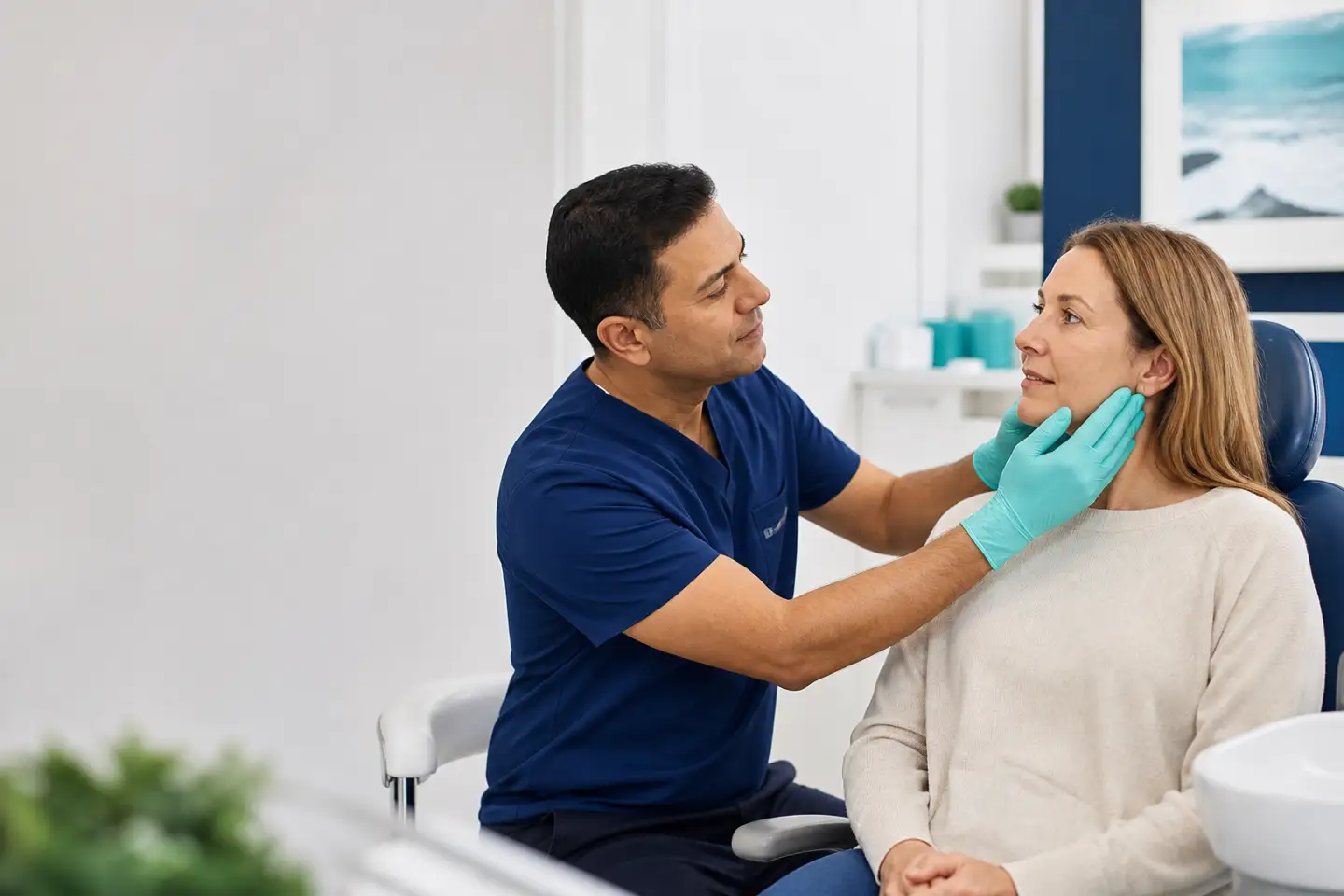
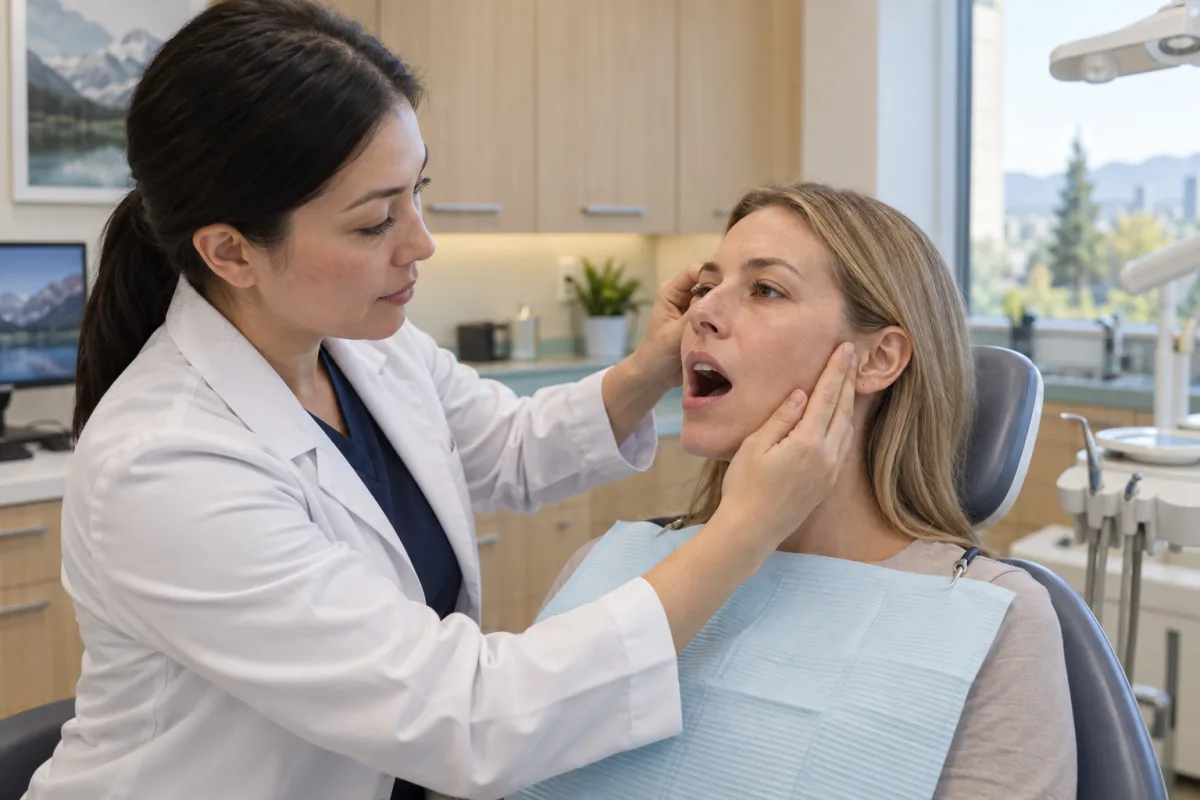
The dentist gently feels the jaw joints and chewing muscles for tenderness, listens for sounds and measures how far you can open. Your bite and signs of grinding are examined. X-rays or other imaging may be recommended to look at the joints if needed.
Jaw pain can sometimes come from dental problems, sinus issues, ear conditions or nerve-related causes. The dentist considers these possibilities and may suggest seeing your physician or another specialist. Understanding the source helps guide appropriate treatment.
Treatment options
Eating softer foods, avoiding gum chewing, applying warm or cold compresses, gentle jaw exercises and stress management often help. Being aware of daytime clenching and keeping teeth apart when relaxed can reduce strain. Over-the-counter pain relief may ease symptoms when used as directed.
A custom night guard or stabilization splint may be recommended to reduce strain from grinding. Physiotherapy can help some people with jaw function and posture. Persistent or severe problems may be referred to a specialist for further evaluation and management.
Long-term management
Follow-up visits allow the dentist to check whether symptoms are improving and adjust appliances or advice. Keep track of flare-ups and what seems to trigger them. Report worsening pain, locking or new symptoms, which may need further assessment.
Stress, poor sleep, long periods of clenching and hard or chewy foods can trigger flare-ups. Building habits that relax the jaw, such as regular breaks during concentration, may help. Wear your night guard consistently if one was prescribed, and bring it to checkups.
Planning your appointment
Call our Port Dover office and describe your jaw symptoms, how long they have lasted and what seems to trigger them. The team will arrange an appointment with time for a thorough assessment.
Bring any night guard or splint you already use, and note any imaging or treatment you have had elsewhere.
Before you book
Have a question about your situation? Our team can help you plan a visit.
Clicking without pain or movement problems is common and not always a concern. If clicking comes with pain or locking, it is worth having assessed.
A guard may reduce strain from grinding and help some symptoms. It is often part of a broader approach that includes self-care and habit changes.
Stress often leads to clenching and muscle tension, which can contribute to jaw pain. Managing stress may help reduce symptoms.
Most TMJ problems improve with conservative care. Surgery is rarely needed and is considered only for specific conditions after specialist evaluation.
Some people benefit from physiotherapy for jaw function and posture. The dentist can discuss whether a referral might help in your case.
Waking with a sore jaw or worn teeth? Normandale patients can visit our Port Dover office to assess grinding and clenching and talk through protective options.
A custom night guard is shaped to your bite to cushion grinding forces. Normandale patients can learn how guards are made, fitted and maintained in Port Dover.
Recognized year after year
Best Dentists in Norfolk
Proudly recognized among Norfolk’s top-rated dental practices for six consecutive years.

2021 Winner

2022 Winner

2023 Winner

2024 Winner

2025 Winner

2026 Winner
Stories from our patients
Watch a patient’s experience and browse more five-star reviews from people who have visited our Port Dover dental clinic.
Patient video
A patient shares the welcoming atmosphere and positive experience they found at our Port Dover office.
Google reviews
Swipe or use the arrows
Read all reviewsYour next visit can start today
New patients and CDCP patients are welcome. Tell us how we can help and our Port Dover dental team will follow up with you.
Evening appointments Monday and Tuesday