
Patient video
Welcoming and Wonderful Practice
A patient shares the welcoming atmosphere and positive experience they found at our Port Dover office.
★★★★★
Port Dover Family Dentistry
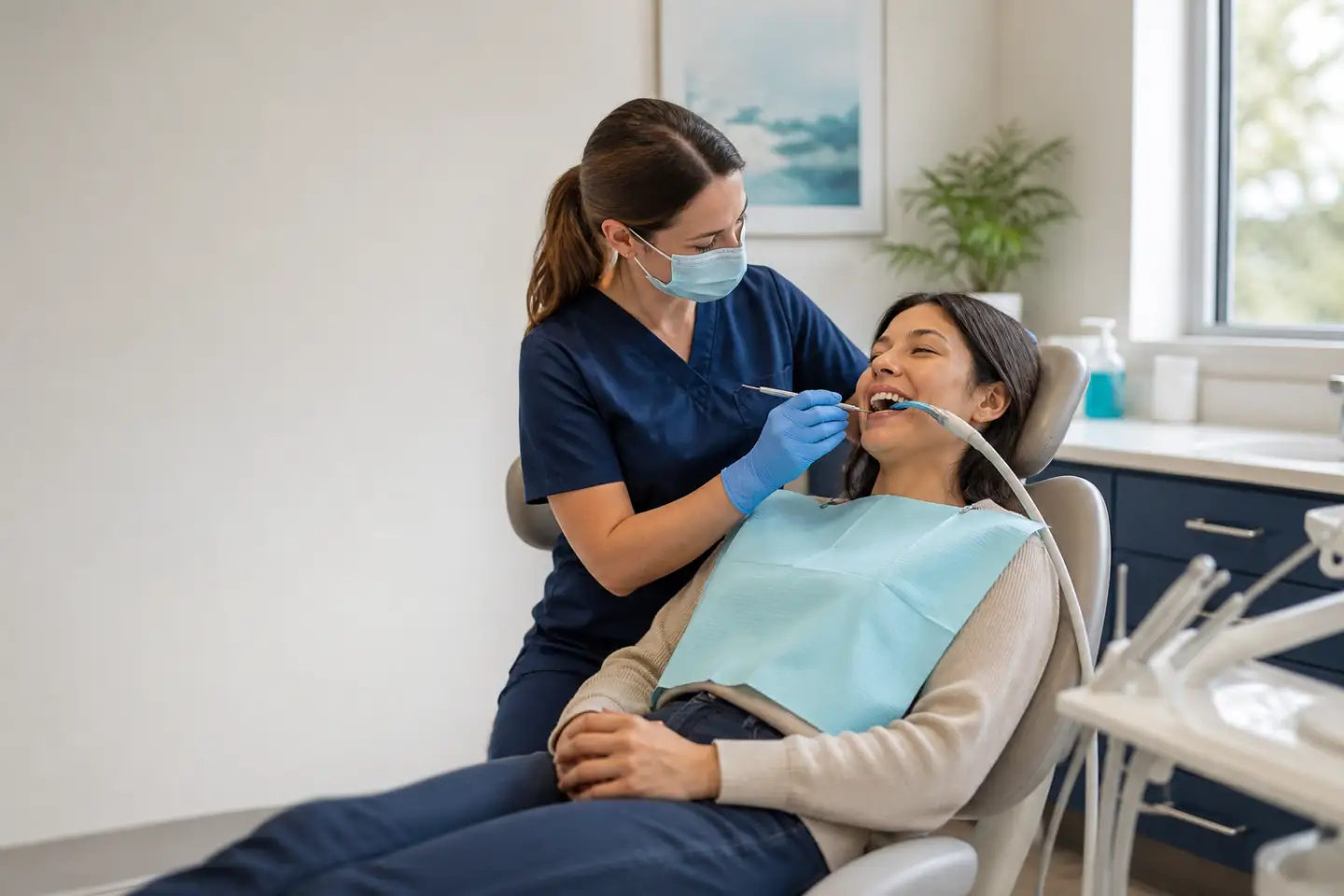
A professional cleaning removes tartar and stains that brushing leaves behind. Walsingham adults can learn what happens at a hygiene visit and how often to book one.
Let’s get you smiling
Tell us how we can help. Our team will follow up to confirm a time.
Serving Walsingham households from our Port Dover office
See every dental service for WalsinghamA fresh start for your mouth
Brushing and flossing remove much of the daily plaque, but some always slips past. Over time it hardens into tartar, especially behind the lower front teeth and around the back molars. Tartar irritates gums and gives bacteria a place to thrive. A professional cleaning removes it, polishes away surface stains and helps keep gum disease at bay.
Adults travelling from Walsingham can book cleanings at our Port Dover office, often combined with an exam. The hygienist will tailor the visit to your gum health and comfort, point out areas that need extra attention at home and recommend how often you should return.

Why it matters
Tartar along and below the gumline can lead to gingivitis and, if left, to periodontitis, which damages the bone supporting your teeth. Regular professional cleaning removes this buildup before it causes lasting harm. It also gives the team a chance to spot early signs of gum problems and decay.
Removing plaque and tartar can improve breath, and polishing lifts surface stains from coffee, tea and other foods. Many people leave a cleaning with teeth that feel smoother and look brighter. While cleanings do not whiten teeth the way bleaching does, they can make a noticeable difference to how your smile looks.
The visit
The hygienist reviews your health history and asks about any concerns. They may measure the spaces between your teeth and gums to check for signs of gum disease. Bleeding, recession and inflamed areas are noted. These findings help guide the cleaning and are compared with future visits.
Using hand instruments, an ultrasonic scaler or both, the hygienist removes plaque and tartar from above and just below the gumline. Teeth are then polished and flossed. Fluoride may be offered. If any area is sensitive, let the hygienist know so they can adjust their approach or use numbing gel.
Comfort
Some people have sensitive teeth or gums during cleaning, especially if there is a lot of tartar or inflammation. Using a sensitive toothpaste for a few weeks beforehand may help. The hygienist can use topical numbing gel or, in some cases, local anaesthetic for deeper cleaning areas.
Agree on a signal, like raising a hand, if you need a break. Let the team know about jaw discomfort, dental anxiety or difficulty lying back. Headphones may help you relax. A comfortable visit makes it easier to keep up with regular cleanings over time.
Between visits
Brush twice a day for about two minutes with fluoride toothpaste, angling the brush toward the gumline. Clean between teeth once a day with floss, interdental brushes or a water flosser. Ask the hygienist which tools suit your teeth, especially if you have bridges, implants or tight spaces.
How often you need a cleaning depends on how quickly tartar builds up and your gum health. Some people benefit from more frequent visits. Ask the hygienist what interval is best and book your next appointment before you leave, so it fits into your schedule.
Planning your appointment
When Walsingham patients call our Port Dover office, they can ask to book a cleaning and exam together. Mention any sensitivity, bleeding or concerns so the hygienist can plan the visit.
Bring a list of medications, details of any recent dental work elsewhere and questions about tools or products for home care.
Before you book
Have a question about your situation? Our team can help you plan a visit.
Many adults have cleanings at regular intervals, but some need them more often due to gum disease or heavy tartar buildup. The hygienist will recommend a schedule.
Bleeding often indicates inflammation from plaque buildup. Regular cleanings and better home care usually reduce bleeding over time. Persistent bleeding should be assessed.
Polishing removes surface stains, which can make teeth look brighter. It does not change the natural colour of teeth the way whitening treatments do.
Most people find cleanings comfortable. Sensitive areas can be managed with numbing gel or adjustments. Let the hygienist know if you feel discomfort.
A regular cleaning removes plaque and tartar above and slightly below the gumline. Deep cleaning, or scaling and root planing, treats deeper pockets caused by gum disease.
Prevention is the easiest dental care. Walsingham households can learn how hygiene visits, fluoride, diet and daily cleaning work together to protect teeth and gums.
After treatment for gum disease, regular maintenance helps keep it under control. Walsingham patients can learn what these visits involve and why intervals may be shorter.
Recognized year after year
Best Dentists in Norfolk
Proudly recognized among Norfolk’s top-rated dental practices for six consecutive years.

2021 Winner

2022 Winner

2023 Winner

2024 Winner

2025 Winner

2026 Winner
Stories from our patients
Watch a patient’s experience and browse more five-star reviews from people who have visited our Port Dover dental clinic.
Patient video
A patient shares the welcoming atmosphere and positive experience they found at our Port Dover office.
Google reviews
Swipe or use the arrows
Read all reviewsYour next visit can start today
New patients and CDCP patients are welcome. Tell us how we can help and our Port Dover dental team will follow up with you.
Evening appointments Monday and Tuesday