
Patient video
Welcoming and Wonderful Practice
A patient shares the welcoming atmosphere and positive experience they found at our Port Dover office.
★★★★★
Port Dover Family Dentistry
A professional cleaning removes tartar brushing cannot reach. Pine Grove residents can learn what happens during a cleaning, how often to book and aftercare.
Let’s get you smiling
Tell us how we can help. Our team will follow up to confirm a time.
Caring for Pine Grove patients at our Port Dover office
Browse every dental service for Pine GroveFresh start for your smile
Plaque that is not removed hardens into tartar, which cannot be brushed or flossed away. Tartar along the gumline irritates the gums and can lead to bleeding, inflammation and eventually gum disease. A professional cleaning removes this buildup, polishes the teeth and gives the hygienist a chance to check gum health and offer advice tailored to your mouth.
Pine Grove residents can book teeth cleanings at our Port Dover office. Many patients schedule a cleaning alongside their exam so both can be completed in a single trip when the schedule allows.

Why it matters
Removing tartar and plaque reduces inflammation and helps prevent gingivitis from progressing to periodontitis, which can damage bone and loosen teeth. Regular cleanings also allow early detection of gum changes. For many people, they are one of the most effective ways to keep the mouth healthy over time.
After a cleaning, teeth feel smoother and look brighter as surface stains from coffee, tea or tobacco are reduced. Breath often feels fresher. The polished surface also makes it harder for plaque to stick, helping your home care work more effectively until your next visit.
The appointment
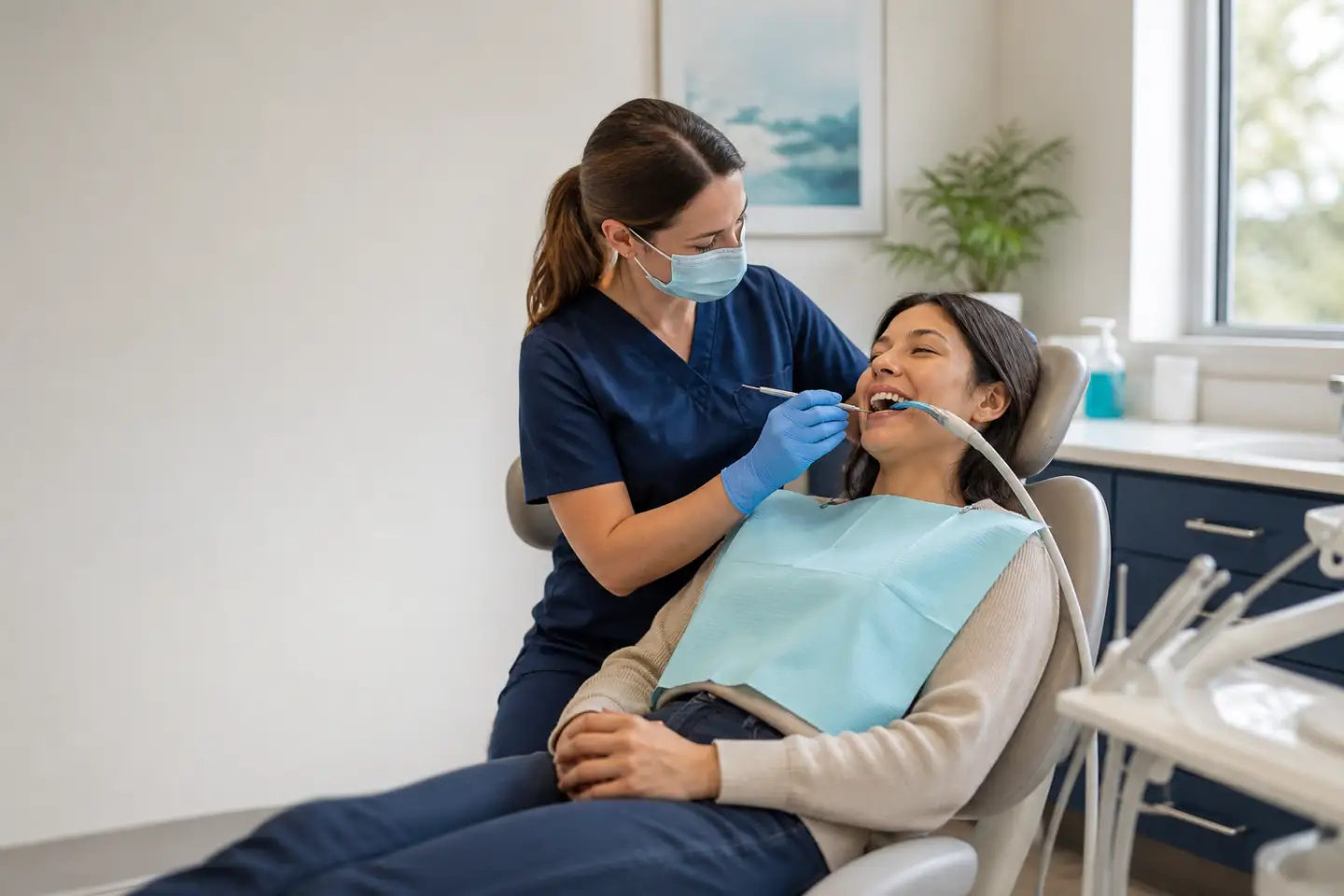
The hygienist reviews your health history and checks your gums, sometimes measuring pocket depths. Tartar is then removed with hand instruments and an ultrasonic scaler, which uses vibrations and water. You may feel scraping or vibration. Let the hygienist know if any area is sensitive so they can adjust.
Teeth are polished with a gritty paste to remove stains and smooth surfaces. Flossing may follow. Fluoride may be applied if recommended. The hygienist will point out areas needing extra attention at home and suggest tools or techniques to improve your daily routine.
Comfort
If you have sensitive teeth or gums, mention it before the cleaning starts. The hygienist may use a gentler technique, topical numbing gel or local anaesthetic for deeper areas. Using a sensitivity toothpaste for a couple of weeks beforehand may also help reduce discomfort.
If you feel nervous, let the team know. Agree on a signal to pause, ask for breaks and bring headphones if allowed. Explaining what will happen at each step can make the experience more predictable. Regular cleanings usually become easier as tartar buildup is kept under control.
After the cleaning
Gums may feel slightly tender or bleed a little after a thorough cleaning, especially if there was significant buildup. This usually settles within a day or two. If fluoride was applied, follow any instructions about eating or drinking. Rinse gently with warm salt water if gums feel sore.
Brush twice daily with fluoride toothpaste, clean between teeth every day and limit sugary snacks. Book your next cleaning at the interval recommended, often every six months, though some people need more frequent visits. Call if you notice persistent bleeding, swelling or sensitivity.
Planning your appointment
Call our Port Dover office to book a teeth cleaning. Ask whether an exam can be included at the same visit and let the team know if you have sensitive areas.
Bring your medication list and insurance details. Mention when your last cleaning was so the team can allow appropriate time.
Before you book
Have a question about your situation? Our team can help you plan a visit.
Many people benefit from cleanings about every six months. Those with gum disease or heavy buildup may need more frequent visits. The hygienist will recommend an interval based on your needs.
Most people find cleanings comfortable, though some areas may feel sensitive. Let the hygienist know, and they can adjust technique or use numbing gel to improve comfort.
Bleeding often indicates inflammation from plaque buildup. It usually improves with regular cleanings and consistent home care. Persistent bleeding may need further assessment for gum disease.
A cleaning removes surface stains, which can make teeth look brighter, but it does not change the natural colour of teeth. Whitening treatments are needed for that.
A regular cleaning focuses on the teeth above and just below the gumline. A deep cleaning treats gum disease by cleaning deeper pockets and root surfaces, often with local anaesthetic.
Prevention means fewer fillings and healthier gums over time. Pine Grove patients can learn about hygiene visits, fluoride, home habits and personal risks.
After gum disease treatment, regular maintenance visits help keep pockets stable. Pine Grove patients can learn what these cleanings involve and their timing.
Recognized year after year
Best Dentists in Norfolk
Proudly recognized among Norfolk’s top-rated dental practices for six consecutive years.

2021 Winner

2022 Winner

2023 Winner

2024 Winner

2025 Winner

2026 Winner
Stories from our patients
Watch a patient’s experience and browse more five-star reviews from people who have visited our Port Dover dental clinic.
Patient video
A patient shares the welcoming atmosphere and positive experience they found at our Port Dover office.
Google reviews
Swipe or use the arrows
Read all reviewsYour next visit can start today
New patients and CDCP patients are welcome. Tell us how we can help and our Port Dover dental team will follow up with you.
Evening appointments Monday and Tuesday