
Patient video
Welcoming and Wonderful Practice
A patient shares the welcoming atmosphere and positive experience they found at our Port Dover office.
★★★★★

Port Dover Family Dentistry
Medical, developmental or sensory needs can shape how dental care is delivered. Bloomsburg families can plan individual arrangements with our Port Dover team.
Let’s get you smiling
Tell us how we can help. Our team will follow up to confirm a time.
Caring for Bloomsburg patients at our office in Port Dover
See every dental service for BloomsburgCare shaped around the person
Some patients live with medical conditions, developmental differences, cognitive changes or sensory sensitivities that affect how a dental visit can work for them. A diagnosis gives part of the picture, but practical details matter more: how the person communicates, what helps them feel settled, what overwhelms them and how much assistance they need with daily routines.
Families and caregivers from Bloomsburg can contact our Port Dover office to talk through these needs before booking. The team can discuss what assessment and arrangements are possible, and whether any part of care may be better coordinated with another provider or setting, so expectations are clear before anyone travels to the appointment.
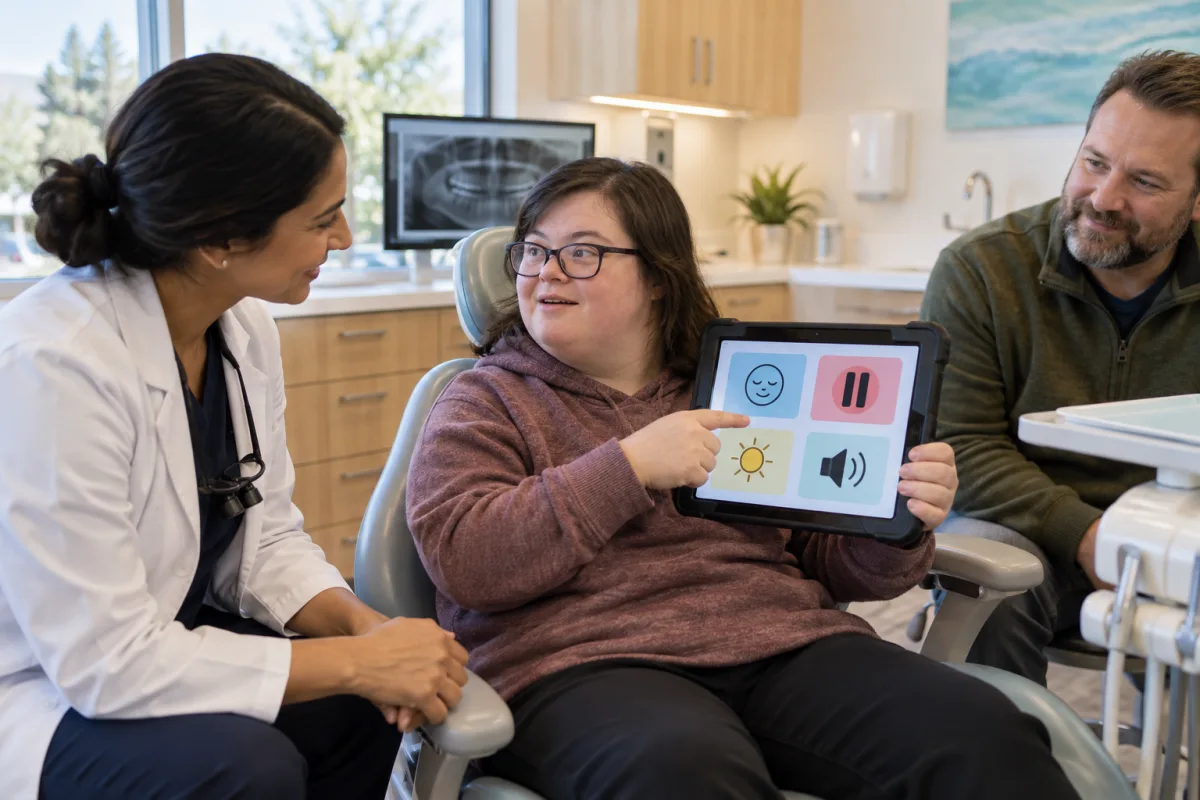
Describe the person
Share current medications, relevant diagnoses and the names of physicians or specialists involved. Then go further: explain how the person signals discomfort, what words or routines reassure them, and what tends to cause distress, such as noise, bright lights or unexpected touch. These details allow the team to adapt their approach for the person who will actually be in the chair.
If a family member or caregiver helps with communication or decisions, explain their role and any formal consent arrangements before the visit. Discuss how the patient can still participate as much as possible. Clarity about who speaks, who decides and how the patient’s own preferences are honoured helps the appointment feel respectful and avoids confusion once everyone has arrived.
Plan the visit
Describe mobility, transfer needs, how long the person can comfortably sit or recline, and the time of day they tend to do best. Ask what the treatment area can accommodate and whether shorter or staged visits are possible. An assessment visit may have different requirements from a treatment visit, so confirm what the planned appointment is for before arranging transport and support.
Some situations call for records or input from other healthcare providers before treatment is planned. Ask what information is still needed and who will request it. Sorting this out early helps the team decide whether the proposed appointment is suitable and reduces the chance of a wasted trip, which can be especially tiring for the patient and the people supporting them.
Choose treatment
After assessment, the dentist will explain what needs attention, what can wait and the suitable options for each concern. Ask how many visits each option would involve, what maintenance it would need and what support at home it assumes. Sometimes a simpler option that the person can tolerate and maintain is better than a more complex one that is hard to sustain.
Comfort measures, including sedation, are considered on an individual basis, taking into account health, communication and the specific procedure. A particular diagnosis does not automatically determine the approach. The dentist will explain the purpose, requirements and limits of any option being considered, and whether referral to a provider with additional facilities would be a more appropriate path.
Support at home
Explain what the person can do independently, who helps with brushing and where the routine tends to break down. The hygienist can suggest adapted tools, positions or techniques and demonstrate them for caregivers. Advice that fits the person’s abilities and the support around them is far more likely to be followed than a standard instruction sheet that assumes no limitations.
Agree on how follow-up visits will be arranged and how new symptoms or changes in support should be reported. Make responsibilities clear among the patient, family, caregivers and other clinicians. If health, medications, living arrangements or caregivers change, let the office know before the next appointment so the plan can be reviewed rather than simply assumed to still work.
Planning your appointment
Call our Port Dover office to describe the dental concern along with communication, sensory, mobility and medical needs. Ask what information or preliminary consultation would help establish the right arrangements for care.
Share the support person’s contact details and any consent documents, and confirm the purpose of the appointment and any preparation instructions.
Before you book
Have a question about your situation? Our team can help you plan a visit.
It helps, but practical information matters just as much. Explain how the person communicates, what helps them cope and what support they need with positioning or routines, so the team can plan for the individual rather than making assumptions from a diagnosis alone.
Yes, with appropriate consent arrangements in place. Clarify the caregiver’s role before the visit, bring an accurate medication list and relevant records, and discuss how the patient’s own preferences and participation can be respected during the appointment.
That depends on the assessment and the type of treatment required. Ask what can be accommodated. Some care may need coordination with other providers or referral to a setting with additional facilities, and the dentist will explain the reasons if that is recommended.
Yes. Describe what is difficult and who helps at home. The hygienist can suggest adapted tools and techniques and demonstrate them for caregivers, so the routine is realistic for the person and the support available day to day.
Ask during planning whether input from physicians or specialists is needed. Share their contact details so the dental team can coordinate where appropriate, particularly when medications, medical conditions or sedation may affect the dental treatment being considered.
Mobility aids, transfers, sensory needs or a support person can shape a dental visit. Bloomsburg patients can talk through access before booking in Port Dover.
Feeling nervous about the dentist is common. Bloomsburg patients can talk with our Port Dover team about pacing, signals and comfort options before any treatment.
Recognized year after year
Best Dentists in Norfolk
Proudly recognized among Norfolk’s top-rated dental practices for six consecutive years.

2021 Winner

2022 Winner

2023 Winner

2024 Winner

2025 Winner

2026 Winner
Stories from our patients
Watch a patient’s experience and browse more five-star reviews from people who have visited our Port Dover dental clinic.
Patient video
A patient shares the welcoming atmosphere and positive experience they found at our Port Dover office.
Google reviews
Swipe or use the arrows
Read all reviewsYour next visit can start today
New patients and CDCP patients are welcome. Tell us how we can help and our Port Dover dental team will follow up with you.
Evening appointments Monday and Tuesday