
Patient video
Welcoming and Wonderful Practice
A patient shares the welcoming atmosphere and positive experience they found at our Port Dover office.
★★★★★
Port Dover Family Dentistry
A custom oral appliance may reduce snoring by holding the jaw forward. Pine Grove patients can learn why sleep apnea is ruled out first and how fitting works.
Let’s get you smiling
Tell us how we can help. Our team will follow up to confirm a time.
Caring for Pine Grove patients at our Port Dover office
Browse every dental service for Pine GroveRule out, then reduce
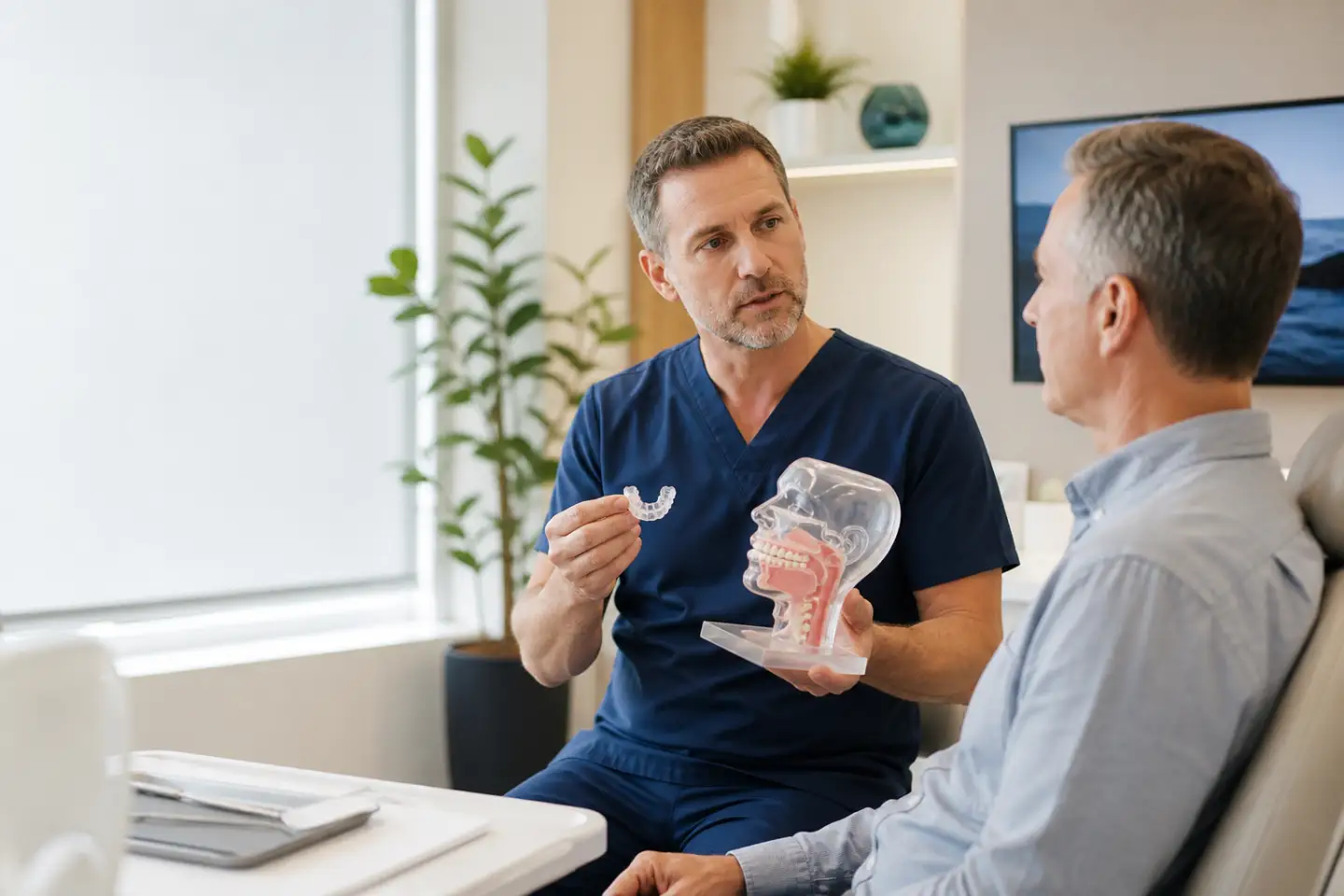
Snoring happens when relaxed tissues in the throat vibrate as air passes through during sleep. It can disrupt a partner’s rest and sometimes your own. A custom snoring appliance, worn in the mouth at night, gently holds the lower jaw forward to help keep the airway more open. Because snoring can also be a sign of sleep apnea, a medical check is important.
Pine Grove patients troubled by snoring can discuss appliance options at our Port Dover office. The dentist will ask about your sleep and may recommend speaking with your physician before an appliance is made.

Snoring or apnea
Pauses in breathing, gasping or choking during sleep, morning headaches, excessive daytime sleepiness, difficulty concentrating and high blood pressure can point toward sleep apnea. If you have these signs, a sleep assessment through your physician is recommended. Treating snoring alone could mask a more serious condition.
Snoring without breathing pauses or daytime tiredness may be primary snoring, which is not associated with the same health risks. Even then, a physician’s input can be helpful. The dentist will review your symptoms and explain whether a medical assessment is recommended before proceeding with an appliance.
Contributing factors
Jaw position, the size of the tongue and tonsils, nasal congestion and sleeping on your back can all contribute. Some people snore more as they age because throat muscles relax. A dentist may look at your jaw and mouth structure to see whether an appliance that repositions the jaw is likely to help.
Alcohol before bed, smoking, weight gain, sedating medications and poor sleep habits can increase snoring. Addressing these may reduce snoring on their own or improve the effect of an appliance. Speak with your physician about weight, medications or nasal problems that may be playing a role.
The appliance
The dentist examines your teeth, gums and jaw joints to make sure an appliance is suitable. Impressions or scans are taken, along with records of your bite and jaw position. These are sent to a laboratory where the appliance is made to fit your teeth closely.
At the fitting appointment, the dentist checks comfort and fit and shows you how to wear and clean the appliance. Many appliances can be adjusted gradually to move the jaw forward. Follow-up visits allow fine-tuning to balance snoring reduction with comfort.
Living with it
Some jaw soreness, tooth tenderness, excess saliva or a dry mouth are common at first and often improve. The bite may feel slightly different in the morning but usually returns to normal within a short time. Report persistent discomfort so the dentist can adjust the appliance.
Clean the appliance daily and store it in its case. Bring it to dental checkups so the fit and condition can be reviewed. Over time, the dentist will watch for bite changes. If snoring returns, or you develop daytime fatigue or breathing pauses, discuss it with your physician.
Planning your appointment
Book an appointment at our Port Dover office to discuss snoring. The dentist will ask about your sleep and may suggest a physician’s assessment before an appliance is made.
Bring your partner’s observations about your snoring, any sleep study results and a list of medications. Mention jaw pain or past appliances.
Before you book
Have a question about your situation? Our team can help you plan a visit.
Many people notice a reduction, but results vary. Adjustments help find the best position. Lifestyle factors also affect snoring. The dentist will explain realistic expectations for your situation.
It is often recommended, especially if you have signs of sleep apnea such as breathing pauses or daytime sleepiness. A physician can determine whether a sleep assessment is needed.
Some people try these, but they are less precise and may not fit well. A custom appliance is made to your teeth and adjusted by a dentist, which can improve comfort and effectiveness.
Some people notice minor bite changes over time. The dentist monitors for this at follow-up visits. Morning exercises may be suggested to help the jaw return to its normal position.
With good care, many last several years. Wear and changes to your teeth may require adjustment or replacement. Bring it to checkups so its condition can be assessed.
For some diagnosed sleep apnea, a custom oral appliance can help keep the airway open. Pine Grove patients can learn how dentists and physicians work together.
Jaw pain, clicking or limited opening can come from the TMJ and chewing muscles. Pine Grove patients can learn how these problems are assessed and managed.
Recognized year after year
Best Dentists in Norfolk
Proudly recognized among Norfolk’s top-rated dental practices for six consecutive years.

2021 Winner

2022 Winner

2023 Winner

2024 Winner

2025 Winner

2026 Winner
Stories from our patients
Watch a patient’s experience and browse more five-star reviews from people who have visited our Port Dover dental clinic.
Patient video
A patient shares the welcoming atmosphere and positive experience they found at our Port Dover office.
Google reviews
Swipe or use the arrows
Read all reviewsYour next visit can start today
New patients and CDCP patients are welcome. Tell us how we can help and our Port Dover dental team will follow up with you.
Evening appointments Monday and Tuesday