
Patient video
Welcoming and Wonderful Practice
A patient shares the welcoming atmosphere and positive experience they found at our Port Dover office.
★★★★★
Port Dover Family Dentistry
A custom oral appliance may reduce snoring for some people. Glen Meyer patients can learn why sleep apnea should be ruled out first and how devices are fitted.
Let’s get you smiling
Tell us how we can help. Our team will follow up to confirm a time.
Seeing patients from Glen Meyer and the surrounding countryside at our Port Dover office
Browse all dental services for Glen MeyerQuieter nights, safely
Snoring happens when tissues in the throat vibrate as air passes through a narrowed airway during sleep. It can disturb partners, disrupt sleep and sometimes signal obstructive sleep apnea, a condition that needs medical evaluation. For some people with simple snoring, a custom oral appliance that holds the jaw slightly forward may help reduce noise.
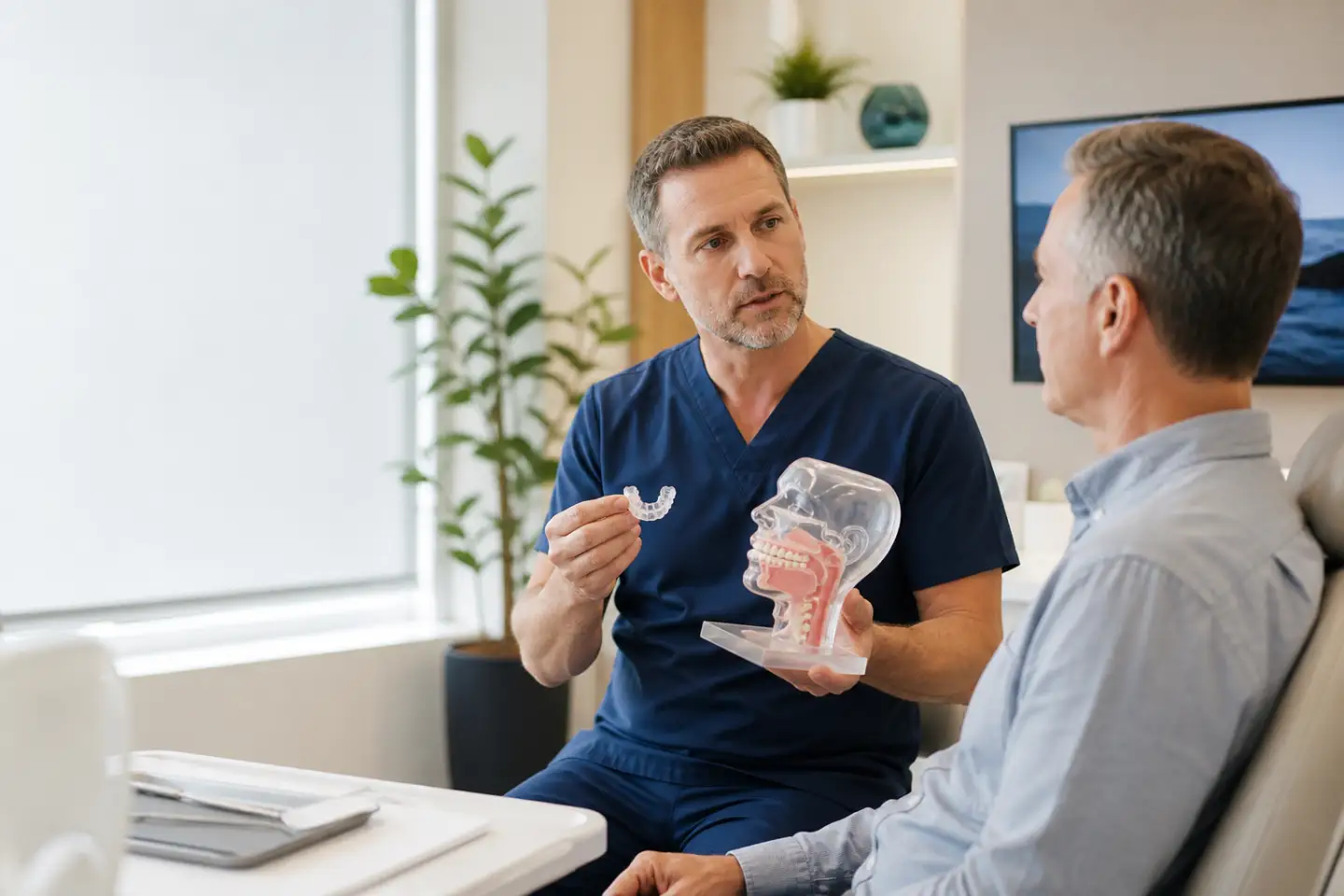
Glen Meyer patients whose snoring is affecting their household can ask about appliances at our Port Dover office. The dentist will discuss your symptoms, explain when a physician’s assessment is important and determine whether your teeth and jaws are suited to wearing an appliance every night.

Rule out apnea
Snoring can be harmless, but it can also be a sign of obstructive sleep apnea, where breathing repeatedly stops or becomes shallow during sleep. Using a snoring appliance without a proper evaluation may reduce the noise while leaving apnea untreated. Your physician can arrange testing to help determine what type of snoring you have and how it should be managed.
Pauses in breathing, gasping or choking during sleep, excessive daytime sleepiness, morning headaches, difficulty concentrating and high blood pressure are all reasons to speak with your physician before getting a snoring device. A bed partner’s observations can be very helpful here. The dentist may also ask about these symptoms during your visit and recommend a medical assessment.
Is an appliance suitable
An appliance relies on healthy teeth and gums to hold it in place, so the dentist will examine your mouth carefully. Active gum disease, loose teeth, extensive dental work or jaw joint problems may affect suitability. If you have dentures, an appliance may not be practical. The dentist will explain whether a device is likely to be comfortable and effective.
Lifestyle changes may reduce snoring for some people, such as weight management, avoiding alcohol close to bedtime, sleeping on your side and treating nasal congestion. Your physician may suggest other treatments as well, depending on what is causing the airway to narrow. A snoring appliance can be one part of a broader approach, rather than the only solution considered.
Getting fitted
Impressions or scans of your teeth are taken, along with records of your bite and jaw position. The appliance is designed to hold the lower jaw slightly forward during sleep, which can help keep the airway more open. Let the dentist know about any jaw discomfort or clicking, since these can influence the design and adjustment.
When the appliance is ready, the dentist checks its fit and comfort. You will be shown how to insert, remove and clean it. Adjustments are usually made gradually over several weeks to balance effectiveness and comfort. Keep notes about your sleep and snoring, and ask your partner for feedback, so the dentist can fine-tune the device.
Living with it
Some people notice jaw soreness, tooth tenderness, extra saliva or dry mouth, particularly in the first few weeks of wearing the appliance. These often improve as you adjust. Over time, the appliance may cause changes in your bite, so regular dental checkups are important. Report persistent pain, jaw clicking or changes in how your teeth fit together.
Clean the appliance daily as instructed and store it in its case whenever it is not in use. Bring it to checkups so the dentist can examine it for wear and check its fit. If your snoring returns, worsens or you develop symptoms such as daytime fatigue, contact your physician and the dental office for reassessment.
Planning your appointment
Call our Port Dover office to discuss snoring and whether an oral appliance might help. Mention any symptoms of sleep apnea, so the team can advise on whether a medical assessment should come first.
Bring results from any sleep study, and mention jaw problems, dental work or appliances you have used in the past.
Before you book
Have a question about your situation? Our team can help you plan a visit.
No. Many people snore without having sleep apnea. However, snoring can be a symptom of apnea, especially with breathing pauses, gasping or daytime sleepiness. A physician can help determine whether further testing is needed before any device is made.
Results vary. Some people notice a significant reduction, while others see less improvement. Factors such as anatomy, weight, alcohol use and sleep position affect outcomes. The dentist will adjust the appliance gradually to help improve its effectiveness.
Some over-the-counter devices exist, but they are not custom-fitted and may cause discomfort or bite changes. They also do not address possible sleep apnea. Speak with your physician and dentist before choosing any device for regular use.
Most people find a custom appliance comfortable once they adjust, though jaw or tooth soreness can occur at first. Report persistent discomfort, so the dentist can make adjustments or reconsider the overall approach if the problem continues.
Lifespan depends on the material, how often it is used and how well it is cared for. Regular checkups allow the dentist to assess wear and fit and recommend replacement when the appliance is no longer working as intended.
Some people diagnosed with sleep apnea may use a dental appliance. Glen Meyer patients can learn how dentists work with physicians and what devices involve.
Clicking, aching or a jaw that locks can point to a TMJ disorder. Glen Meyer patients can learn how jaw problems are assessed and which gentle steps may help.
Recognized year after year
Best Dentists in Norfolk
Proudly recognized among Norfolk’s top-rated dental practices for six consecutive years.

2021 Winner

2022 Winner

2023 Winner

2024 Winner

2025 Winner

2026 Winner
Stories from our patients
Watch a patient’s experience and browse more five-star reviews from people who have visited our Port Dover dental clinic.
Patient video
A patient shares the welcoming atmosphere and positive experience they found at our Port Dover office.
Google reviews
Swipe or use the arrows
Read all reviewsYour next visit can start today
New patients and CDCP patients are welcome. Tell us how we can help and our Port Dover dental team will follow up with you.
Evening appointments Monday and Tuesday