
Patient video
Welcoming and Wonderful Practice
A patient shares the welcoming atmosphere and positive experience they found at our Port Dover office.
★★★★★
Port Dover Family Dentistry
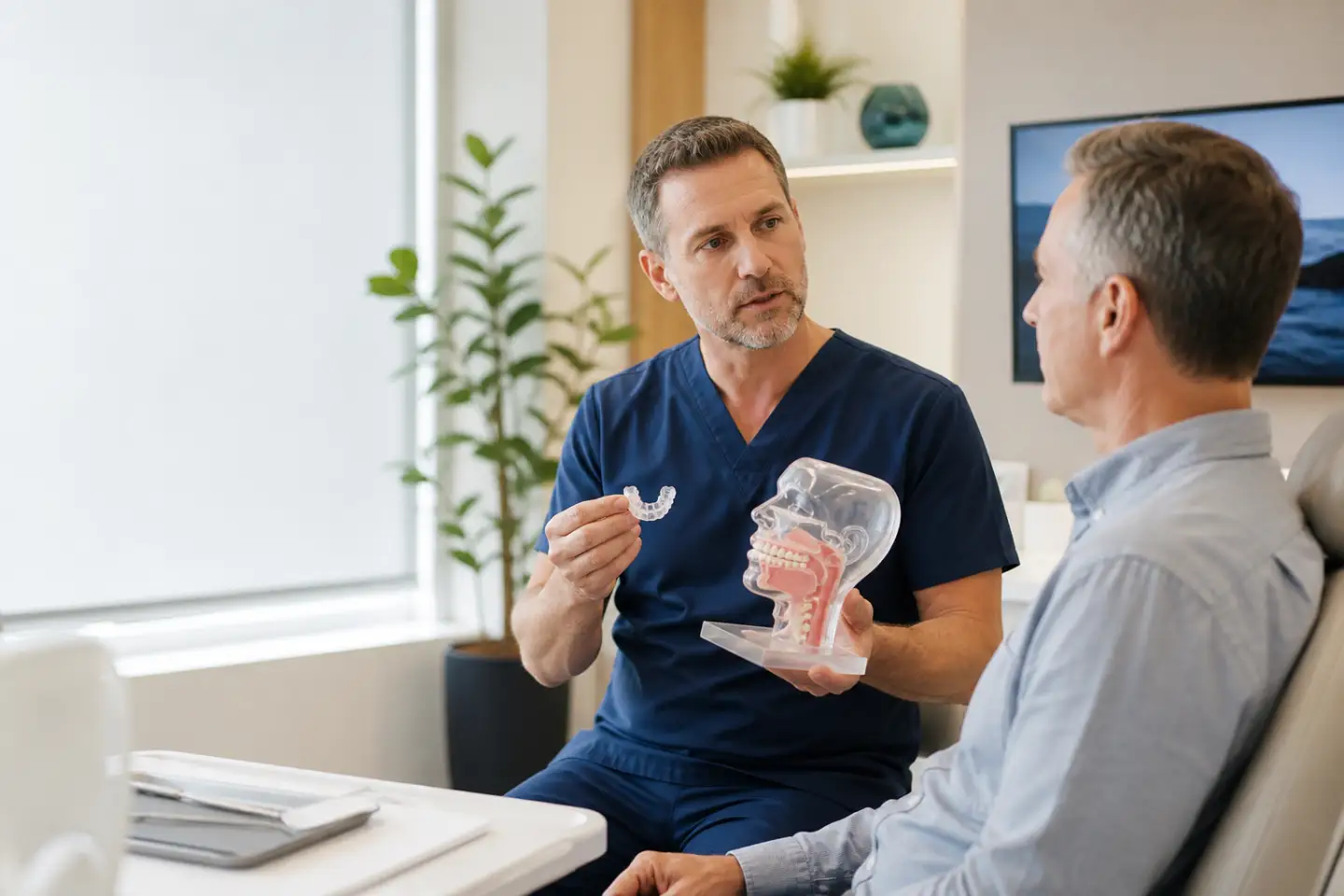
Diagnosed with sleep apnea and curious about an oral appliance? St. Williams patients can learn how dentists work alongside physicians at our Port Dover office.
Let’s get you smiling
Tell us how we can help. Our team will follow up to confirm a time.
Caring for St. Williams patients at our office in Port Dover
Every dental service for St. WilliamsTeamwork with your physician
Obstructive sleep apnea occurs when the airway repeatedly narrows or closes during sleep, interrupting breathing. It can cause loud snoring, daytime tiredness and other health concerns. Diagnosis requires a medical sleep assessment. For some people, a custom oral appliance that positions the lower jaw forward can help keep the airway more open.
St. Williams patients who have been diagnosed with sleep apnea, or who suspect it, can talk with our Port Dover team about whether an oral appliance might fit into their care. We work alongside your physician and do not replace a medical diagnosis or follow-up.
Recognizing it
Loud snoring, pauses in breathing noticed by a partner, gasping or choking during sleep, morning headaches, dry mouth on waking and excessive daytime sleepiness are common signs. Difficulty concentrating and mood changes can also occur. Mention these symptoms to both your dentist and physician.
Sleep apnea can only be diagnosed through a medical sleep assessment. The severity and type determine appropriate treatment. A dentist can identify warning signs and refer you for evaluation but cannot diagnose sleep apnea. Starting with your physician ensures the right treatment approach.
Appliance options
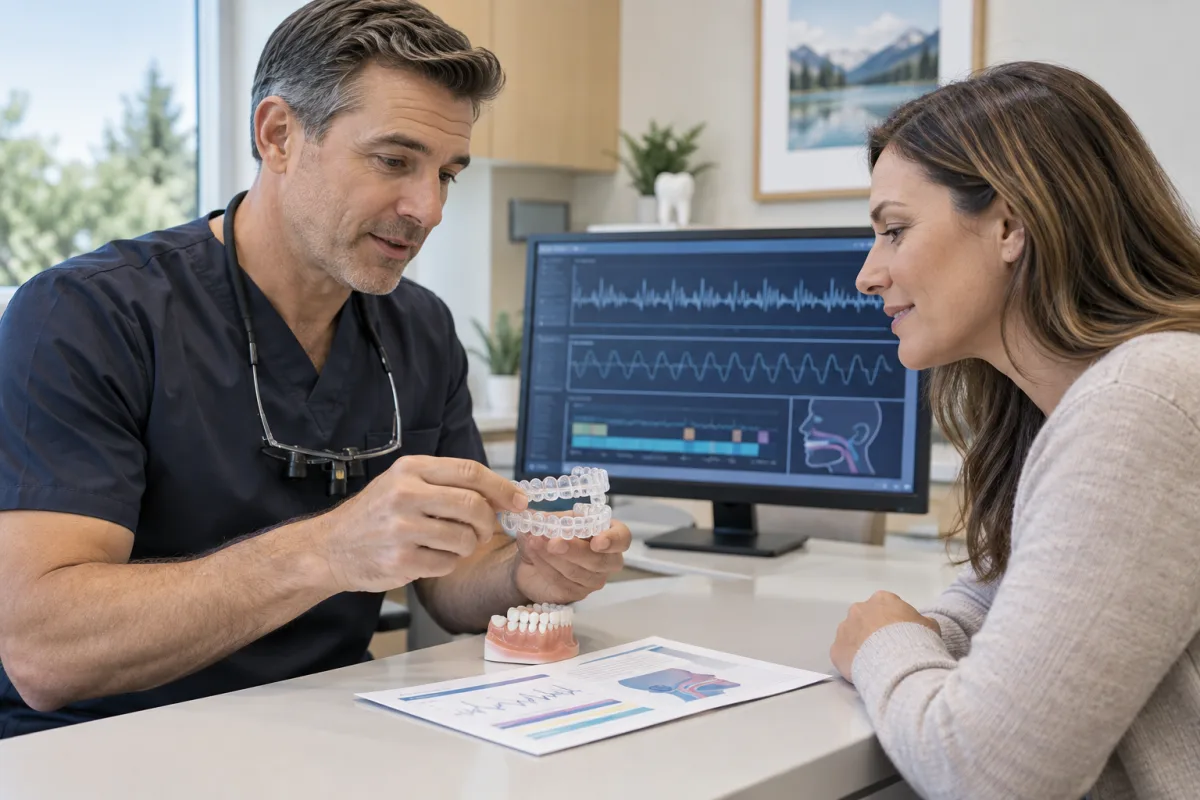
Mandibular advancement devices are custom-made appliances worn over the teeth at night. They hold the lower jaw slightly forward, which may help keep the airway from collapsing. They are adjustable so the position can be fine-tuned for comfort and effectiveness over time.
Oral appliances are often considered for mild to moderate obstructive sleep apnea or for people who cannot tolerate CPAP. Healthy teeth and gums are needed to support the appliance. Your physician’s recommendation is important in deciding whether an appliance is appropriate.
The process
The dentist reviews your sleep study results and physician’s recommendation, examines your teeth, gums and jaw joints and takes impressions or scans. Your bite and jaw movement are recorded. The appliance is made by a laboratory to fit your teeth precisely.
At the fitting, the dentist checks comfort and fit and shows you how to use and adjust the appliance. Follow-up visits help fine-tune the jaw position. Your physician may arrange a follow-up sleep study to evaluate how well the appliance is working.
Ongoing care
Some people notice jaw soreness, tooth tenderness, excess saliva or dry mouth at first. These often improve. Over time, oral appliances can cause changes in bite, so regular dental checks are important. Report persistent discomfort or bite changes so adjustments can be made.
Sleep apnea is a medical condition that requires ongoing follow-up with your physician. Weight changes, ageing and other factors can affect severity. Keep appointments with both your physician and dentist so treatment remains appropriate for your current needs.
Planning your appointment
If you have a sleep apnea diagnosis, call our Port Dover office to discuss an oral appliance. Bring your sleep study results and your physician’s recommendation.
If you have not been diagnosed but have symptoms, start with your family physician, who can arrange the appropriate sleep assessment.
Before you book
Have a question about your situation? Our team can help you plan a visit.
No. Sleep apnea is diagnosed through a medical sleep assessment. A dentist can recognize warning signs and suggest you speak with your physician.
CPAP is often more effective for moderate to severe sleep apnea, but some people cannot tolerate it. Oral appliances can be effective for selected patients. Your physician can advise.
Long-term use can cause bite changes in some people. Regular dental checks help monitor this. The dentist may suggest exercises or adjustments to minimize changes.
Many people adjust within a few weeks. Jaw soreness or saliva changes often improve. Report persistent discomfort so the appliance can be adjusted.
Yes. Sleep apnea requires ongoing medical follow-up. Your physician may arrange a sleep study to confirm that the appliance is effective.
Loud snoring can disrupt sleep for you and your household. St. Williams residents can learn how custom oral appliances may help and why screening for apnea matters.
A custom night guard is shaped to your teeth to cushion grinding forces while you sleep. Find out how St. Williams patients are fitted at our Port Dover office.
Recognized year after year
Best Dentists in Norfolk
Proudly recognized among Norfolk’s top-rated dental practices for six consecutive years.

2021 Winner

2022 Winner

2023 Winner

2024 Winner

2025 Winner

2026 Winner
Stories from our patients
Watch a patient’s experience and browse more five-star reviews from people who have visited our Port Dover dental clinic.
Patient video
A patient shares the welcoming atmosphere and positive experience they found at our Port Dover office.
Google reviews
Swipe or use the arrows
Read all reviewsYour next visit can start today
New patients and CDCP patients are welcome. Tell us how we can help and our Port Dover dental team will follow up with you.
Evening appointments Monday and Tuesday