
Patient video
Welcoming and Wonderful Practice
A patient shares the welcoming atmosphere and positive experience they found at our Port Dover office.
★★★★★
Port Dover Family Dentistry
After a medical sleep apnea diagnosis, an oral appliance may be an option for some. Port Ryerse patients can discuss suitability with our Port Dover dentist.
Let’s get you smiling
Tell us how we can help. Our team will follow up to confirm a time.
Caring for Port Ryerse patients at our Port Dover office
Every dental service for Port RyerseDental support for a medical condition
Obstructive sleep apnea occurs when the airway repeatedly narrows or closes during sleep, interrupting breathing. Loud snoring, gasping, morning headaches and daytime sleepiness are common signs. It is a medical condition linked with other health risks, and it must be diagnosed by a physician, usually through a sleep study, before treatment is chosen.
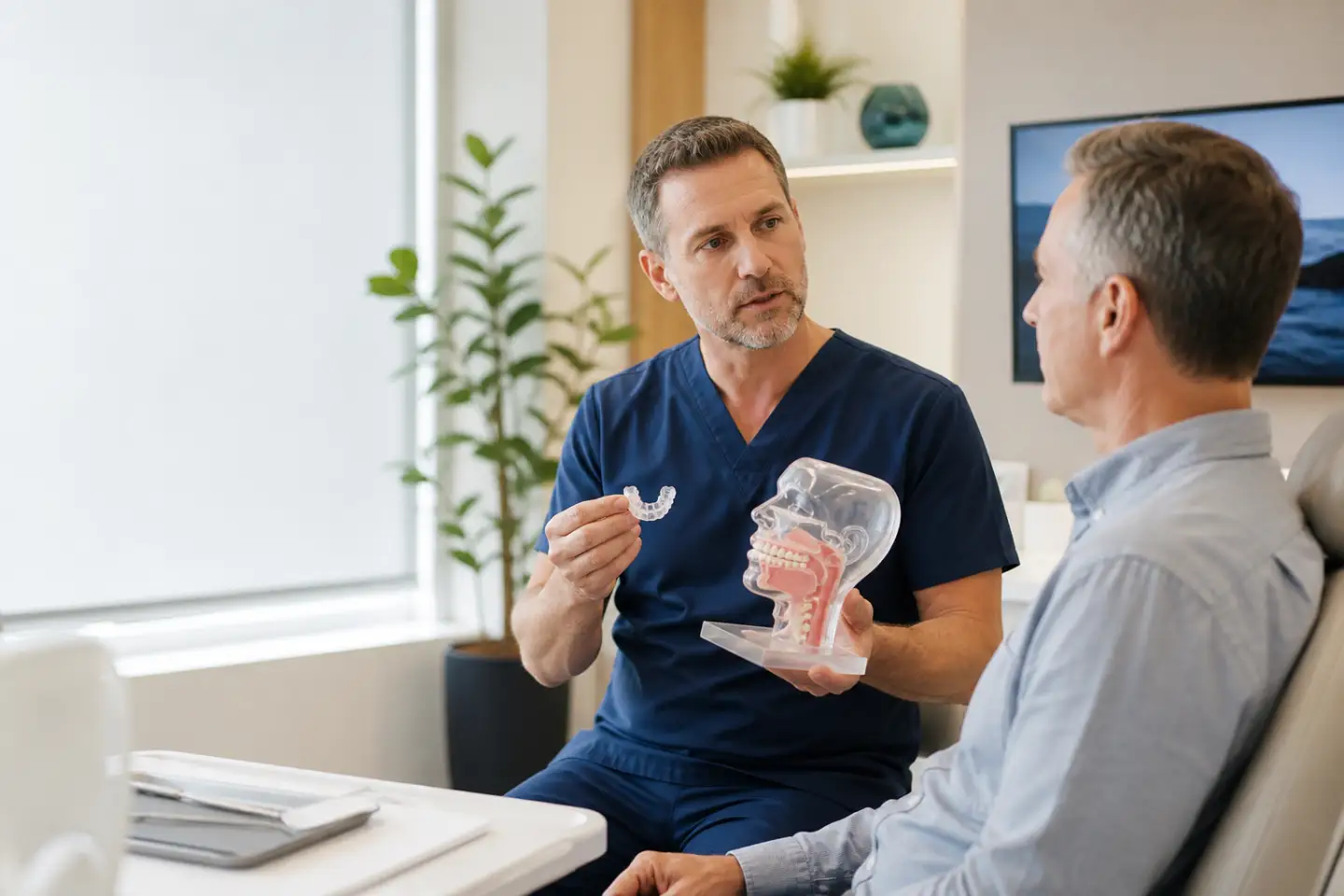
For some people diagnosed with sleep apnea, an oral appliance that holds the lower jaw forward is a treatment option. Patients from Port Ryerse can discuss this with the dentist at our Port Dover office, who will work with your physician’s findings to assess suitability.
Diagnosis first
Loud, frequent snoring, pauses in breathing observed by a partner, waking with a dry mouth or headache, daytime fatigue, poor concentration and high blood pressure can all be associated with sleep apnea. If you notice these signs, speak with your family physician, who can arrange appropriate testing.
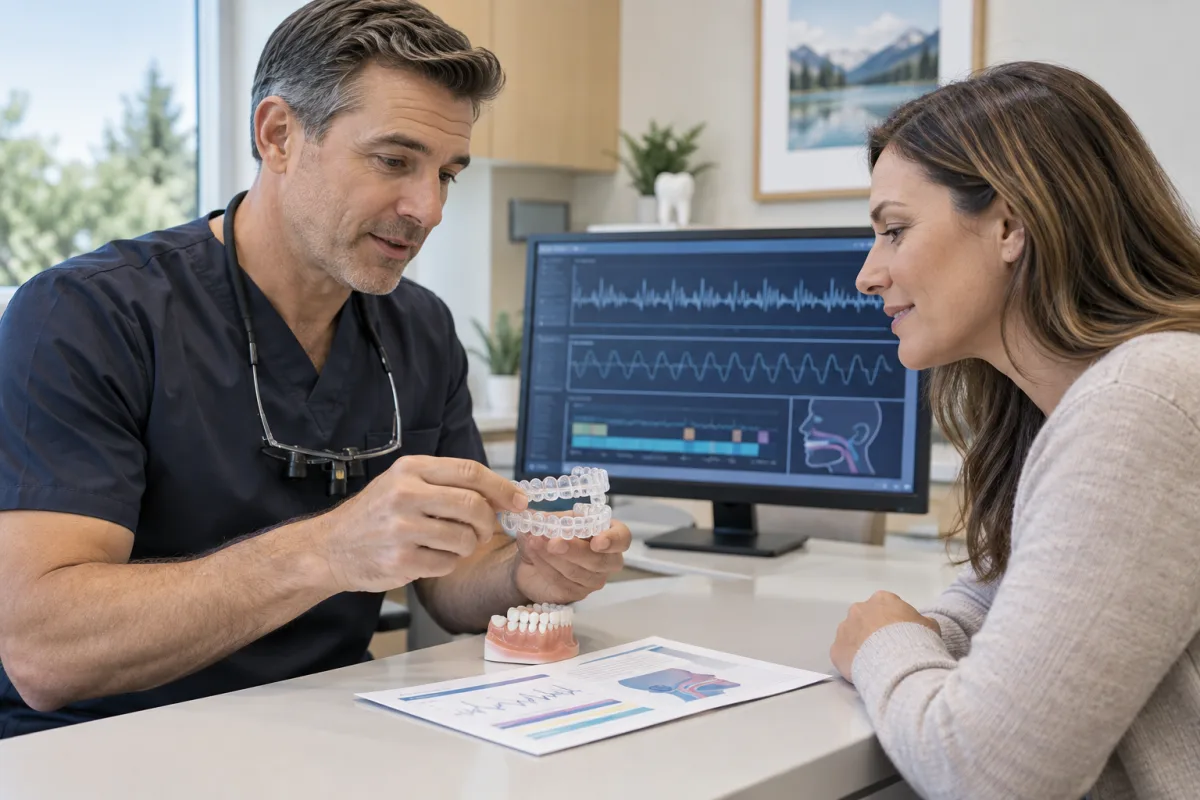
A sleep study measures breathing, oxygen levels and other factors overnight, at home or in a sleep clinic. It determines whether sleep apnea is present and how severe it is. Severity influences which treatments are recommended. Oral appliances are generally considered for mild to moderate cases or for those who cannot tolerate other options.
Oral appliance therapy
Mandibular advancement devices fit over the upper and lower teeth and gently hold the lower jaw forward, which may help keep the airway more open. They are custom-made and adjustable. Not everyone responds the same way, so follow-up testing with your physician is usually needed to confirm effectiveness.
CPAP machines, which deliver air through a mask, are a common treatment, especially for moderate to severe sleep apnea. Weight management, positional therapy and surgery may be options for some. Your physician will discuss the full range of treatments, and the dentist can explain the dental option.
Getting fitted
The dentist examines your teeth, gums and jaw joints to ensure they can support an appliance. Enough healthy teeth are needed to anchor it. Jaw problems or gum disease may need attention first. Records such as impressions or scans are taken to create the custom device.
At the fitting, the dentist checks comfort and retention and explains how to adjust it. The jaw position is often advanced gradually over several visits. Your physician may arrange a follow-up sleep study to see how well the appliance is working and whether further adjustment is needed.
Long-term use
Some people notice jaw soreness, tooth tenderness, excess saliva or a change in how teeth meet in the morning. These often settle, but report them so the dentist can adjust the device. Over time, an appliance can cause bite changes, which the dentist will monitor.
Clean the appliance daily and bring it to dental visits for inspection. Keep follow-up appointments with both your dentist and physician. Report any return of snoring, fatigue or other symptoms, as the appliance may need adjustment or a different treatment may be needed.
Planning your appointment
If you have a sleep apnea diagnosis, call our Port Dover office and mention it when booking. Bring or arrange for a copy of your sleep study and physician’s recommendations.
If you have not been tested yet, speak with your family doctor first. The dental team can then review the results with you.
Before you book
Have a question about your situation? Our team can help you plan a visit.
No. Diagnosis requires a physician and usually a sleep study. A dentist may notice possible signs and suggest you speak with your doctor, and can provide oral appliance therapy when appropriate.
CPAP is often more effective, particularly for severe sleep apnea. Oral appliances can work well for some mild to moderate cases or for those who cannot tolerate CPAP. Your physician will advise.
Most people adapt within a few weeks. Initial jaw or tooth soreness is common. The dentist can adjust the device to improve comfort.
Long-term use may cause gradual changes in how teeth meet. The dentist will monitor your bite and discuss strategies to minimize changes.
Often, yes. Your physician may recommend testing with the appliance in place to confirm it is effectively managing your sleep apnea.
A custom oral appliance may reduce snoring for some people once sleep apnea is ruled out. Port Ryerse patients can learn the steps at our Port Dover office.
A custom night guard is made to your bite to protect teeth from grinding. Learn how Port Ryerse patients are fitted and how guards are maintained in Port Dover.
Recognized year after year
Best Dentists in Norfolk
Proudly recognized among Norfolk’s top-rated dental practices for six consecutive years.

2021 Winner

2022 Winner

2023 Winner

2024 Winner

2025 Winner

2026 Winner
Stories from our patients
Watch a patient’s experience and browse more five-star reviews from people who have visited our Port Dover dental clinic.
Patient video
A patient shares the welcoming atmosphere and positive experience they found at our Port Dover office.
Google reviews
Swipe or use the arrows
Read all reviewsYour next visit can start today
New patients and CDCP patients are welcome. Tell us how we can help and our Port Dover dental team will follow up with you.
Evening appointments Monday and Tuesday