
Patient video
Welcoming and Wonderful Practice
A patient shares the welcoming atmosphere and positive experience they found at our Port Dover office.
★★★★★
Port Dover Family Dentistry
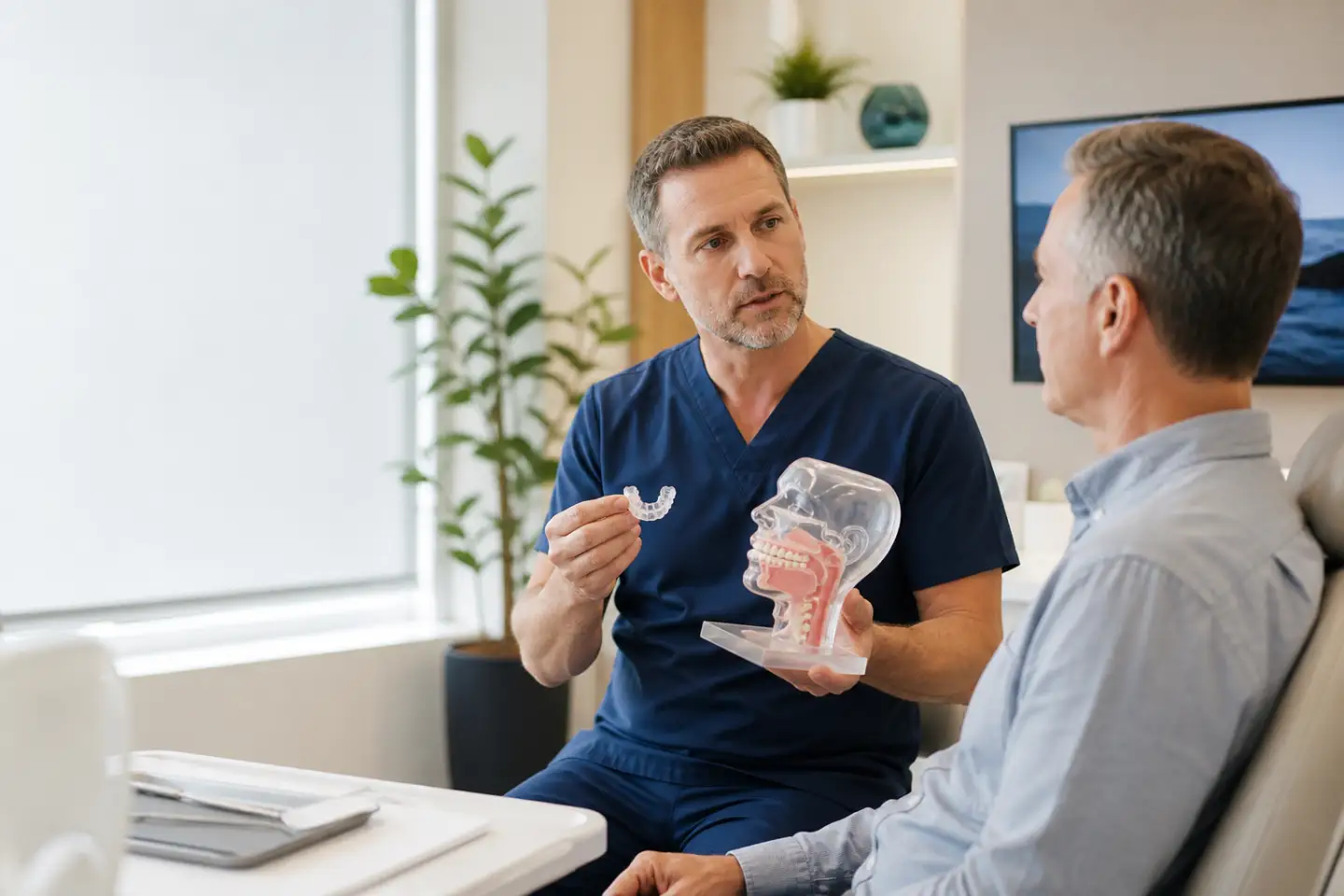
For some people diagnosed with sleep apnea, a custom oral appliance may help. Long Point patients can discuss suitability and medical coordination in Port Dover.
Let’s get you smiling
Tell us how we can help. Our team will follow up to confirm a time.
Caring for Long Point residents, cottagers and visitors at our Port Dover office
Browse every dental service for Long PointDiagnosis first, appliance second
Obstructive sleep apnea occurs when the airway repeatedly narrows or closes during sleep, interrupting breathing. Signs include loud snoring, gasping, daytime sleepiness and morning headaches. Diagnosis requires a sleep study arranged through a physician. For some people with mild to moderate sleep apnea, or those who cannot tolerate CPAP, a custom oral appliance that positions the lower jaw forward may be recommended.
Long Point patients with a diagnosis or a physician referral can discuss oral appliance therapy at our Port Dover office. The dentist works alongside your medical team rather than replacing them.
Medical diagnosis
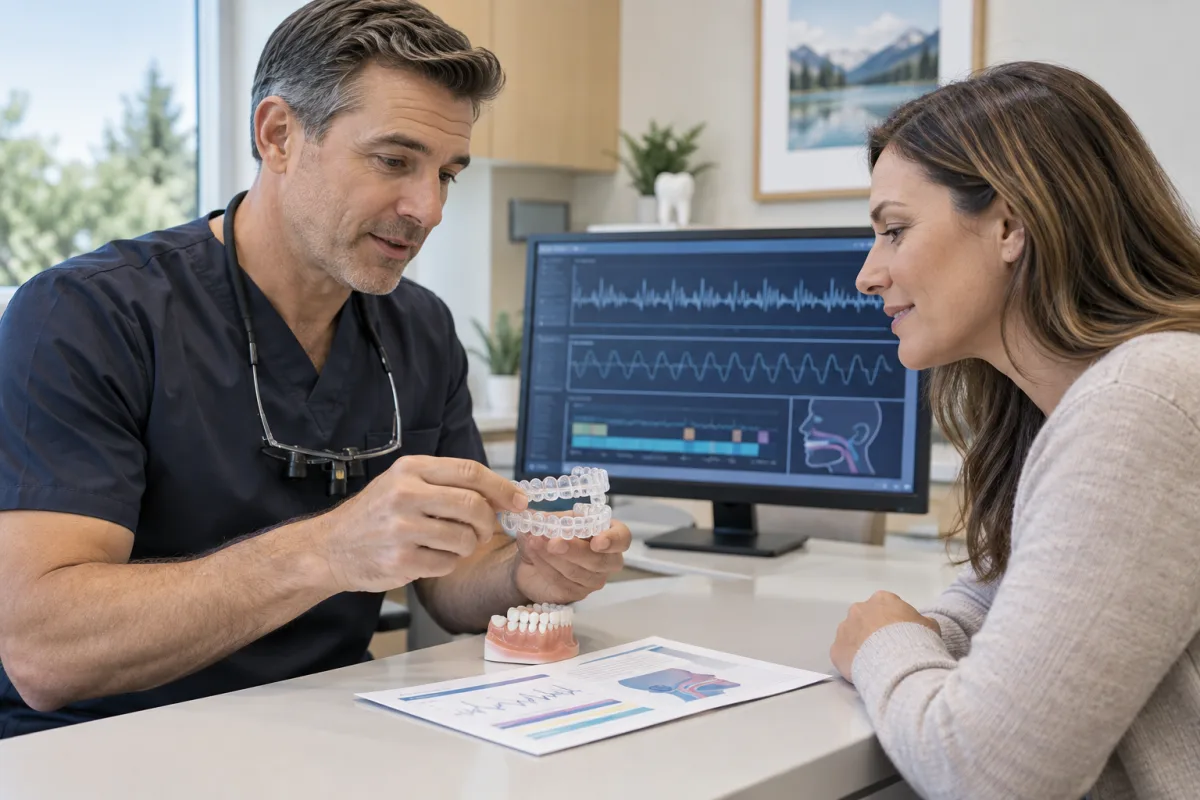
Sleep apnea is a medical condition that can affect heart health, blood pressure and daily functioning. A sleep study, arranged through your physician, determines whether you have sleep apnea and how severe it is. That diagnosis guides treatment choices. A dentist should not provide a sleep apnea appliance without an appropriate medical diagnosis.
During routine exams, the dentist may notice signs such as tooth wear from grinding, a large tongue, a narrow airway or reports of snoring. If so, they may suggest speaking with your physician about a sleep assessment. Sharing those observations can help start a conversation that leads to diagnosis.
Is an appliance suitable?
An oral appliance needs enough healthy teeth to hold it securely. Gum disease, loose teeth or significant jaw joint problems may need addressing first or may limit suitability. The dentist examines your teeth, gums, bite and jaw movement, and may take X-rays or records to confirm the appliance can be fitted safely.
Appliances are often considered for mild to moderate obstructive sleep apnea or for people who cannot use CPAP. Severe sleep apnea usually requires other treatments. Your physician’s recommendations, sleep study results and your preferences all guide whether an appliance is part of your plan.
Fitting and adjusting
Impressions or scans and bite records are taken so a custom appliance can be made. At the fitting, the dentist checks comfort and retention, and shows you how to insert, remove and clean it. Initial jaw position is set conservatively to allow your muscles and joints to adapt.
Over subsequent visits, the appliance may be adjusted gradually to move the jaw forward. Follow-up with your physician, sometimes including another sleep study, helps confirm whether the appliance is effective. Planning these visits around seasonal stays at Long Point helps keep adjustments on track.
Living with it
Some people experience jaw soreness, tooth tenderness, excess saliva or dry mouth at first. These often ease. Over time, appliances can cause changes in bite. The dentist may recommend morning exercises or a repositioning device to help teeth settle after removing the appliance each day.
Bring the appliance to dental checkups so fit and wear can be reviewed. Report jaw pain, changes in bite or loose teeth. Continue medical follow-up for sleep apnea, since symptoms and severity can change with weight, age and health over the years.
Planning your appointment
Contact our Port Dover office if you have a sleep apnea diagnosis or physician referral and want to explore an oral appliance. Bring your sleep study report to the consultation.
If you have not been diagnosed but snore loudly or feel unrested, start by speaking with your physician about a sleep assessment.
Before you book
Have a question about your situation? Our team can help you plan a visit.
No. Diagnosis requires a sleep study arranged through a physician. A dentist may notice signs and suggest you seek medical assessment, then work with your physician if an appliance is recommended.
CPAP is often the first-line treatment, especially for severe sleep apnea. Appliances can be effective for some people with mild to moderate apnea or CPAP intolerance. Your physician can help compare options.
Long-term use can cause bite changes in some people. Regular dental reviews help monitor this. Morning exercises or devices may be recommended to reduce the effect.
Many people adapt within a few weeks. Initial jaw or tooth soreness is common and often fades. Report persistent discomfort so the dentist can adjust the appliance.
Often, yes. Your physician may recommend testing with the appliance to confirm it is working. Ongoing medical follow-up remains an important part of managing sleep apnea.
Snoring that disrupts the household may respond to a custom oral appliance once sleep apnea is ruled out. Long Point patients can ask our Port Dover dentist.
A custom night guard is shaped to your bite to cushion grinding during sleep. Long Point patients can arrange fitting and follow-up at our Port Dover office.
Recognized year after year
Best Dentists in Norfolk
Proudly recognized among Norfolk’s top-rated dental practices for six consecutive years.

2021 Winner

2022 Winner

2023 Winner

2024 Winner

2025 Winner

2026 Winner
Stories from our patients
Watch a patient’s experience and browse more five-star reviews from people who have visited our Port Dover dental clinic.
Patient video
A patient shares the welcoming atmosphere and positive experience they found at our Port Dover office.
Google reviews
Swipe or use the arrows
Read all reviewsYour next visit can start today
New patients and CDCP patients are welcome. Tell us how we can help and our Port Dover dental team will follow up with you.
Evening appointments Monday and Tuesday