
Patient video
Welcoming and Wonderful Practice
A patient shares the welcoming atmosphere and positive experience they found at our Port Dover office.
★★★★★

Port Dover Family Dentistry
A throbbing toothache that keeps you awake needs attention. Walsingham patients can learn common causes, safe relief at home and how our Port Dover dentists find the source.
Let’s get you smiling
Tell us how we can help. Our team will follow up to confirm a time.
Serving Walsingham households from our Port Dover office
See every dental service for WalsinghamPain with a cause
A severe toothache can make it hard to eat, sleep or concentrate. It may throb, ache constantly, flare with hot or cold, or hurt only when you bite. Common causes include deep decay, an inflamed or infected nerve, a cracked tooth, an abscess or gum infection. Pain relief can help for a while, but the underlying problem usually needs dental treatment.
Walsingham patients with severe tooth pain can call our Port Dover office to describe their symptoms. The team will advise on urgency and the next available appropriate appointment. At the visit, the dentist will find the source of the pain and explain the options for treating it.
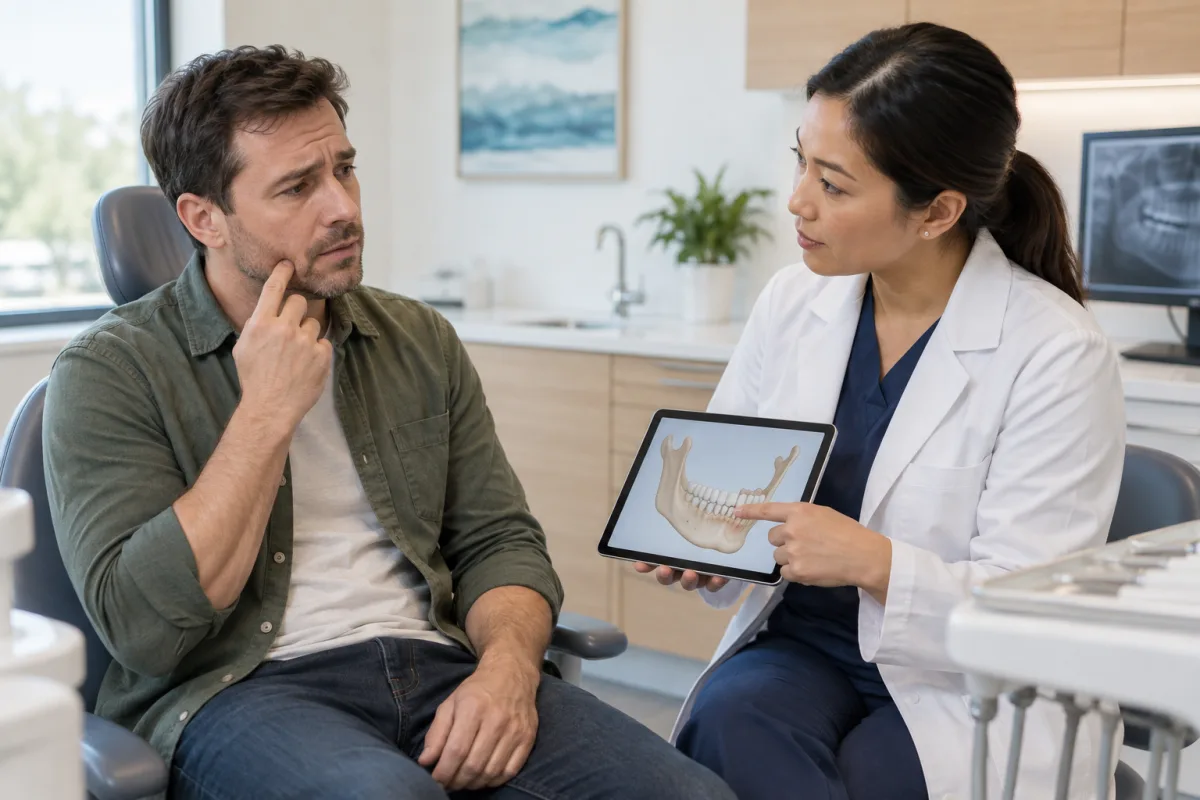
Describing the pain
Notice whether the pain is sharp or dull, constant or comes and goes, and whether it is triggered by hot, cold, sweet foods or biting. Lingering pain after a cold drink, throbbing that wakes you at night or pain that spreads to the ear or jaw are all useful details to share. Try to identify which tooth seems responsible.
Swelling of the gum or face, a bad taste, fever, a pimple on the gum or difficulty opening your mouth suggest infection. These symptoms increase urgency. Mention any recent dental work, injury or grinding habits, since they can be related. Pain that suddenly stops can also be significant.
Relief at home
Rinse gently with warm salt water and floss carefully around the tooth to remove trapped food. Over-the-counter pain relief, taken as directed if safe for you, may help. A cold compress on the outside of the cheek for short periods can ease discomfort. Keep your head raised when lying down.
Do not place aspirin or other tablets directly on the gum, which can burn tissue. Avoid heat on the face if there is swelling. Do not take leftover antibiotics. Avoid very hot, cold or sweet foods and chewing on the painful side. If pain becomes unbearable or swelling increases, call again or seek emergency care.
Finding the cause
The dentist examines the painful area, checks for decay, cracks, swelling and loose restorations, and tests the tooth with cold, tapping and bite tests. Pain can sometimes be felt in a different tooth from where the problem is, so nearby teeth are checked too. Sinus problems can also cause upper tooth pain.
X-rays help reveal deep decay, infection at the root tip, bone loss or other hidden problems. Combining the exam, tests and images, the dentist explains the likely cause, how serious it is and the treatment options. You can ask questions before deciding.
Treatment
If the nerve is inflamed or infected, root canal treatment may be started to relieve pain and save the tooth. A deep cavity may be cleaned and filled. An abscess may be drained. If the tooth cannot be saved, extraction may be recommended. Medication may be prescribed when appropriate.
Many treatments for severe toothache need more than one visit. For example, a root canal may be followed by a crown. Keep follow-up appointments even if pain has gone. Regular checkups help catch decay and cracks before they cause severe pain, which can reduce urgent trips from Walsingham.
Planning your appointment
Phone our Port Dover office from Walsingham as soon as severe tooth pain starts. Describe the pain, any swelling and how long it has lasted so the team can advise on urgency.
Bring a list of medications and allergies, and note what pain relief you have taken and when, so the dentist has a clear picture.
Before you book
Have a question about your situation? Our team can help you plan a visit.
Lying down can increase pressure in the head and tooth, and there are fewer distractions. Keeping your head raised may help. Night-time throbbing often suggests nerve inflammation and should be assessed.
Yes. Pain can stop when a nerve dies, but infection may still be present and can spread. Have the tooth checked even if it no longer hurts.
Yes. Sinus pressure can cause aching in upper back teeth. The dentist will check whether the pain is dental or may need medical care for the sinuses.
Not always. It depends on the cause. A cavity, cracked tooth or gum problem may need other treatment. The dentist will test the tooth and explain the options.
Go to an emergency department if you have swelling affecting breathing or swallowing, swelling near the eye, high fever or feel very unwell. Hospitals can manage serious infections.
A root canal can save a tooth with an infected or inflamed nerve. Walsingham patients can learn the signs, what treatment involves and why a crown often follows.
An emergency dental exam focuses on finding the cause of sudden pain, swelling or damage. Walsingham patients can learn what it involves and what the visit may not include.
Recognized year after year
Best Dentists in Norfolk
Proudly recognized among Norfolk’s top-rated dental practices for six consecutive years.

2021 Winner

2022 Winner

2023 Winner

2024 Winner

2025 Winner

2026 Winner
Stories from our patients
Watch a patient’s experience and browse more five-star reviews from people who have visited our Port Dover dental clinic.
Patient video
A patient shares the welcoming atmosphere and positive experience they found at our Port Dover office.
Google reviews
Swipe or use the arrows
Read all reviewsYour next visit can start today
New patients and CDCP patients are welcome. Tell us how we can help and our Port Dover dental team will follow up with you.
Evening appointments Monday and Tuesday