
Patient video
Welcoming and Wonderful Practice
A patient shares the welcoming atmosphere and positive experience they found at our Port Dover office.
★★★★★

Port Dover Family Dentistry
Intense or throbbing tooth pain usually signals a problem that needs diagnosis. Port Ryerse residents can call our Port Dover office for advice and an assessment.
Let’s get you smiling
Tell us how we can help. Our team will follow up to confirm a time.
Caring for Port Ryerse patients at our Port Dover office
Every dental service for Port RyerseFind the source of the pain
Toothache can range from a dull ache to sharp, throbbing pain that keeps you awake. Common causes include deep decay, an inflamed or infected nerve, a cracked tooth, gum infection or an erupting wisdom tooth. Pain relievers may help temporarily, but the underlying cause usually needs professional treatment to resolve properly.
When a toothache strikes in Port Ryerse, call our Port Dover office to describe the pain. The team will ask about its location, triggers and any swelling or fever, then discuss how urgently you should be seen and what to do in the meantime.
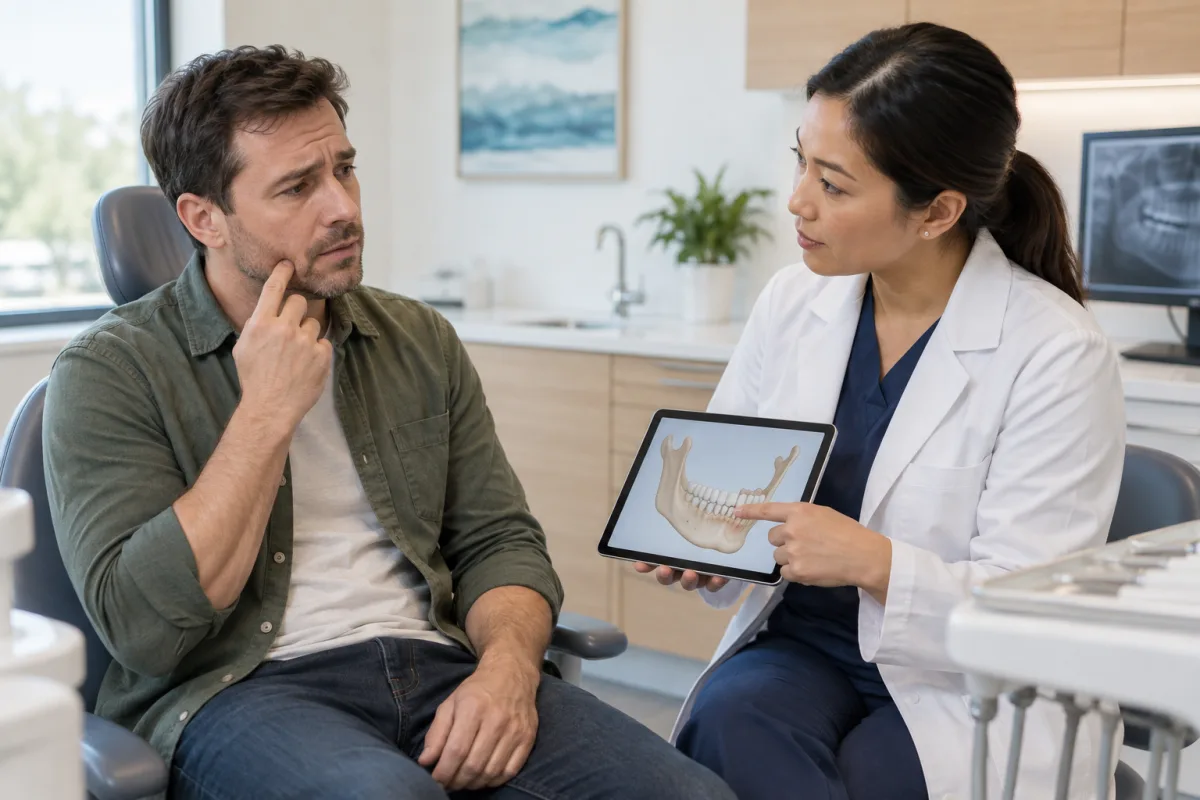
Describe the pain
Note whether the pain is sharp or dull, constant or intermittent, and whether it is triggered by hot, cold, sweets or biting. Pain that lingers after hot or cold, wakes you at night or throbs on its own may suggest nerve inflammation or infection. Pain on biting may indicate a crack or infection at the root.
Swelling of the gum or face, a bad taste, fever, a pimple on the gum or pain spreading to the ear or jaw are important to mention. These may indicate infection. If swelling spreads rapidly or affects breathing or swallowing, seek emergency medical care immediately.
Interim relief
Rinse with warm water and gently floss around the tooth to remove trapped food. Over-the-counter pain relief may help if appropriate for you; follow package directions and medical advice. A cold compress on the outside of the cheek can ease discomfort. Keep your head elevated when lying down.
Do not place aspirin or other pills directly on the gum, as this can burn tissue. Avoid applying heat to the face. Do not ignore the pain if it fades, as infection may still be present. Avoid chewing on the painful side until the tooth has been assessed.
Diagnosis and treatment
The dentist examines the tooth and surrounding area, may tap or apply cold to test the nerve and takes X-rays to check for decay, infection or bone changes. Identifying the source is essential, as pain can sometimes be felt in a different tooth from the one causing it.
Treatment may include a filling for decay, root canal treatment for an inflamed or infected nerve, a crown for a cracked tooth, cleaning for gum infection or extraction when the tooth cannot be saved. Antibiotics may be prescribed for spreading infection alongside dental treatment.
After treatment
Some tenderness is normal after treatment. Follow aftercare instructions and take medications as prescribed. Contact the office if pain worsens, swelling develops or a temporary filling comes out. Attend follow-up visits to complete treatment, such as placing a final crown.
Many toothaches stem from decay or cracks that developed slowly. Regular checkups, good home care and addressing small problems early reduce the chance of severe pain. A night guard may help if grinding contributes to cracked teeth.
Planning your appointment
Phone our Port Dover office and describe your pain, swelling and any fever. The team will discuss urgency and the earliest appropriate appointment available.
Bring a list of medications you take and note what pain relief you have used and when you last took it.
Before you book
Have a question about your situation? Our team can help you plan a visit.
Lying down can increase blood flow to the head and pressure in an inflamed tooth. There are also fewer distractions. Keeping your head elevated may help. Pain that wakes you should be assessed promptly.
Pain may come and go, but the underlying cause, such as decay or infection, usually does not resolve without treatment. Even if pain stops, the tooth should be examined.
Over-the-counter pain relievers can help temporarily if suitable for you. Follow package directions and consult a pharmacist or physician if you have health conditions or take other medications.
Not always. Antibiotics are used for certain infections, especially with spreading swelling or fever, but they do not replace dental treatment. The dentist will advise based on the diagnosis.
Severe pain, swelling, fever, pain after an injury or pain that prevents sleep or eating should be assessed promptly. Swelling that affects breathing or swallowing requires immediate emergency care.
Root canal treatment clears infection from inside a tooth so it can be kept. Port Ryerse patients can learn what happens and how to plan care in Port Dover.
An emergency exam finds the cause of sudden pain, swelling or damage. Port Ryerse patients can call our Port Dover office to discuss symptoms and timing.
Recognized year after year
Best Dentists in Norfolk
Proudly recognized among Norfolk’s top-rated dental practices for six consecutive years.

2021 Winner

2022 Winner

2023 Winner

2024 Winner

2025 Winner

2026 Winner
Stories from our patients
Watch a patient’s experience and browse more five-star reviews from people who have visited our Port Dover dental clinic.
Patient video
A patient shares the welcoming atmosphere and positive experience they found at our Port Dover office.
Google reviews
Swipe or use the arrows
Read all reviewsYour next visit can start today
New patients and CDCP patients are welcome. Tell us how we can help and our Port Dover dental team will follow up with you.
Evening appointments Monday and Tuesday