
Patient video
Welcoming and Wonderful Practice
A patient shares the welcoming atmosphere and positive experience they found at our Port Dover office.
★★★★★

Port Dover Family Dentistry
Throbbing, constant or night-time tooth pain needs a proper diagnosis. Lynedoch patients can learn safe interim care and when to call our Port Dover office.
Let’s get you smiling
Tell us how we can help. Our team will follow up to confirm a time.
Caring for Lynedoch patients at our Port Dover office
Every dental service for Lynedoch patientsPain with a cause
A severe toothache can make it hard to eat, sleep or concentrate. It may be sharp, throbbing, constant or triggered by hot, cold or biting. Common causes include deep decay, an inflamed or infected nerve, a cracked tooth, an abscess or gum problems. Sometimes pain is felt in one tooth but originates elsewhere, such as the sinuses or an adjacent tooth.
If you are in Lynedoch and dealing with intense tooth pain, call our Port Dover office to describe your symptoms. The team will discuss urgency and availability and help you manage the pain safely until you can be examined.
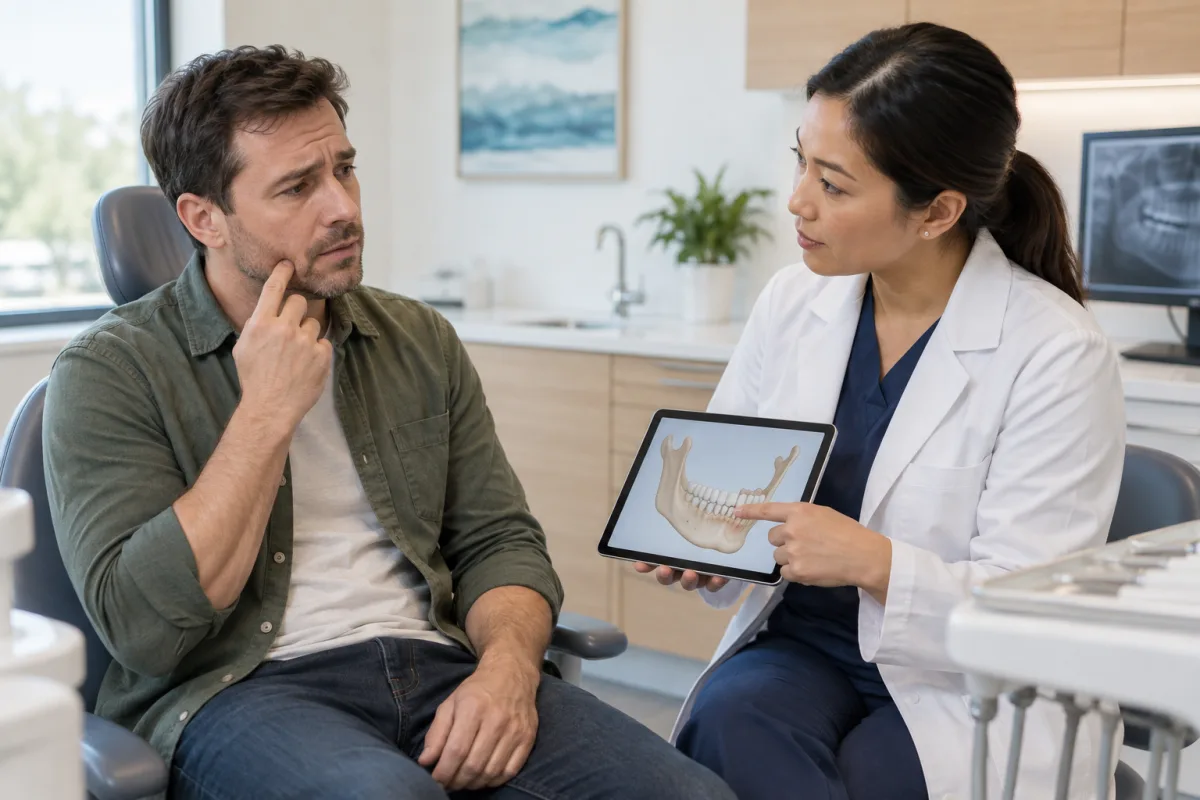
Describe the pain
Notice whether pain is sharp or dull, constant or comes in waves, and whether it is triggered by temperature, sweets or biting. Pain that lingers after cold, wakes you at night or throbs with your heartbeat may suggest nerve involvement. These details help the team assess urgency when you call.
Mention swelling, fever, a bad taste, a gum pimple or pain spreading to the ear, jaw or head. Note whether pain relief helps and how much you have taken. Recent dental work or injury is also important information that can point toward the cause.
Managing pain safely
Over-the-counter pain relief may be used as directed on the label if it is safe for you. Rinse with warm salt water and floss gently to remove trapped food. A cold compress on the cheek may help. Keep your head elevated when lying down, which can reduce throbbing.
Do not place aspirin or other tablets directly on the gum, as they can burn the tissue. Avoid applying heat to the face. Do not exceed recommended medication doses. If pain is controlled but swelling or fever develops, call the office or seek medical care promptly.
Finding the cause
The examination may include tapping teeth, testing sensitivity to cold, checking bite and examining gums. The dentist compares the painful tooth with its neighbours. Your feedback during testing is important. Sometimes pain is referred from another area, and the dentist will consider this possibility.
X-rays reveal decay, infection at the root tip, bone loss or other problems not visible to the eye. Combining the exam with images helps the dentist explain what is causing the pain and recommend appropriate treatment. Ask to see the X-ray if it helps you understand.
Treatment
Depending on the cause, the dentist may place a sedative filling, adjust a high bite, drain an abscess or begin root canal treatment to relieve pressure. Antibiotics may be prescribed in specific situations, though they rarely resolve tooth pain on their own.
Definitive care may involve completing a root canal, placing a crown, treating gum disease or removing a tooth that cannot be saved. The dentist will explain the options and timing. Completing recommended care helps prevent pain from returning and protects your oral health.
Planning your appointment
Phone our Port Dover office and describe the pain, how long it has lasted and any swelling or fever. The team will discuss how soon you should be seen.
Bring a list of medications and note what pain relief you have taken and when, so the dentist has an accurate picture.
Before you book
Have a question about your situation? Our team can help you plan a visit.
Severe, persistent pain, swelling, fever or difficulty swallowing need urgent attention. Swelling affecting breathing requires emergency medical care. Call the dental office for guidance on other toothaches.
Lying down can increase blood flow to the head, which may intensify throbbing pain. Fewer distractions also make pain more noticeable. Elevating your head may help.
Antibiotics may help with certain infections, but they usually do not resolve the cause of tooth pain. Dental treatment is generally needed to address the problem.
Yes. Sinus pressure can cause aching in upper back teeth. The dentist can help determine whether the pain is dental or sinus-related and refer you if needed.
Pain may stop if the nerve dies, but infection can remain. Keep your appointment so the tooth can be assessed, even if it no longer hurts.
Root canal treatment removes infected or inflamed pulp to save a tooth. Lynedoch patients can learn about symptoms, the procedure and recovery at our Port Dover office.
An emergency dental exam focuses on finding the cause of pain, swelling or damage. Lynedoch patients can learn what the visit covers and how to prepare for Port Dover.
Recognized year after year
Best Dentists in Norfolk
Proudly recognized among Norfolk’s top-rated dental practices for six consecutive years.

2021 Winner

2022 Winner

2023 Winner

2024 Winner

2025 Winner

2026 Winner
Stories from our patients
Watch a patient’s experience and browse more five-star reviews from people who have visited our Port Dover dental clinic.
Patient video
A patient shares the welcoming atmosphere and positive experience they found at our Port Dover office.
Google reviews
Swipe or use the arrows
Read all reviewsYour next visit can start today
New patients and CDCP patients are welcome. Tell us how we can help and our Port Dover dental team will follow up with you.
Evening appointments Monday and Tuesday