
Patient video
Welcoming and Wonderful Practice
A patient shares the welcoming atmosphere and positive experience they found at our Port Dover office.
★★★★★

Port Dover Family Dentistry
A severe toothache can stem from deep decay, infection or a crack. Boston patients can learn safe relief steps and how Port Dover finds the real cause.
Let’s get you smiling
Tell us how we can help. Our team will follow up to confirm a time.
Caring for Boston, Ontario patients at our Port Dover office
See every dental service for Boston patientsWhen the pain will not let up
A severe toothache can make it hard to eat, sleep or concentrate. It may throb constantly, flare with hot or cold, or strike sharply when you bite. Common causes include deep decay reaching the nerve, an abscess, a cracked tooth or gum infection. Pain that eases on its own does not always mean the problem has gone, so an assessment is still important.
If you are in Boston and have a toothache that is severe or getting worse, call our Port Dover office. Describe the pain, how long it has lasted and whether there is swelling, so the team can advise how soon you should be seen and what to do meanwhile.
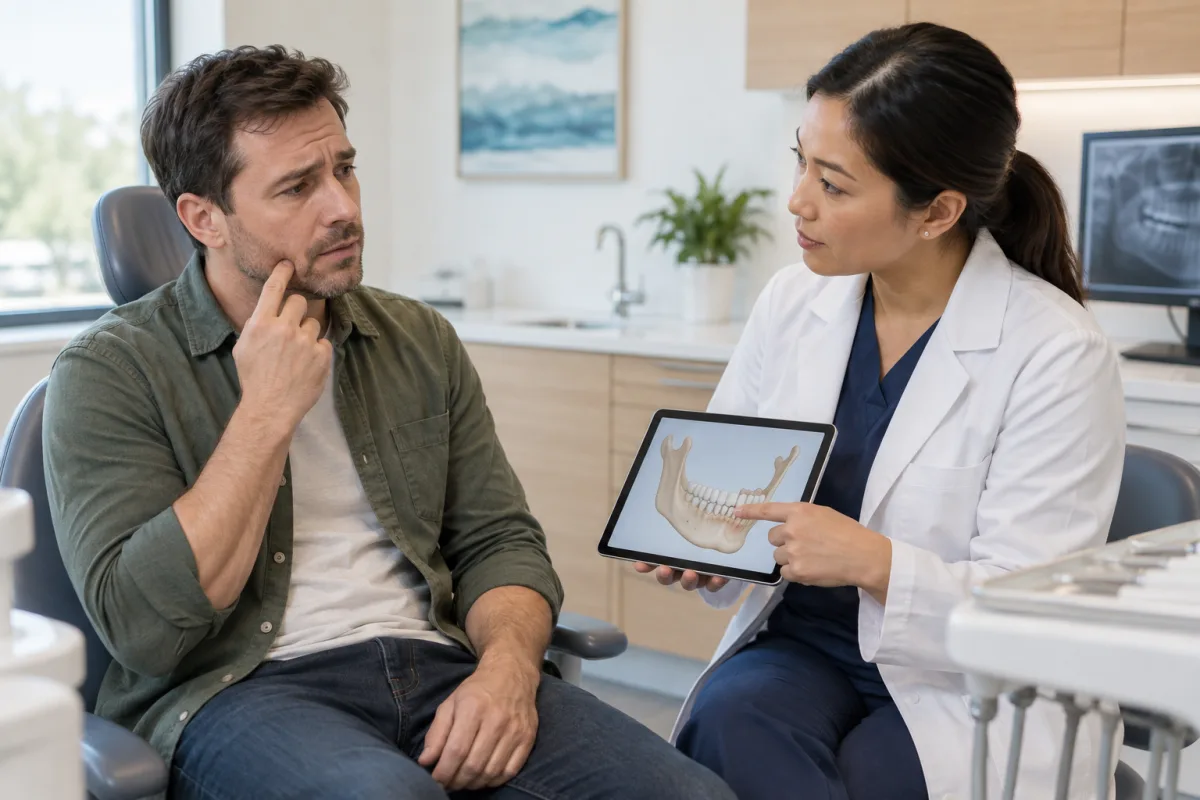
Describing pain
Notice whether the pain is constant or comes and goes, whether it is sharp or dull, and whether it is triggered by hot, cold, sweet foods or biting. Pain that lingers long after a cold drink, keeps you awake at night or throbs with your heartbeat can suggest the nerve is involved. Share these details when you call.
Swelling of the gum or face, a bad taste, a pimple on the gum, fever or a tooth that feels raised when you bite are important to mention. So are recent injuries, dental work or a cracked filling. These clues help the team judge urgency and what might be causing the pain before you arrive.
Easing the pain
Over-the-counter pain relief may help if it is safe for you; follow the label directions and ask a pharmacist if you have health conditions or take other medications. Rinse gently with warm salt water. Floss carefully around the tooth in case food is trapped. A cold compress on the outside of the cheek can ease swelling.
Avoid placing aspirin or other tablets directly on the gum, which can burn the tissue. Do not apply heat to a swollen face. Avoid very hot, cold or sweet foods and chewing on the painful side. Do not take leftover antibiotics without professional guidance, since they may be the wrong type or dose and can mask a worsening infection.
Finding the cause
The dentist will examine the area, tap and test teeth for sensitivity, check gum pockets and usually take x-rays. Pain can sometimes be felt in a different tooth from the one causing it, so testing helps locate the source accurately. Your description of the pain is an important part of the process from the start.
Common causes include deep decay, inflamed or infected pulp, an abscess, a cracked tooth or gum infection. Occasionally, sinus problems or jaw issues can mimic toothache. Once the cause is clear, the dentist will explain the options for relieving pain and treating the underlying problem, and which steps can safely wait for a later visit.
Treatment and after
Depending on the diagnosis, treatment might include a filling, starting root canal treatment, draining an abscess or extraction. Antibiotics may be prescribed in some cases of spreading infection. The dentist will explain what can be done at the first visit and what may need to follow. Ask how you can expect to feel in the day or two afterward.
Some treatments, such as root canals, need more than one appointment, often followed by a crown. Keep follow-up visits even if pain has eased. Contact the office if pain returns, swelling develops or new symptoms appear. Regular checkups help catch problems before they become painful, often when a small filling is still enough to fix them.
Planning your appointment
Phone our Port Dover office as soon as your toothache becomes severe or keeps getting worse. Describe the pain and any swelling or fever, and the team will advise on timing and next steps.
Note what pain relief you have taken and when, and have your medication and allergy list ready for the team.
Before you book
Have a question about your situation? Our team can help you plan a visit.
Lying down can increase pressure in the head, which may make an inflamed tooth throb more. Fewer distractions at night can also make pain more noticeable. Persistent night pain is worth mentioning to the dentist.
Yes. Pain can fade if the nerve dies or an abscess drains, but the problem often remains and can flare up again. An examination helps determine whether treatment is still needed and how urgent it is.
Not necessarily. Some toothaches are caused by decay that can be filled, gum problems or cracks. The dentist will test the tooth and explain whether root canal treatment or another option is most appropriate for you.
Yes. Sinus pressure can cause aching in the upper back teeth. The dentist can examine your teeth to help determine whether the pain is dental or may be related to your sinuses, and suggest seeing your doctor if needed.
Over-the-counter pain relievers may help if they are safe for you. Follow label directions and check with a pharmacist if you have health conditions or take other medicines. Never place a tablet directly on the gum.
Root canal treatment removes infected or inflamed tissue to save a tooth. Boston patients can learn how Port Dover diagnoses it and what recovery is like.
An emergency exam focuses on why a tooth hurts or swells and how to ease it. Boston patients can learn what is checked and how to prepare to call.
Recognized year after year
Best Dentists in Norfolk
Proudly recognized among Norfolk’s top-rated dental practices for six consecutive years.

2021 Winner

2022 Winner

2023 Winner

2024 Winner

2025 Winner

2026 Winner
Stories from our patients
Watch a patient’s experience and browse more five-star reviews from people who have visited our Port Dover dental clinic.
Patient video
A patient shares the welcoming atmosphere and positive experience they found at our Port Dover office.
Google reviews
Swipe or use the arrows
Read all reviewsYour next visit can start today
New patients and CDCP patients are welcome. Tell us how we can help and our Port Dover dental team will follow up with you.
Evening appointments Monday and Tuesday