
Pain Pattern
Timing, triggers, duration and whether pain is spontaneous or wakes you help narrow the possibilities.
Port Dover Family Dentistry
Severe toothache treatment in Port Dover begins with a focused diagnosis and may include restorative, root canal, periodontal or extraction care.
Let’s get you smiling
Tell us how we can help. Our team will follow up to confirm a time.
Severe dental pain?
Call for prompt assessment, especially when pain is worsening, interrupts sleep, or occurs with swelling, fever or a bad taste.
Severe toothache treatment in Port Dover
A severe toothache can result from deep decay, inflammation or infection inside a tooth, a crack, gum disease, bite trauma or another nearby structure. Symptoms alone cannot reliably show which treatment is needed.
We use a focused exam and, when indicated, dental X-rays to locate the source and assess the tooth. Treatment is then selected to address the cause—not simply cover up the pain.
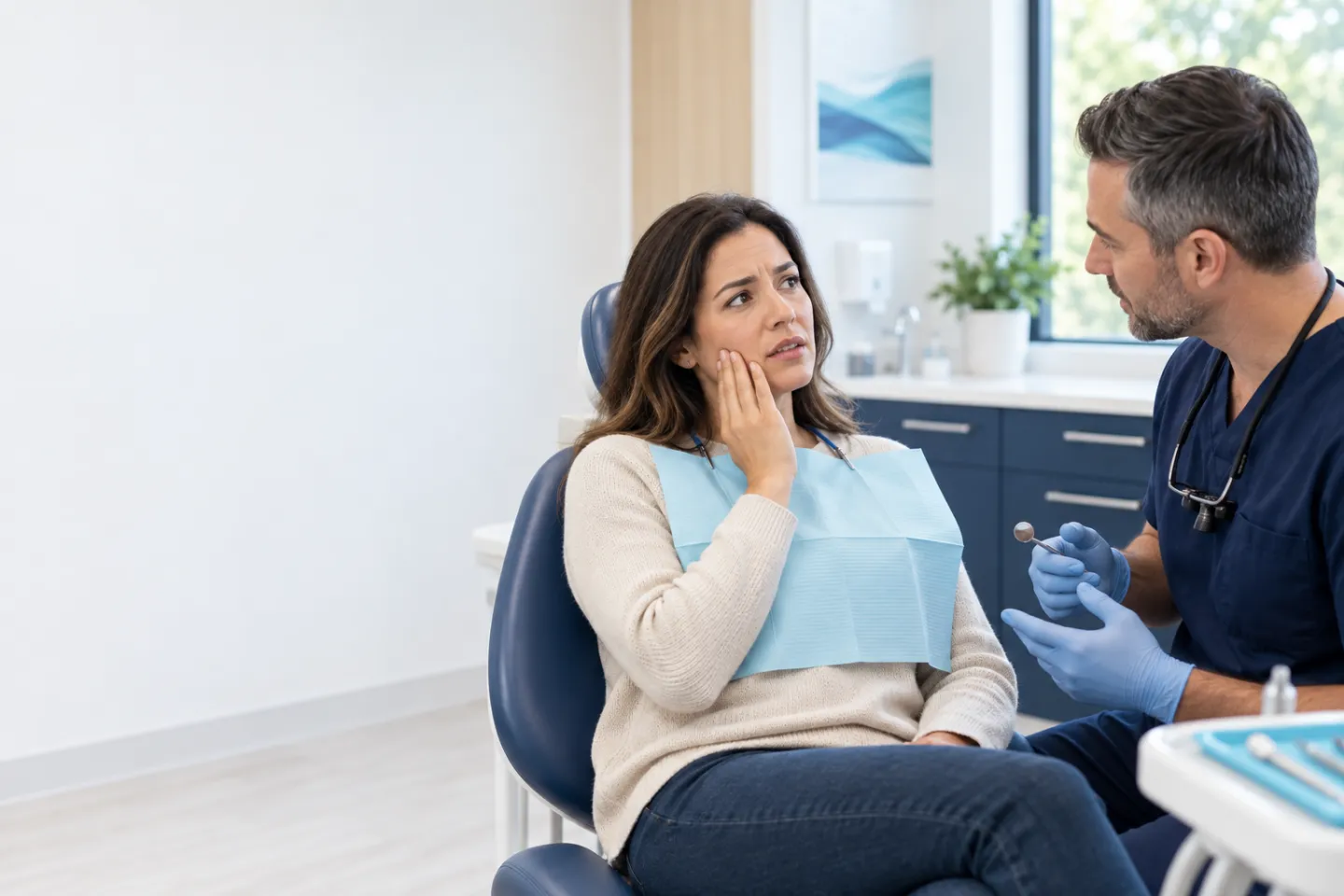
Pain can fluctuate
Temporary improvement does not always mean the problem has healed. A damaged or infected tooth may still require treatment even if symptoms become quieter.
Seek emergency medical care for trouble breathing or swallowing, rapidly spreading swelling, swelling around the eye or neck, uncontrolled bleeding, loss of consciousness, or serious facial trauma.
Diagnosis before treatment
Timing, triggers, duration and whether pain is spontaneous or wakes you help narrow the possibilities.
The dentist checks for decay, fractures, leaking restorations, tenderness, mobility and bite changes.
Clinical tests and X-rays may assess the tooth’s nerve, root, bone and surrounding gums.
Swelling, drainage, fever and difficulty opening the mouth help determine urgency and whether medical escalation is needed.
From pain to a plan
We review symptoms and health history, then examine and test the tooth and nearby structures.
The dentist explains the likely cause, restorability and options such as a filling, crown, root canal treatment, gum care or extraction.
Care may begin that day when feasible. If definitive treatment needs another visit, we outline interim care and warning signs.
Patterns provide clues
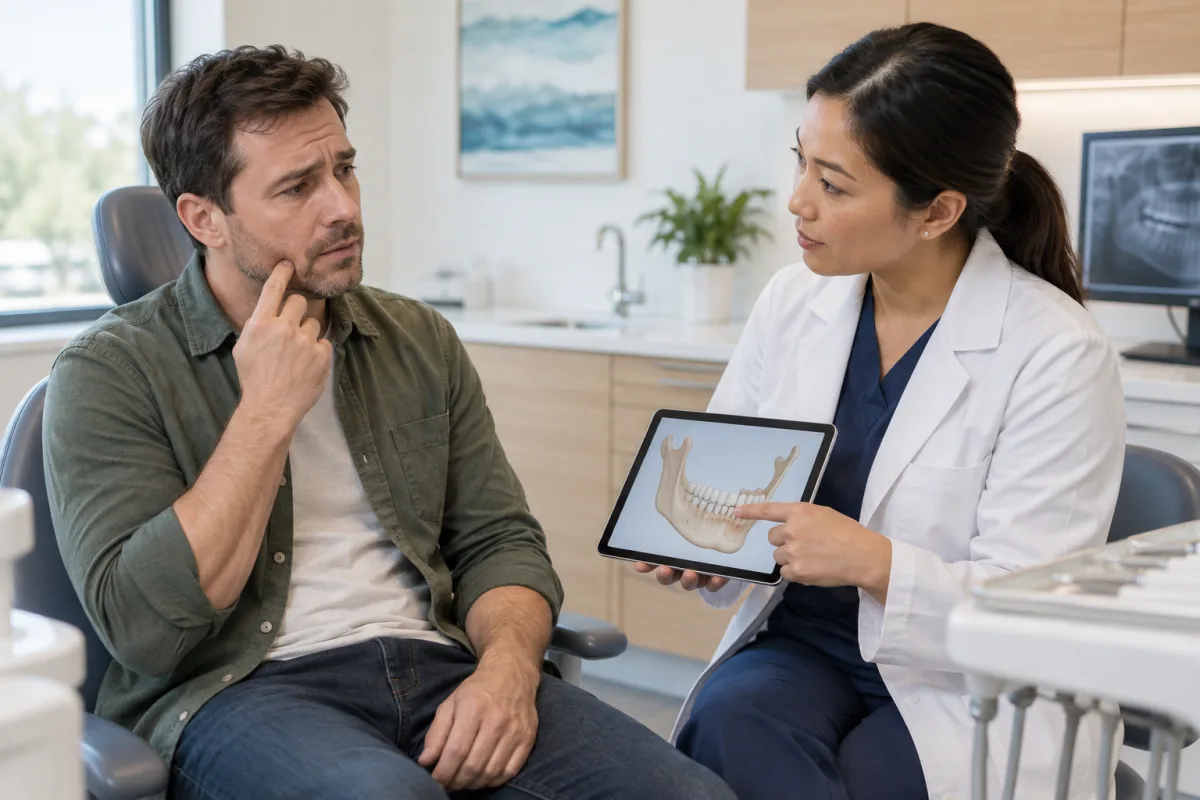
Where pain is felt is not always where it begins. A neighbouring tooth, the tissues around a tooth, the jaw muscles or another structure can sometimes create discomfort that seems to come from one specific spot.
The dentist compares your description with examination findings and response tests. No single pain pattern confirms a diagnosis, but the timing, trigger and duration help decide which tooth and tissues need closer investigation.
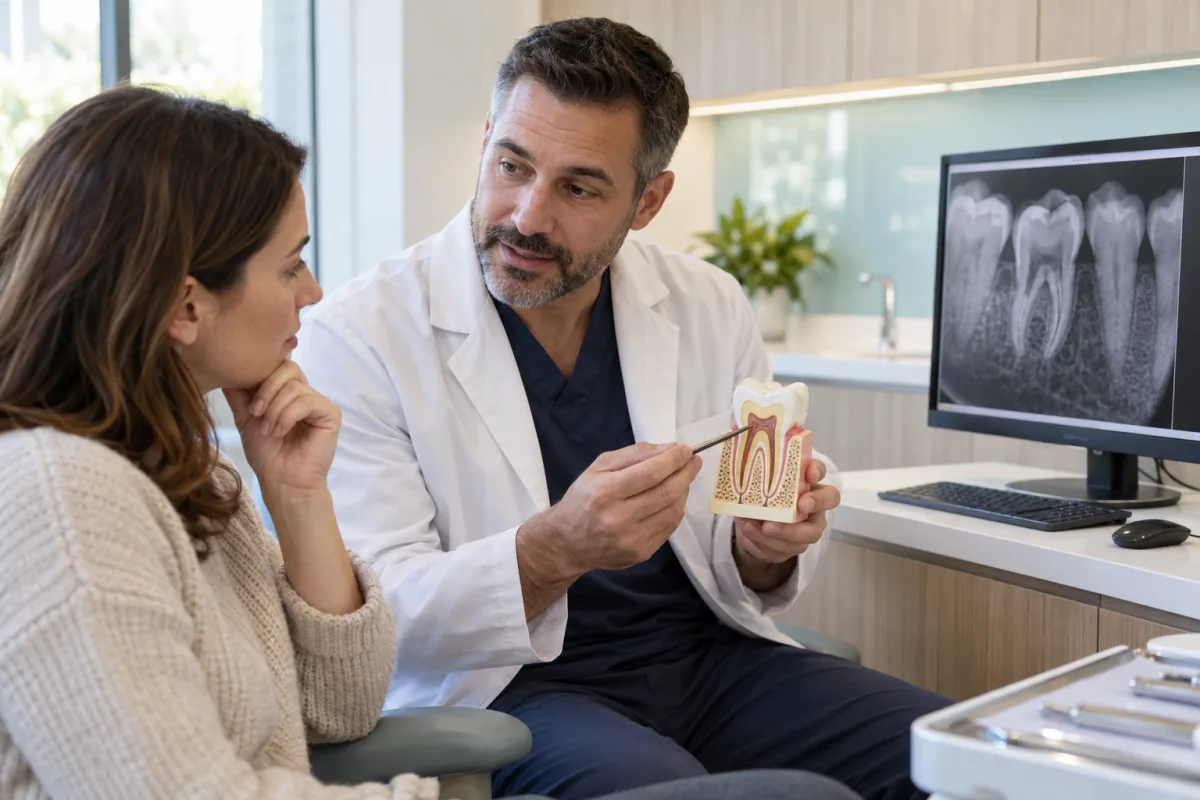
Pain from hot or cold—and how long it lingers after the stimulus is gone—can help guide pulp testing.
Pain when biting down or releasing may point toward a crack, bite issue or inflammation around the root.
Unprovoked, throbbing or sleep-disrupting pain is important to report even if it later subsides.
Treatment follows the diagnosis
Severe pain does not automatically mean extraction, and medication alone does not repair the source. The tooth’s condition and restorability guide the options.
Decay, a damaged filling or a restorable fracture may be treated with a filling, onlay or crown depending on the remaining tooth.
When the pulp is irreversibly inflamed or infected and the tooth can be restored, endodontic treatment may be considered.
Periodontal inflammation, food trapping or bite trauma may require treatment around the tooth rather than inside it.
Removal may be discussed when a tooth cannot be predictably restored or another option is not appropriate.
Antibiotics are reserved for selected infections and do not replace treatment of the dental source. Seek urgent reassessment if swelling, fever or general illness develops or worsens.
Before your visit
Keep the area clean, rinse gently with warm water and avoid very hot, cold or sugary triggers. Over-the-counter pain medication may help when used exactly as labelled and safe for your health.
Never place aspirin directly against the tooth or gum because it can injure tissue. Do not rely on leftover antibiotics or delay assessment if the pain eases.
Urgent toothache care
Call our team for triage and a focused assessment of the cause and treatment options.
Toothache questions
Inflamed dental tissues can feel more noticeable when lying down or when distractions are reduced. The pattern provides clues but an exam is still needed for diagnosis.
Not every toothache is caused by an infection that needs antibiotics. Even when antibiotics are appropriate, the source often still requires dental treatment.
No. Depending on the diagnosis and restorability, options may include a filling, crown, root canal treatment or periodontal care. Extraction is one possible treatment, not the automatic choice.
No. Aspirin against the gum can cause a chemical burn. Use medication only as directed on its label and ask a pharmacist or healthcare professional if you are unsure it is safe for you.
Seek emergency medical care for breathing or swallowing difficulty, rapidly spreading face or neck swelling, eye involvement, uncontrolled bleeding, confusion or serious trauma.
Recognized year after year
Best Dentists in Norfolk
Proudly recognized among Norfolk’s top-rated dental practices for six consecutive years.

2021 Winner

2022 Winner

2023 Winner

2024 Winner

2025 Winner

2026 Winner
Stories from our patients
Watch a patient’s experience and browse more five-star reviews from people who have visited our Port Dover dental clinic.
Patient video
A patient shares the welcoming atmosphere and positive experience they found at our Port Dover office.
Google reviews
Swipe or use the arrows
Read all reviewsOur community
Your next visit can start today
New patients and CDCP patients are welcome. Tell us how we can help and our Port Dover dental team will follow up with you.
Evening appointments Monday and Tuesday