
Patient video
Welcoming and Wonderful Practice
A patient shares the welcoming atmosphere and positive experience they found at our Port Dover office.
★★★★★
Port Dover Family Dentistry
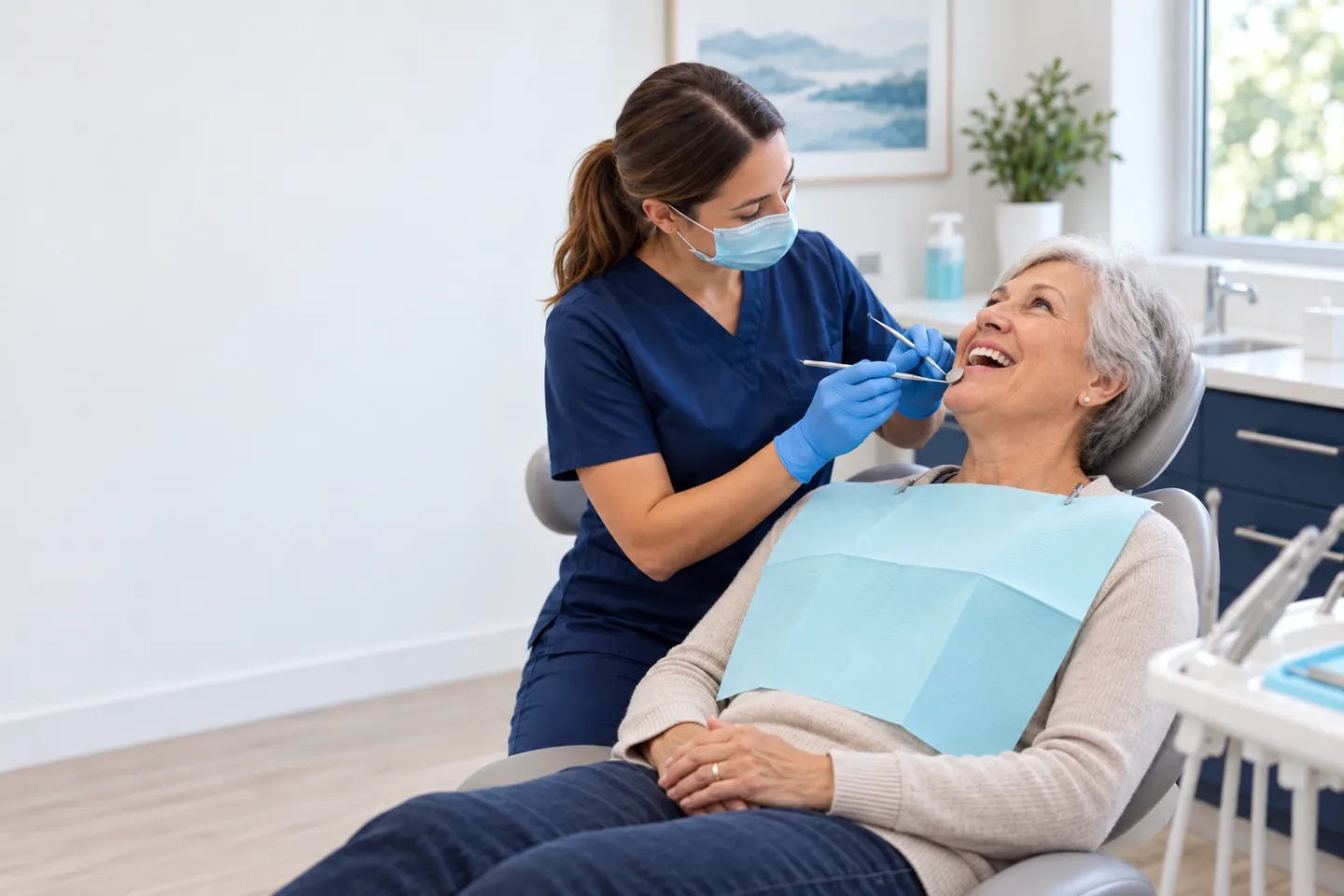
Older adults face changing teeth, gums, medications and mobility. Long Point seniors and families can plan comfortable, practical dental care in Port Dover.
Let’s get you smiling
Tell us how we can help. Our team will follow up to confirm a time.
Caring for Long Point residents, cottagers and visitors at our Port Dover office
Browse every dental service for Long PointCare that adapts with age
As people age, dental needs change. Gums may recede and expose sensitive roots, older fillings and crowns wear, saliva can decrease with medications, and conditions like arthritis can make brushing harder. Many older adults keep their natural teeth for life with good care, while others manage dentures or implants. Senior dental care looks at the whole person, including health, mobility and daily routines.
Whether you live on Long Point year-round or return to a cottage each season, our Port Dover office can plan care that fits changing needs and coordinate with family members or caregivers when helpful.
Common changes
Root decay near the gumline, worn or cracked teeth, failing old restorations and gum disease are common in older adults. Teeth may darken or become more brittle. Regular exams help catch changes early, when treatment is usually simpler. Mention sensitivity, food catching or bleeding gums at your visits so they can be investigated.
Many medicines reduce saliva, raising cavity risk and making dentures less comfortable. Conditions such as diabetes, heart disease and osteoporosis, and medications like blood thinners, can affect dental treatment. Bring an updated medication list to every visit so the dentist can plan safely and adjust recommendations as your health changes.
Practical support
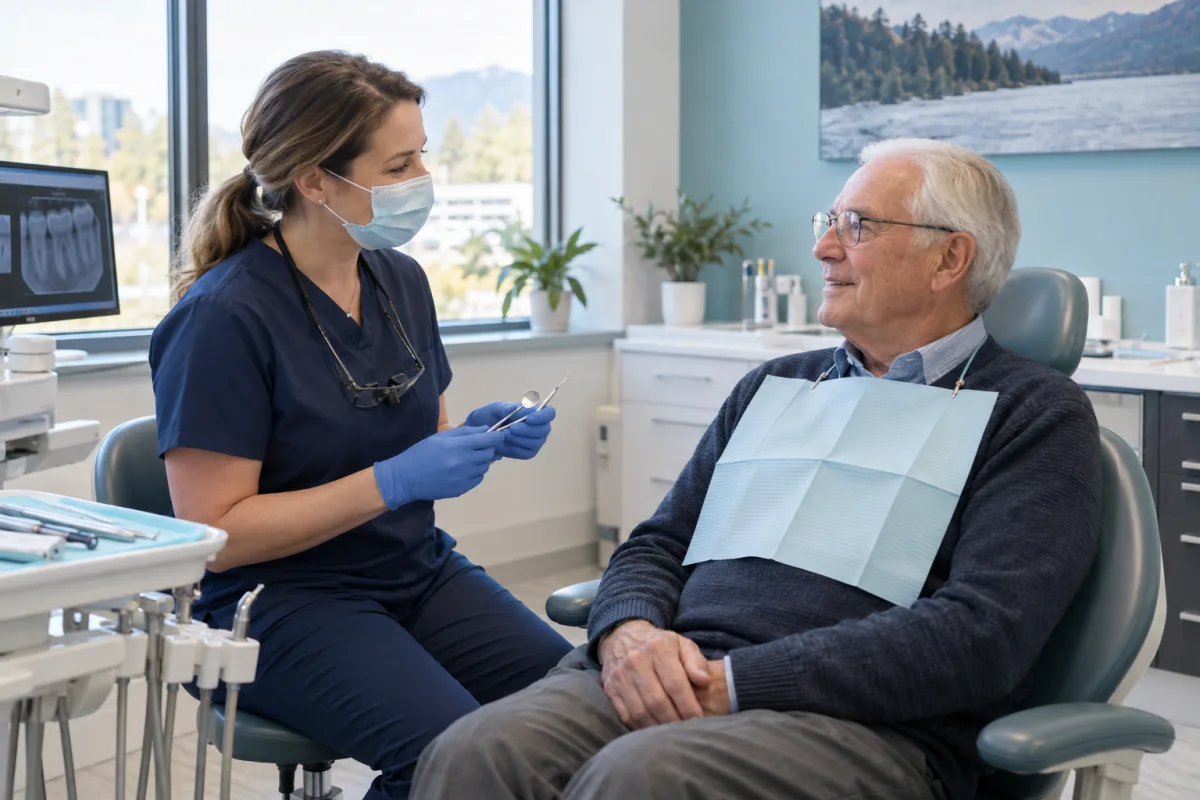
If you use a walker or wheelchair, tire easily or have difficulty lying back, tell the team when booking. Shorter appointments, breaks and positioning adjustments may be discussed. Morning or afternoon times may suit your energy better. Planning ahead makes the visit more comfortable and helps the team prepare.
A family member or caregiver can help with communication, transportation or home care, with your consent. Let the team know their role. They can learn how to help with brushing or denture care if needed. You remain involved in decisions about your own treatment.
Treatment planning
The dentist considers your overall health, comfort, preferences and how much treatment you want or can manage. Some people prefer to address everything, while others focus on comfort and function. Discuss what matters most to you, such as eating comfortably, avoiding pain or maintaining appearance, so the plan reflects your priorities.
If teeth are missing, options include bridges, partial or complete dentures and implants. Each has different requirements for health, maintenance and cost. The dentist will explain what suits your situation and how each might affect daily life, including cleaning and eating.
Home care
Arthritis or reduced grip can make brushing difficult. Electric toothbrushes, wide-handled brushes, floss holders and interdental brushes may help. Ask the hygienist to recommend tools and demonstrate techniques. High-fluoride toothpaste may be suggested if root decay is a concern.
Clean dentures daily and remove them overnight where advised. Brush gums, tongue and any remaining teeth. Watch for sore spots, white patches or sores that do not heal within two weeks, and report them. Regular checkups remain important, even for people with full dentures.
Planning your appointment
Call our Port Dover office to book an exam and mention any mobility needs or health conditions. Ask whether a family member or caregiver can attend and how long to allow.
Bring a full medication list, any dentures or appliances and the contact details of your physician if coordination may be needed.
Before you book
Have a question about your situation? Our team can help you plan a visit.
Yes. Gums, soft tissues and denture fit should be checked regularly. Oral cancer screening is also important. Changes in the mouth can affect comfort and health even without natural teeth.
Reduced saliva from medications, gum recession exposing roots and difficulty brushing can increase cavity risk in later life. The dentist may suggest fluoride products and adjustments to your routine.
With your consent, family members or caregivers can help with communication, transportation and home care. Let the team know their role so they can be included appropriately.
Age alone does not rule out implants. Bone, gum health and medical conditions matter more. The dentist will assess whether implants are suitable and discuss alternatives.
Adapted tools such as electric toothbrushes or wide-handled brushes may help. Ask the hygienist for recommendations and a demonstration. A caregiver can also learn how to assist.
Mobility, hearing, vision or stamina needs can shape a dental visit. Long Point patients can arrange practical support before coming to our Port Dover office.
A mouth that feels sticky, dry or burning can raise cavity risk. Long Point patients can explore causes and protective strategies for dry mouth in Port Dover.
Recognized year after year
Best Dentists in Norfolk
Proudly recognized among Norfolk’s top-rated dental practices for six consecutive years.

2021 Winner

2022 Winner

2023 Winner

2024 Winner

2025 Winner

2026 Winner
Stories from our patients
Watch a patient’s experience and browse more five-star reviews from people who have visited our Port Dover dental clinic.
Patient video
A patient shares the welcoming atmosphere and positive experience they found at our Port Dover office.
Google reviews
Swipe or use the arrows
Read all reviewsYour next visit can start today
New patients and CDCP patients are welcome. Tell us how we can help and our Port Dover dental team will follow up with you.
Evening appointments Monday and Tuesday