Patient video
Welcoming and Wonderful Practice
A patient shares the welcoming atmosphere and positive experience they found at our Port Dover office.
★★★★★

Port Dover Family Dentistry
Before covering a tooth's grooves, understand what the assessment found. Explore sealants, fluoride and questions about suspicious surfaces in our Waterford guide.
Let’s get you smiling
Tell us how we can help. Our team will follow up to confirm a time.
Preventive dental visits for Waterford children at our Port Dover practice
All dental services for WaterfordTwo preventive options with different purposes
Parents often hear sealants and fluoride mentioned together, but they do different jobs. Sealants cover selected grooves on tooth surfaces, while fluoride helps support resistance to decay. The recommendation should relate to your child's teeth, cavity history and current findings rather than an automatic choice for every appointment.
Waterford families can discuss preventive care at our Port Dover office. Bring questions about brushing products, new back teeth or advice from a previous visit. The assessment can explain why one or both measures may be useful and how they fit alongside daily care and regular examinations.
Understand the reason for prevention
The clinician considers the child's history and teeth when discussing preventive options. Ask which areas are vulnerable and whether a particular finding is being monitored or needs treatment. Prevention should be connected to what has been assessed, not used as a vague substitute for explaining a suspected cavity.
Describe earlier decay, products used at home and the areas your child finds difficult to clean. Include preventive care received elsewhere so the team can consider the existing routine. Ask what each proposed measure is intended to protect and whether another finding needs treatment first, rather than treating several suggestions as one interchangeable package.
Discuss sealants for selected grooves
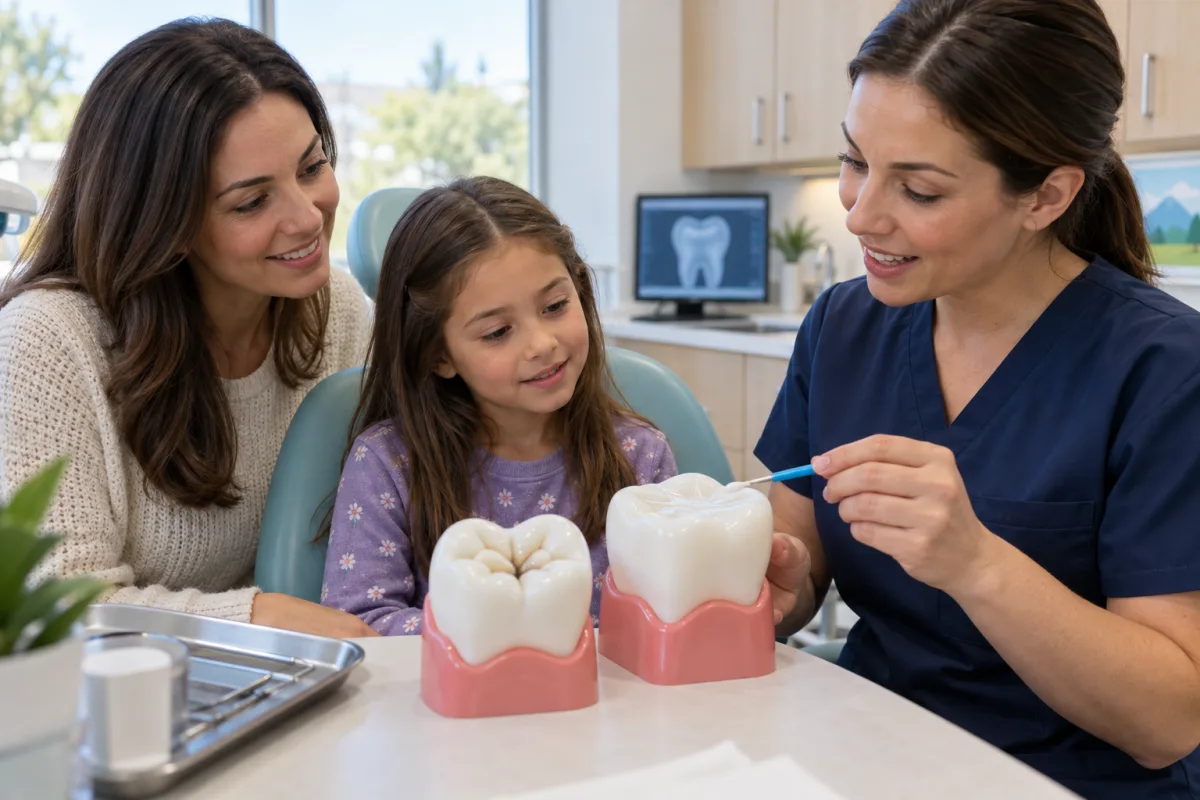
A sealant forms a protective covering over suitable pits and grooves, often on chewing surfaces. Ask which teeth are being considered and why. The dentist needs to determine the condition of those surfaces and whether a sealant, another preventive approach or restorative care is appropriate.
Ask how the surface is prepared and what your child will be asked to do during placement. Discuss how the material will be checked afterward and which instructions apply when you leave. A sealant covers selected areas rather than every tooth surface, so cleaning and review remain necessary and new discomfort should still be reported.
Review fluoride use as a whole
Bring the names or details of the products your child uses and describe how well they manage the instructions. Ask why professional fluoride is being considered and which application is proposed. Home advice should account for this child's age and needs, including the existing routine, rather than being copied from an older sibling's recommendations.
Follow the instructions provided for the particular treatment, including any guidance about eating, drinking or brushing afterward. Do not add supplements or stronger products on your own. If instructions from different sources seem inconsistent, ask the clinician to explain which apply to your child.
Keep prevention under review
Sealants can require monitoring or attention over time, and preventive needs can change as more teeth arrive. Ask when the treated surfaces will be reviewed and what happens if part of a sealant is lost. A useful plan explains how protection is maintained, not only how it is first applied.
Continue home care and examinations, and describe symptoms even when they involve a previously sealed or fluoride-treated tooth. If new decay is found, ask how that finding changes the wider prevention plan and whether any everyday obstacle needs attention. The review can address both the problem present now and the protection still useful for other surfaces.
Planning your appointment
Tell our Port Dover team your child's age and whether sealants or fluoride were recommended at an earlier assessment. Confirm whether the next appointment is for examination, discussion or a planned application.
Bring details of products used at home and previous preventive treatment if known. Ask for the reason, process and aftercare to be explained before giving consent to the proposed care.
Before you book
Have a question about your situation? Our team can help you plan a visit.
They serve different purposes and may be considered separately or together. Ask how each relates to the child's findings and risk. The recommendation should identify the teeth or preventive need involved rather than assume both are required simply because they are often discussed together.
The surface needs assessment before the appropriate approach is chosen. Some findings may be suitable for preventive management, while others need different care. Ask what the dentist has identified and why sealing or another option is recommended for that specific area.
No. The treated surfaces and the rest of the mouth still need daily care. Ask for help reaching difficult areas and continue the recommended examinations. A sealant protects selected grooves; it does not cover every surface or guarantee that a tooth will remain problem-free.
Bring details of what your child already uses and ask for an individualized recommendation first. Product type and instructions should fit the child's age and needs. Avoid adding stronger products or supplements without guidance about whether they are appropriate.
The clinician checks its condition at follow-up and discusses whether maintenance is needed. Ask when that review should occur and report a new concern between visits. You do not need to judge the sealant's integrity by appearance at home alone.
A loose baby tooth needs context from age, symptoms and any injury. Waterford families can discuss whether the change fits development during a child's dental exam.
Connect a child's dental cleaning with wider cavity prevention: our Waterford page considers daily habits, individual risk and other recommended preventive care.
Recognized year after year
Best Dentists in Norfolk
Proudly recognized among Norfolk’s top-rated dental practices for six consecutive years.

2021 Winner

2022 Winner

2023 Winner

2024 Winner

2025 Winner

2026 Winner
Stories from our patients
Watch a patient’s experience and browse more five-star reviews from people who have visited our Port Dover dental clinic.
Patient video
A patient shares the welcoming atmosphere and positive experience they found at our Port Dover office.
Google reviews
Swipe or use the arrows
Read all reviewsYour next visit can start today
New patients and CDCP patients are welcome. Tell us how we can help and our Port Dover dental team will follow up with you.
Evening appointments Monday and Tuesday