
Patient video
Welcoming and Wonderful Practice
A patient shares the welcoming atmosphere and positive experience they found at our Port Dover office.
★★★★★

Port Dover Family Dentistry
Sealants and fluoride can help protect children’s teeth from cavities. Nanticoke families can learn when they are recommended at our Port Dover office.
Let’s get you smiling
Tell us how we can help. Our team will follow up to confirm a time.
Caring for Nanticoke patients at our Port Dover office
Browse every service for Nanticoke patientsExtra protection for growing teeth
The chewing surfaces of back teeth have deep grooves where food and bacteria collect, and they are hard for children to brush thoroughly. Sealants are thin coatings painted into those grooves to block out decay. Fluoride strengthens enamel and helps repair early damage. Together, they are often recommended for children at risk of cavities.
Nanticoke families can ask about sealants and fluoride at their child’s checkup at our Port Dover office. The dentist or hygienist will assess your child’s teeth and cavity risk and explain whether these treatments would be beneficial.
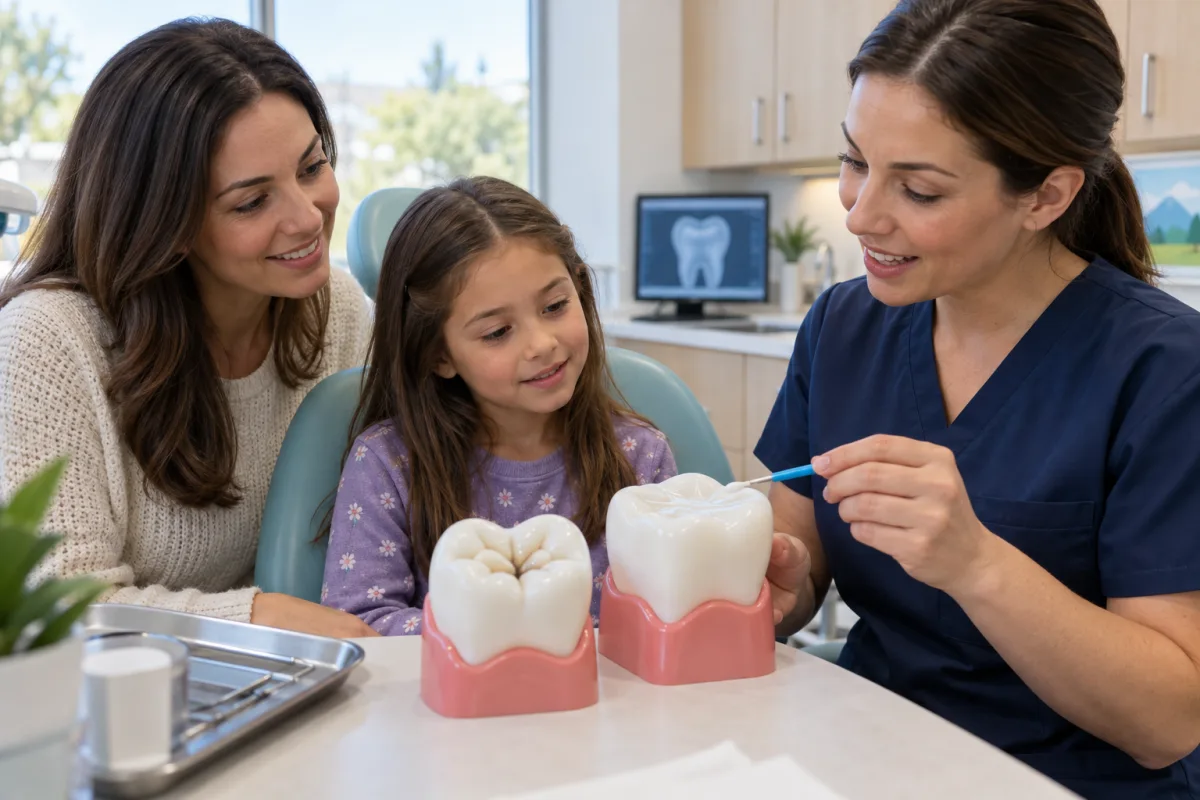
Sealants
Back teeth have pits and fissures that can trap food even with good brushing. A sealant is a liquid resin that flows into these grooves and hardens, creating a smooth surface that is easier to clean. It acts as a barrier between the enamel and bacteria. Sealants are not a replacement for brushing, but they add a layer of protection.
Sealants are often recommended for permanent molars soon after they come in, typically around ages six and twelve. Baby molars with deep grooves may also benefit in some cases. The dentist will check the teeth for early decay before applying sealants and explain which teeth would benefit most for your child.
Fluoride
Fluoride makes enamel more resistant to acid attacks from bacteria and sugars, and it can help reverse very early decay before it becomes a cavity. Professional fluoride treatments use a higher concentration than toothpaste, applied as a varnish, gel or foam. The hygienist will explain which form is used and how often it is recommended.
Fluoride toothpaste is the main source of fluoride for most children at home. Use an amount appropriate for your child’s age and supervise brushing so they spit rather than swallow. Ask the team about how much toothpaste to use and whether any additional fluoride is recommended for your child’s particular risk level.
The appointment
To apply sealants, the teeth are cleaned and dried, and a mild solution is used to prepare the surface. The sealant is painted onto the grooves and hardened with a curing light. No drilling or numbing is usually needed. The process takes just a few minutes per tooth, and children can eat normally afterward.
Fluoride varnish is painted onto the teeth with a small brush and sets quickly. Your child may be advised to avoid eating, drinking or brushing for a short time afterward so the fluoride can work. The team will give specific instructions. Some children notice a slight taste or texture that goes away after a while.
Ongoing care
Sealants can last several years, but they may chip or wear. The dentist checks them at regular visits and can repair or reapply them if needed. Avoid chewing ice or hard candies, which can damage sealants. If you notice a sealant has come off, mention it at your child’s next appointment.
Brushing twice daily with fluoride toothpaste, cleaning between teeth and limiting sugary snacks and drinks remain essential. Sealants protect the chewing surfaces but not the spaces between teeth. Regular checkups allow the dentist to monitor your child’s teeth and recommend fluoride or sealants as their needs change.
Planning your appointment
Ask about sealants and fluoride when booking your child’s checkup at our Port Dover office. The team can assess your child’s cavity risk and explain which treatments may be helpful.
Mention any past cavities or concerns about brushing, and ask about sealants as new molars come in.
Before you book
Have a question about your situation? Our team can help you plan a visit.
Sealants are often recommended for permanent molars soon after they come in, around ages six and twelve. Some baby teeth may also benefit. The dentist will advise based on your child’s teeth and cavity risk.
Sealants are widely used and considered safe. They are applied without drilling or numbing. If you have concerns about the materials, ask the dentist to explain what is used and why sealants are recommended.
Sealants can last several years with good care, though they may wear or chip. The dentist checks them at regular visits and can repair or reapply them if needed to maintain protection.
Fluoride varnish is commonly used for children and applied in small amounts. The hygienist will explain how it is applied and any instructions afterward. Discuss any concerns with the dental team before treatment.
Yes. Sealants protect the chewing surfaces of back teeth but not the rest of the tooth or the spaces between teeth. Brushing twice daily and cleaning between teeth are still essential to prevent cavities.
Regular dental exams help catch changes early as children grow. See what a checkup involves for Nanticoke kids visiting our Port Dover family practice.
A child may report a sore tooth before you see anything. Nanticoke parents can learn how cavities are monitored or filled and how to prepare kids for the visit.
Recognized year after year
Best Dentists in Norfolk
Proudly recognized among Norfolk’s top-rated dental practices for six consecutive years.

2021 Winner

2022 Winner

2023 Winner

2024 Winner

2025 Winner

2026 Winner
Stories from our patients
Watch a patient’s experience and browse more five-star reviews from people who have visited our Port Dover dental clinic.
Patient video
A patient shares the welcoming atmosphere and positive experience they found at our Port Dover office.
Google reviews
Swipe or use the arrows
Read all reviewsYour next visit can start today
New patients and CDCP patients are welcome. Tell us how we can help and our Port Dover dental team will follow up with you.
Evening appointments Monday and Tuesday