
Patient video
Welcoming and Wonderful Practice
A patient shares the welcoming atmosphere and positive experience they found at our Port Dover office.
★★★★★

Port Dover Family Dentistry
Sealants shield deep grooves and fluoride strengthens enamel. Long Point families can ask our Port Dover team whether these steps suit their child’s teeth.
Let’s get you smiling
Tell us how we can help. Our team will follow up to confirm a time.
Caring for Long Point residents, cottagers and visitors at our Port Dover office
Browse every dental service for Long PointProtect before decay starts
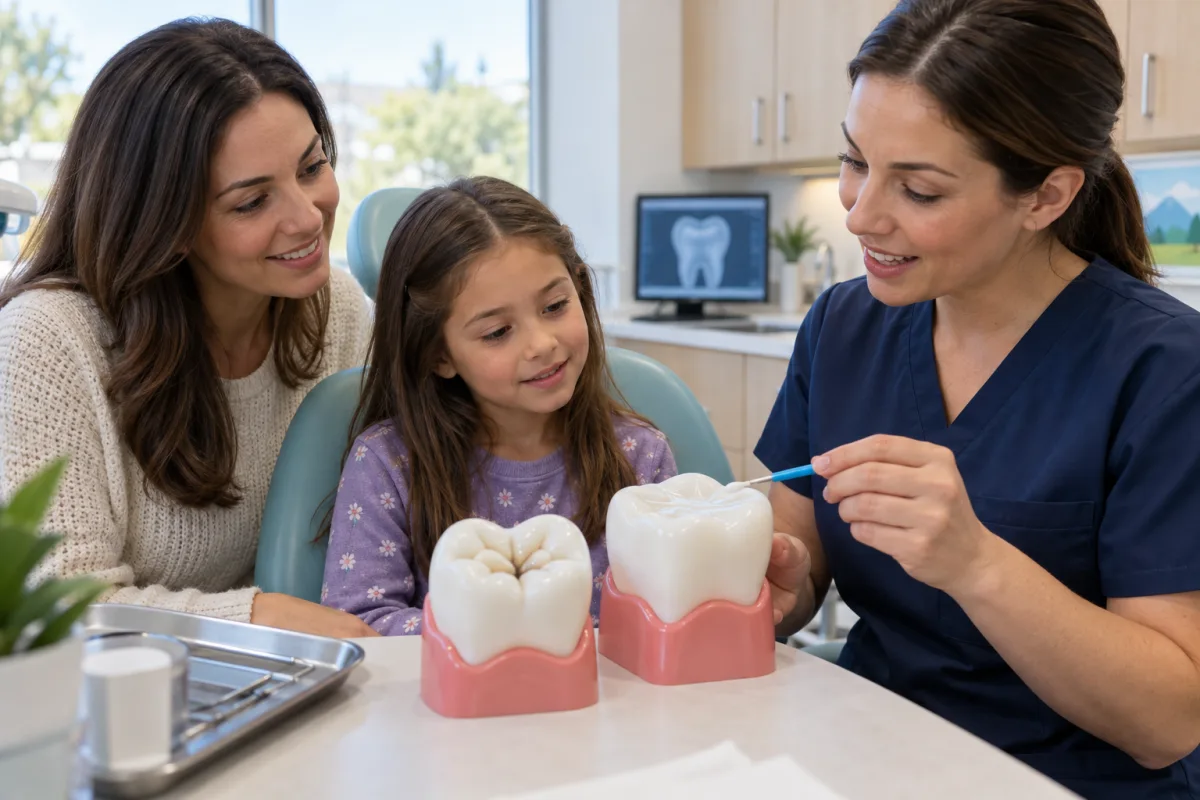
Back teeth have deep grooves where food and bacteria hide, and toothbrush bristles do not always reach the bottom. A sealant is a thin protective coating painted into those grooves to seal them. Fluoride varnish is a different measure: a mineral applied to the teeth that helps strengthen enamel and can slow very early decay. Each targets a different part of cavity prevention.
Long Point families can ask about sealants and fluoride during their child’s checkup at our Port Dover office. The dentist will consider your child’s cavity risk and which teeth would benefit.
How they protect
Sealants are usually placed on the chewing surfaces of permanent molars soon after they erupt, often around ages six and twelve, though baby molars or premolars may also be sealed in some cases. By filling deep pits, sealants make the surface smoother and easier to clean, lowering the chance that decay will start in those grooves.
Fluoride varnish is painted on the teeth and sets quickly. It releases fluoride that helps enamel resist acid and can help repair very early weak spots. It is often recommended for children at higher risk of cavities, but many children benefit. The dentist will suggest how often it should be applied.
Is your child a candidate?
Frequent snacking, sweet drinks, deep grooves in molars, past cavities, braces or difficulty brushing well can all raise cavity risk. Siblings with cavities may also signal higher risk. If your home uses well water, mention it, since fluoride levels can vary. The dentist will use this information to recommend protective steps.
Before a sealant is placed, the dentist checks that the tooth is free of decay. If a small cavity is present, it may need a filling instead. X-rays may help confirm the tooth is healthy. Sealants work best on teeth that are fully erupted and can be kept dry during placement.
The appointment
The tooth is cleaned, dried and prepared with a gentle solution. The sealant liquid is painted into the grooves and hardened with a light. No freezing or drilling is needed for a standard sealant. Children usually tolerate it well. The dentist checks the bite and makes sure the surface is smooth.
Fluoride varnish is brushed onto the teeth and sets on contact with saliva. It may feel slightly sticky. Your child may be asked to avoid hard or sticky foods and brushing for a few hours afterward so the varnish can work. The team will give specific instructions.
Keeping them working
Sealants can last several years but may wear or chip. The dentist checks them at regular visits and can repair or replace them if needed. If you notice a sealant has come off or your child complains of a rough spot, mention it at the next appointment.
Sealants and fluoride do not replace brushing and flossing. Help your child brush twice daily with fluoride toothpaste, clean between teeth and keep sweets and sugary drinks to mealtimes. Water is the best drink between meals, especially during long summer days spent outside.
Planning your appointment
Ask about sealants and fluoride when booking your child’s checkup at our Port Dover office. The team can explain whether they are recommended and allow time in the appointment.
If your family uses well water, mention it so fluoride advice can account for your water source.
Before you book
Have a question about your situation? Our team can help you plan a visit.
No. Placing a standard sealant involves no drilling or freezing. The tooth is cleaned and the sealant is painted on and hardened. Most children find it quick and easy.
Sealants can last several years with normal chewing. They are checked at regular visits and can be repaired or replaced if they wear or come loose over time.
Fluoride varnish is applied in small amounts and is widely used for children. The dentist will consider your child’s age, risk and other fluoride sources when recommending it.
Sometimes. Adults with deep grooves and no decay may benefit. Sealants are most commonly placed on children’s permanent molars soon after they erupt, when cavity risk is high.
Sealants reduce risk on chewing surfaces but do not protect between teeth. Brushing, flossing and regular checkups are still important. Cavities can still develop in unsealed areas.
Regular checkups follow a child’s teeth as they grow. Long Point families can book children’s dental exams in Port Dover and learn what each visit looks at.
Found a dark spot on your child’s tooth or heard a cavity mentioned? Long Point families can learn how kids’ fillings are planned and explained in Port Dover.
Recognized year after year
Best Dentists in Norfolk
Proudly recognized among Norfolk’s top-rated dental practices for six consecutive years.

2021 Winner

2022 Winner

2023 Winner

2024 Winner

2025 Winner

2026 Winner
Stories from our patients
Watch a patient’s experience and browse more five-star reviews from people who have visited our Port Dover dental clinic.
Patient video
A patient shares the welcoming atmosphere and positive experience they found at our Port Dover office.
Google reviews
Swipe or use the arrows
Read all reviewsYour next visit can start today
New patients and CDCP patients are welcome. Tell us how we can help and our Port Dover dental team will follow up with you.
Evening appointments Monday and Tuesday