
Patient video
Welcoming and Wonderful Practice
A patient shares the welcoming atmosphere and positive experience they found at our Port Dover office.
★★★★★
Port Dover Family Dentistry
A root canal can save a tooth with an infected or inflamed nerve. Walsingham patients can learn the signs, what treatment involves and why a crown often follows.
Let’s get you smiling
Tell us how we can help. Our team will follow up to confirm a time.
Serving Walsingham households from our Port Dover office
See every dental service for WalsinghamSaving the natural tooth
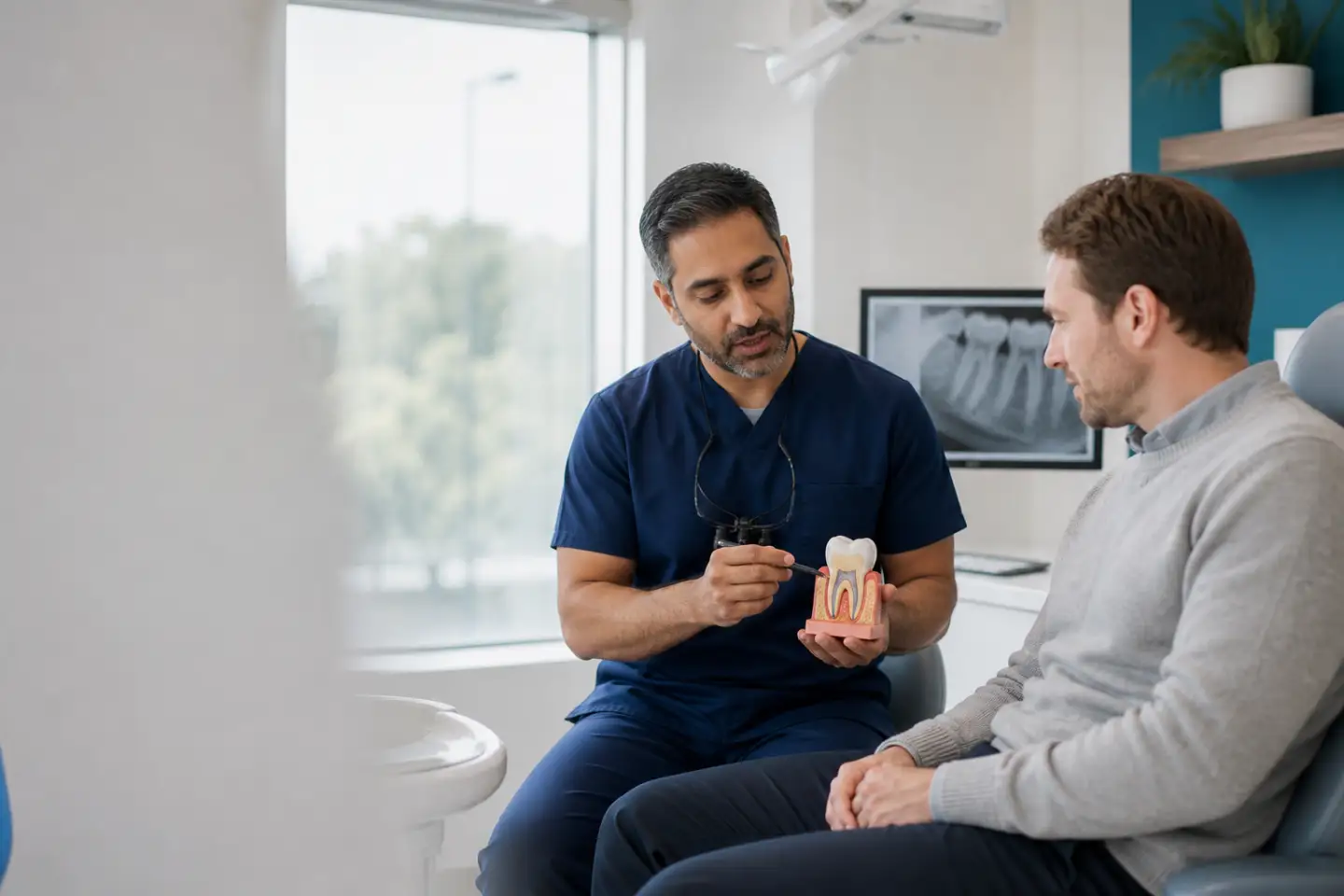
Inside each tooth is soft tissue called the pulp, which contains nerves and blood vessels. Deep decay, cracks, repeated dental work or injury can inflame or infect it. Root canal treatment removes this tissue, cleans and shapes the canals inside the root and seals them. It allows many teeth that would otherwise need extraction to be kept for years.
Walsingham patients with a painful or infected tooth can be assessed at our Port Dover office. The dentist will test the tooth, take X-rays and explain whether root canal treatment is recommended, what the alternatives are and what to expect during and after the procedure, including any restoration needed afterwards.
Signs
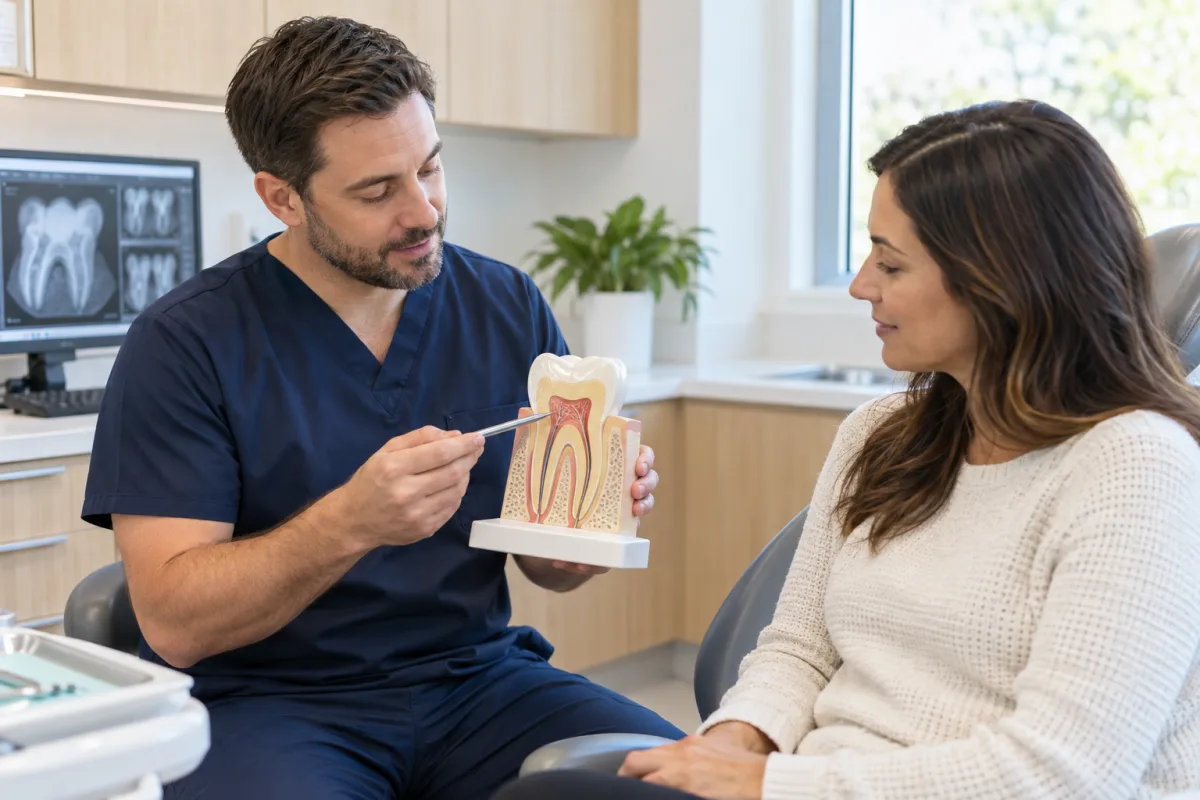
Lingering sensitivity to hot or cold, severe toothache, pain when biting, a tooth that has darkened and swelling or a pimple on the gum can all suggest the pulp is affected. Pain that wakes you at night or throbs constantly is a reason to call promptly. The dentist will test the tooth to confirm the cause.
Sometimes an infected tooth causes no pain at all, especially if the nerve has died. The problem may be found on an X-ray during a routine visit. Even without symptoms, an infection at the root tip can damage bone and spread. Treating it helps prevent future pain and complications.
Diagnosis
The dentist uses cold tests, tapping and bite tests to check the nerve, along with X-rays to look at the root and surrounding bone. These help determine whether the pulp is inflamed, infected or dead, and whether the tooth is strong enough to be saved. The findings are explained in plain language.
Alternatives to root canal treatment typically include removing the tooth, followed by options for replacing it. The dentist will explain the benefits, limitations and costs of each option. Complex cases, such as teeth with unusual root shapes or previous treatment, may be referred to an endodontist.
Treatment
After freezing, a thin rubber sheet is placed to keep the tooth clean and dry. The dentist makes a small opening and removes the inflamed or infected pulp. The canals are cleaned, shaped and disinfected with fine instruments and solutions. Treatment may be completed in one visit or spread over two, depending on the tooth.
Once the canals are clean, they are filled with a rubber-like material and sealed. A temporary or permanent filling closes the opening. Back teeth that have had root canals are often more brittle, so a crown is frequently recommended afterwards to protect the tooth from breaking.
Recovery
The tooth may feel tender for a few days, especially when biting. Over-the-counter pain relief, taken as directed if safe for you, usually helps. Avoid chewing hard foods on the treated tooth until it is fully restored. Contact the office if swelling develops, pain worsens or the temporary filling comes out.
If a crown or permanent filling is recommended, book it soon. Leaving the tooth with only a temporary filling increases the risk of fracture or reinfection. With a proper restoration, good home care and regular checkups, a tooth that has had root canal treatment can last for many years.
Planning your appointment
If you are in Walsingham and have a toothache, swelling or sensitivity that lingers, call our Port Dover office. Describe your symptoms so the team can advise on urgency and arrange an assessment.
Bring a list of your medications and let the team know about any previous treatment on the tooth, including past root canals.
Before you book
Have a question about your situation? Our team can help you plan a visit.
With modern anaesthetic, most people feel little discomfort during treatment. It often relieves the pain caused by an infected nerve. Some tenderness afterwards is normal and usually settles.
Teeth that have had root canals, especially back teeth, can become brittle and more likely to fracture. A crown helps protect the tooth and restore full chewing function.
Antibiotics may help control spreading infection, but they cannot clean the inside of the tooth. Root canal treatment or extraction is usually needed to resolve the source.
It depends on the tooth and how complex the canals are. Some are completed in one visit, others need two. The dentist will give you an estimate.
Most root canals are successful, but occasionally infection persists or returns. Retreatment, surgery or extraction may then be options. Regular checkups help monitor healing.
A crown covers and strengthens a tooth weakened by a large filling, crack or root canal. Walsingham patients can learn about materials, visits and long-term care.
Throbbing pain, a gum bump or swelling near a tooth may mean an abscess. Walsingham residents can learn the warning signs and how our Port Dover dentists treat the source.
Recognized year after year
Best Dentists in Norfolk
Proudly recognized among Norfolk’s top-rated dental practices for six consecutive years.

2021 Winner

2022 Winner

2023 Winner

2024 Winner

2025 Winner

2026 Winner
Stories from our patients
Watch a patient’s experience and browse more five-star reviews from people who have visited our Port Dover dental clinic.
Patient video
A patient shares the welcoming atmosphere and positive experience they found at our Port Dover office.
Google reviews
Swipe or use the arrows
Read all reviewsYour next visit can start today
New patients and CDCP patients are welcome. Tell us how we can help and our Port Dover dental team will follow up with you.
Evening appointments Monday and Tuesday