
Patient video
Welcoming and Wonderful Practice
A patient shares the welcoming atmosphere and positive experience they found at our Port Dover office.
★★★★★
Port Dover Family Dentistry
Root canal treatment can save a tooth with an inflamed or infected nerve. Villa Nova patients can learn about diagnosis, visits and protecting the tooth after.
Let’s get you smiling
Tell us how we can help. Our team will follow up to confirm a time.
Caring for Villa Nova patients at our Port Dover office
Every dental service for Villa NovaSaving the natural tooth
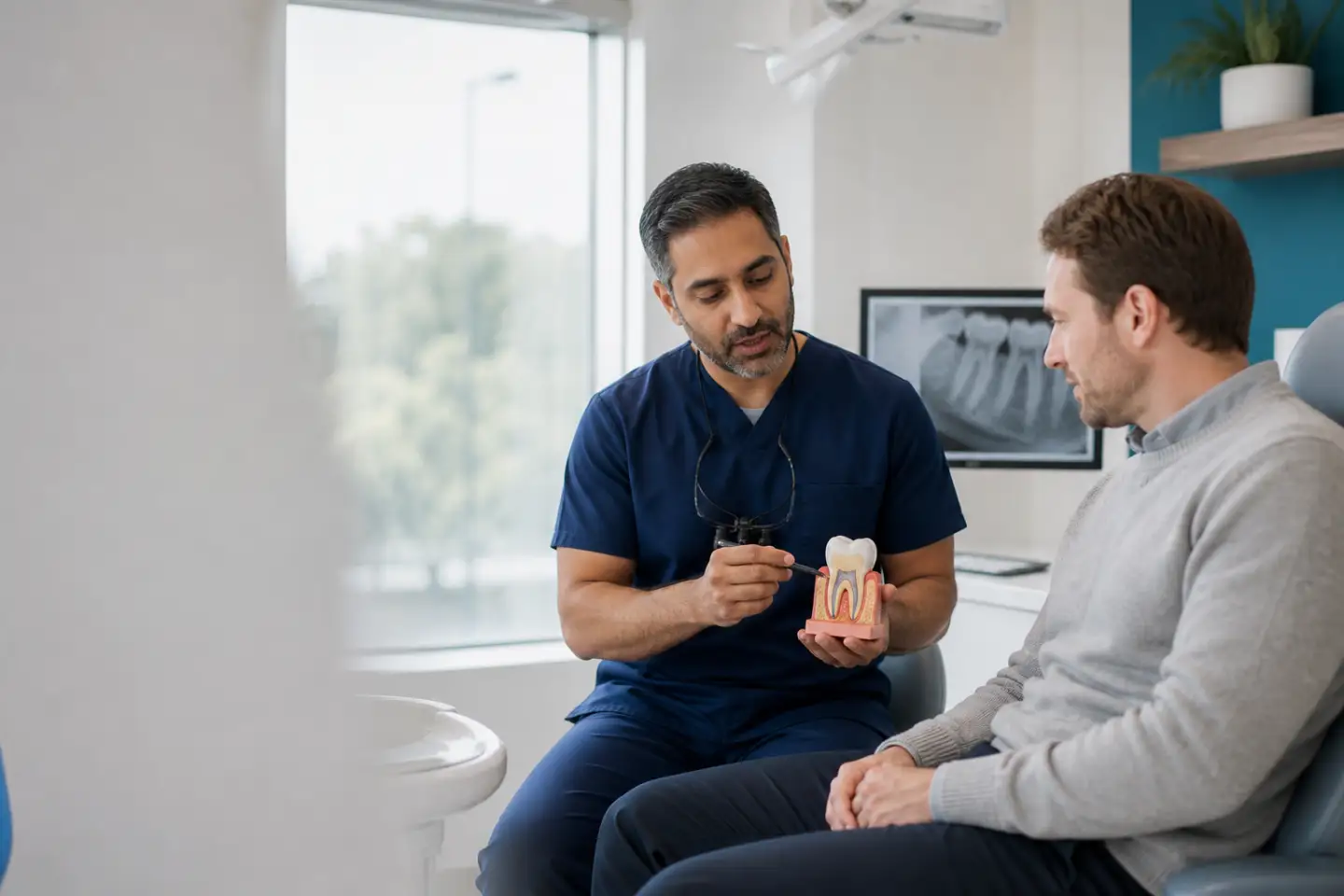
Inside every tooth is soft tissue called the pulp, which contains nerves and blood vessels. Deep decay, cracks or injury can cause this tissue to become inflamed or infected, leading to pain, sensitivity or swelling. Root canal treatment cleans out the damaged pulp, disinfects the canals and seals them, allowing the tooth to be kept rather than removed.
Villa Nova patients who have been told they may need a root canal can have the tooth assessed at our Port Dover office. The dentist will confirm the diagnosis and explain the treatment steps and what comes afterward.
Signs and diagnosis
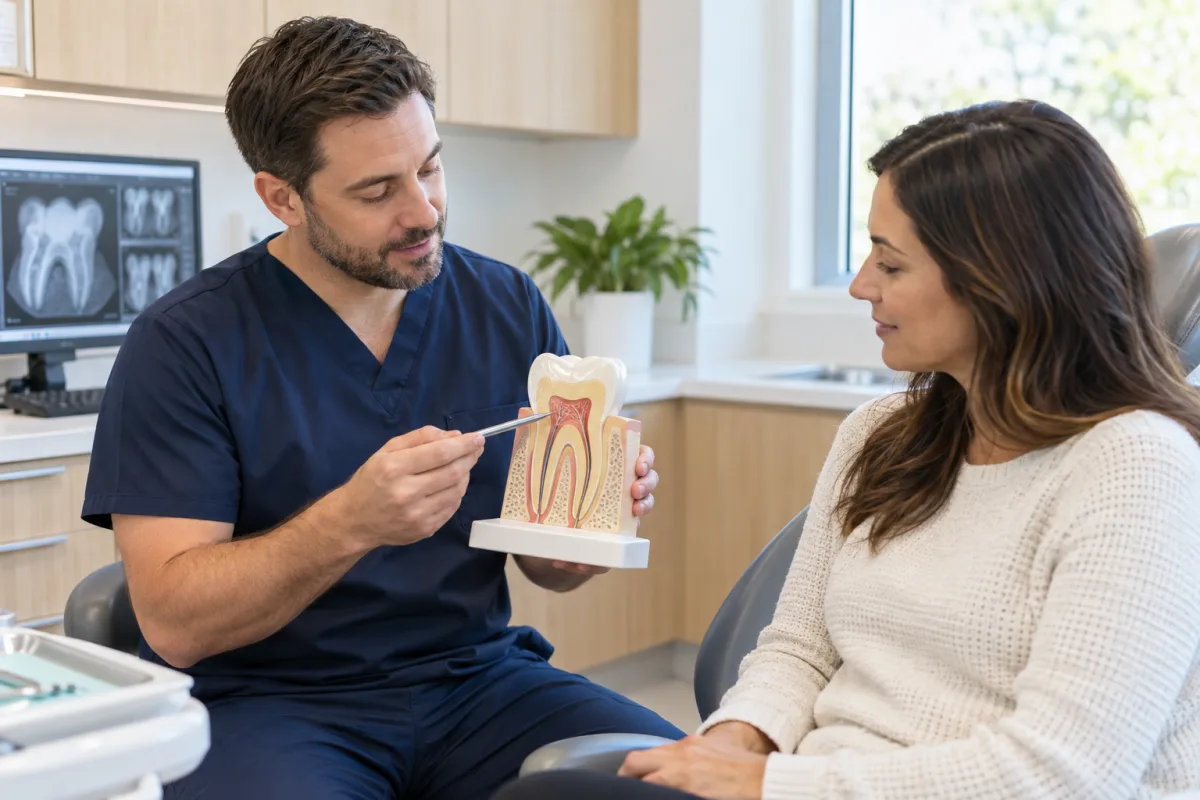
Lingering sensitivity to hot or cold, spontaneous throbbing pain, pain when biting, a darkened tooth, swelling of the gum or a pimple near the tooth may indicate pulp problems. Some teeth have no symptoms and are found during an exam or on X-rays. Note what triggers your pain and how long it lasts.
The dentist will examine the tooth, test its response to temperature and pressure and take X-rays to look for signs of infection at the root tip. These tests help distinguish pulp problems from other causes of pain, like a cracked tooth or gum issue, so treatment is properly targeted.
Weighing options
Root canal treatment preserves your natural tooth, maintaining chewing function and preventing neighbouring teeth from shifting. Success depends on factors like the amount of tooth structure remaining and whether the tooth can be properly restored afterward. The dentist will explain the outlook for your tooth.
Extraction is another option, followed by replacement with a bridge, implant or partial denture, or leaving the space. Ask the dentist to compare the benefits, risks and long-term considerations of each option so you can make an informed choice.
Treatment steps
Local anaesthetic numbs the tooth and surrounding area. A small barrier may be placed to keep the tooth dry. The dentist creates an opening to reach the pulp chamber and canals. Most people find the procedure similar to having a filling, though it may take longer.
The canals are cleaned, shaped and disinfected, then filled with a sealing material. A temporary or permanent filling closes the opening. Complex cases, such as curved or calcified canals, may be referred to an endodontist. The dentist will explain if a referral is recommended.
Afterward
Some tenderness is common for a few days after treatment. Over-the-counter pain relief, used as directed, often helps. Avoid chewing hard foods on the treated tooth until it is fully restored. Contact the office if swelling increases, pain worsens or the temporary filling comes out.
Teeth that have had root canal treatment, especially back teeth, can become brittle. A crown or other suitable restoration is often recommended to protect the tooth from fracture. Ask about timing and keep the appointment, as delays can risk the success of the treatment.
Planning your appointment
Call our Port Dover office if you have tooth pain or have been told you need a root canal. The team can arrange an assessment and explain the visits involved.
Bring any X-rays or notes from another dentist, and ask how many appointments the final restoration will need.
Before you book
Have a question about your situation? Our team can help you plan a visit.
Local anaesthetic keeps the tooth numb during treatment. Many people find it similar to a filling. Some tenderness afterward is normal.
It may be completed in one or more visits, depending on complexity and infection. The dentist will explain the plan for your tooth.
Often, especially for back teeth. A crown helps protect the treated tooth from breaking. The dentist will advise on the best restoration.
Most are successful, but reinfection can occur. Signs include returning pain or swelling. Retreatment or other options may be discussed.
It depends on the tooth and your preferences. Saving the natural tooth is often preferred, but the dentist will discuss alternatives.
A crown covers a weakened tooth to restore its shape and strength. Villa Nova patients can learn when crowns are advised, the visits involved and ongoing care.
A gum pimple, throbbing tooth or swelling can signal an abscess. Villa Nova patients can learn when to call our Port Dover office and when to go to emergency.
Recognized year after year
Best Dentists in Norfolk
Proudly recognized among Norfolk’s top-rated dental practices for six consecutive years.

2021 Winner

2022 Winner

2023 Winner

2024 Winner

2025 Winner

2026 Winner
Stories from our patients
Watch a patient’s experience and browse more five-star reviews from people who have visited our Port Dover dental clinic.
Patient video
A patient shares the welcoming atmosphere and positive experience they found at our Port Dover office.
Google reviews
Swipe or use the arrows
Read all reviewsYour next visit can start today
New patients and CDCP patients are welcome. Tell us how we can help and our Port Dover dental team will follow up with you.
Evening appointments Monday and Tuesday