
Patient video
Welcoming and Wonderful Practice
A patient shares the welcoming atmosphere and positive experience they found at our Port Dover office.
★★★★★
Port Dover Family Dentistry
Root canal treatment removes infected or inflamed pulp to save a tooth. Nixon patients can learn the signs, the procedure and why a crown often follows.
Let’s get you smiling
Tell us how we can help. Our team will follow up to confirm a time.
Serving patients from Nixon and the surrounding countryside at our Port Dover office
See every dental service for NixonSaving a tooth from the inside
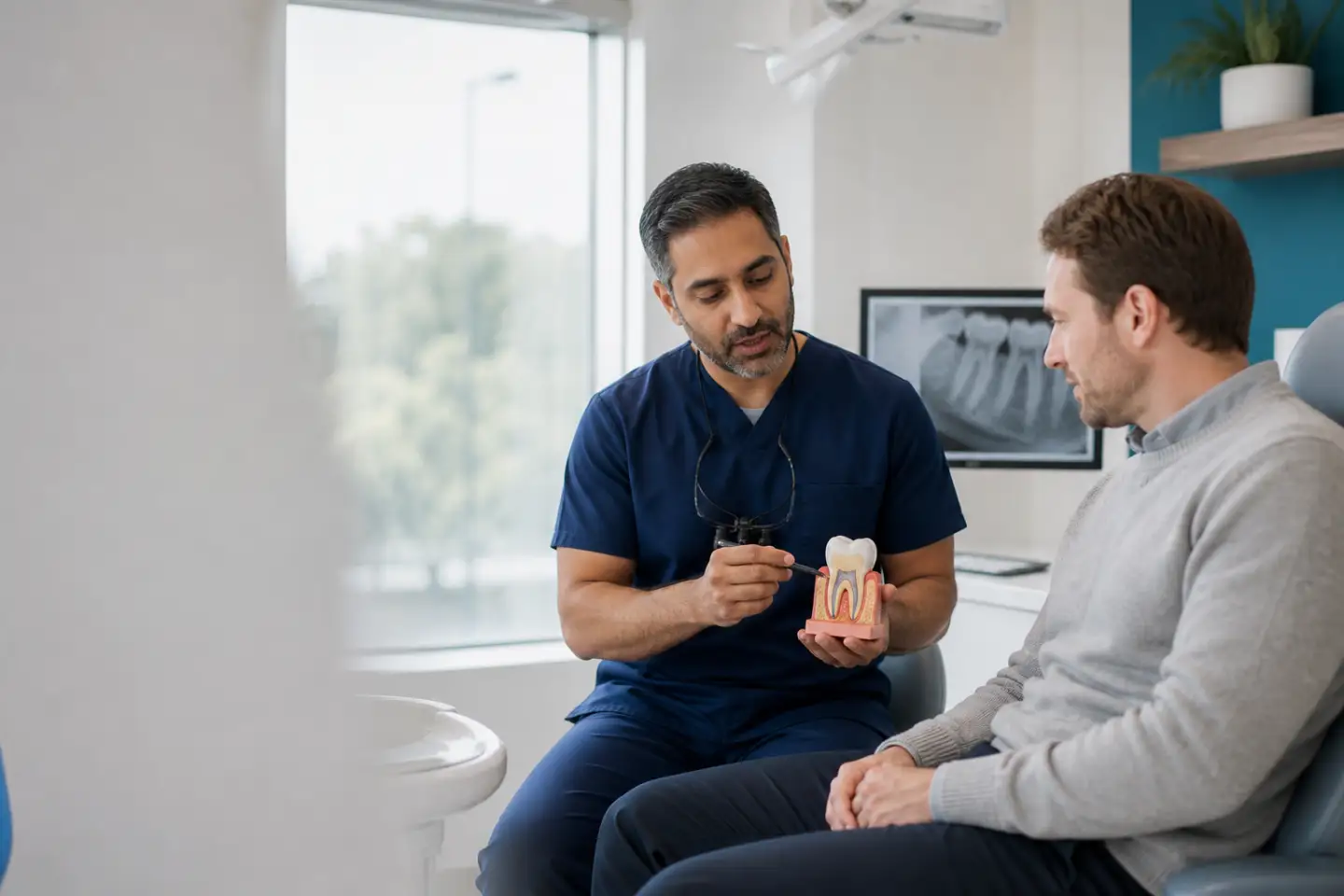
Inside every tooth is soft tissue called the pulp, which contains nerves and blood vessels. When deep decay, a crack or an injury allows bacteria in, the pulp can become inflamed or infected. Root canal treatment removes the damaged pulp, cleans and disinfects the canals and seals them, allowing you to keep a tooth that might otherwise need to be removed.
If you are in Nixon and have a tooth that aches, throbs or reacts strongly to heat, book an assessment at our Port Dover office. The dentist will determine whether root canal treatment is needed, explain the process step by step and discuss what will be required to protect the tooth afterward.
Signs to notice
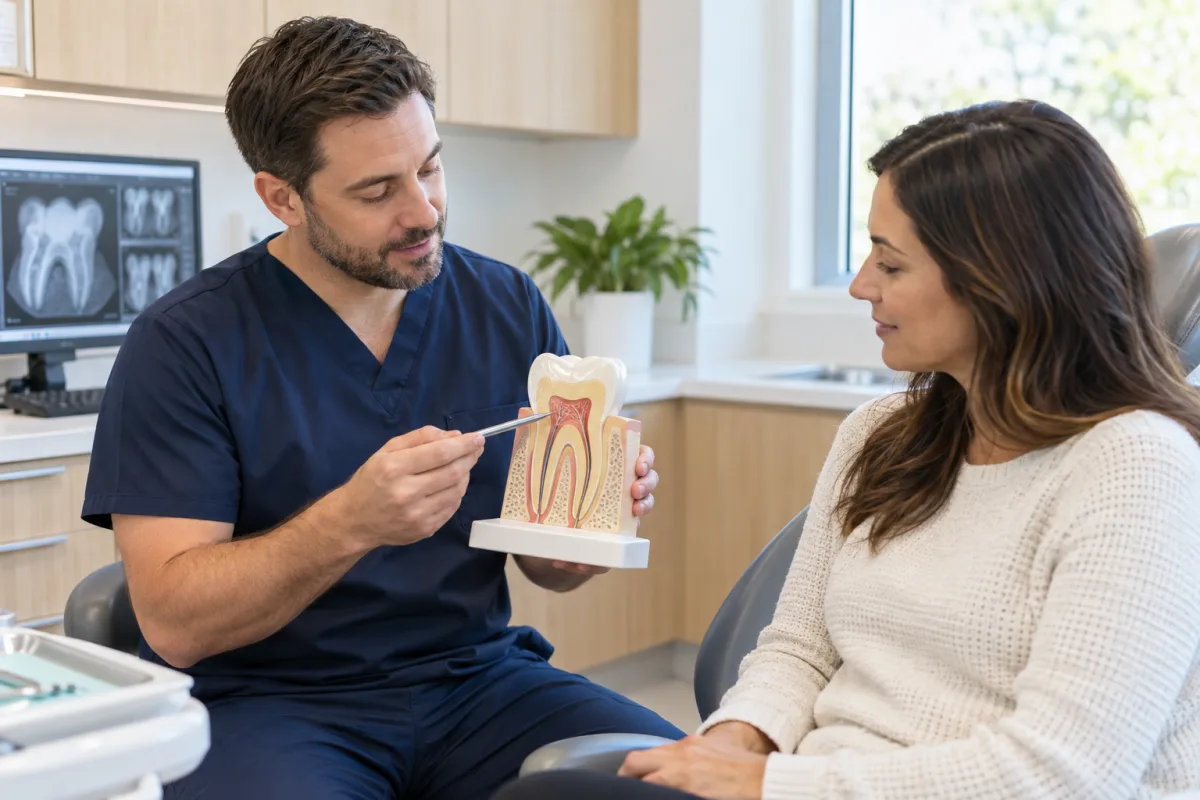
Lingering sensitivity to hot or cold after the stimulus is gone, spontaneous throbbing pain, pain that wakes you at night, tenderness when biting or a pimple on the gum near a tooth can all suggest the pulp is affected. A tooth that has darkened after an injury may also need assessment. Note when symptoms started and what makes them better or worse.
Sometimes an infected tooth causes no pain, especially if the nerve has already died. Problems may be found on X-rays during a routine exam, appearing as changes in the bone around the root tip. Even without symptoms, an untreated infection can spread or flare up. The dentist will explain the findings and why treatment is recommended in your case.
Diagnosis
The dentist may test the tooth with cold, tap gently on it, check the gums and take X-rays to look at the roots and surrounding bone. These steps help confirm whether the pulp is inflamed, infected or no longer alive, and whether the tooth is a good candidate for root canal treatment. Share any history of injury, cracks or previous work on the tooth.
If root canal treatment is recommended, ask about alternatives, such as extraction, and how each would affect your bite and future care. Ask about the long-term outlook for the tooth. In some complex cases, referral to a specialist may be suggested. Understanding all options helps you make a confident decision rather than feeling rushed into one path.
The procedure
The tooth is numbed with local anaesthetic, and a small protective sheet may be placed to keep it dry and clean. The dentist creates a small opening in the top of the tooth, removes the damaged pulp and carefully cleans and shapes the canals. Medication may be placed inside. Most people find the procedure feels similar to having a filling, though it takes longer.
Once the canals are clean, they are filled with a sealing material to prevent bacteria from re-entering. A temporary or permanent filling closes the access opening. Depending on the tooth, treatment may be completed in one visit or require a second appointment. The dentist will explain the plan and what to expect at each step, including any follow-up visits.
After treatment
Some tenderness for a few days after treatment is common, particularly when biting. Over-the-counter pain relief can help if suitable. Avoid chewing hard foods on the treated tooth until it has been fully restored. Contact the office if swelling develops, pain worsens or the temporary filling comes out. These signs need attention rather than waiting for the next appointment.
Back teeth that have had root canal treatment can become more brittle and are prone to breaking under chewing forces. A crown is often recommended to protect them. Delaying the final restoration increases the risk of fracture or reinfection. Ask the dentist about timing so you can plan your return visits from Nixon and complete the treatment fully.
Planning your appointment
Call our Port Dover office if you have a toothache, lingering sensitivity or swelling near a tooth. The team will discuss your symptoms and arrange an assessment to determine whether root canal treatment is needed.
Bring a list of medications and any recent X-rays from other dental offices that may help the dentist plan your treatment.
Before you book
Have a question about your situation? Our team can help you plan a visit.
The tooth is numbed during treatment, and most people find it feels similar to having a filling. Root canal treatment is usually done to relieve pain caused by infection or inflammation. Some tenderness for a few days afterward is common and usually manageable.
Often, especially for back teeth, since they can become brittle after treatment. A crown helps protect the tooth from breaking. Front teeth may sometimes be restored with a filling instead. The dentist will recommend the best option for your tooth.
Many teeth that have had root canal treatment last for years, especially when properly restored and cared for. Regular checkups, good hygiene and protecting the tooth with a crown when recommended help support long-term success.
Saving a natural tooth is often preferred, but every situation is different. Extraction may be considered if the tooth has a poor outlook. The dentist will explain the pros and cons of each option, including replacement needs after removal.
Some tenderness, especially when biting, is normal for a few days as the surrounding tissues heal. If pain increases, swelling develops or tenderness lasts more than a week or so, contact the office so the dentist can check the tooth.
A crown covers and strengthens a weakened tooth. Nixon patients can learn when crowns are advised, how the two-visit process works and how to keep one lasting.
Throbbing pain, a gum bump or swelling may signal a dental abscess. Nixon patients can learn the warning signs, when to get emergency care and the treatment.
Recognized year after year
Best Dentists in Norfolk
Proudly recognized among Norfolk’s top-rated dental practices for six consecutive years.

2021 Winner

2022 Winner

2023 Winner

2024 Winner

2025 Winner

2026 Winner
Stories from our patients
Watch a patient’s experience and browse more five-star reviews from people who have visited our Port Dover dental clinic.
Patient video
A patient shares the welcoming atmosphere and positive experience they found at our Port Dover office.
Google reviews
Swipe or use the arrows
Read all reviewsYour next visit can start today
New patients and CDCP patients are welcome. Tell us how we can help and our Port Dover dental team will follow up with you.
Evening appointments Monday and Tuesday