
Patient video
Welcoming and Wonderful Practice
A patient shares the welcoming atmosphere and positive experience they found at our Port Dover office.
★★★★★
Port Dover Family Dentistry
Root canal treatment removes infected or inflamed tissue to save a tooth. Boston patients can learn how Port Dover diagnoses it and what recovery is like.
Let’s get you smiling
Tell us how we can help. Our team will follow up to confirm a time.
Caring for Boston, Ontario patients at our Port Dover office
See every dental service for Boston patientsSaving a troubled tooth
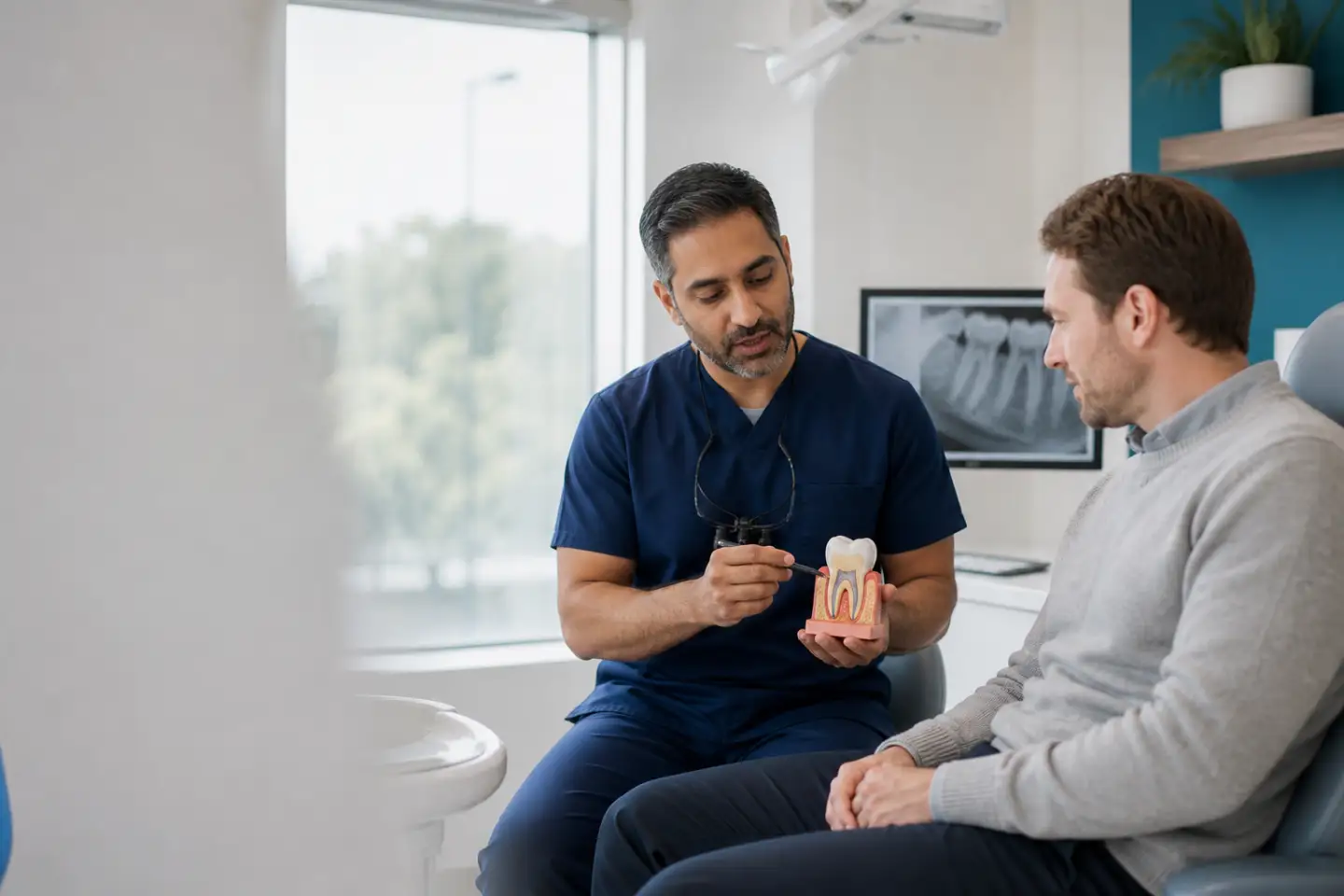
Inside every tooth is a space containing nerves and blood vessels, called the pulp. Deep decay, a crack or injury can let bacteria reach it, causing inflammation or infection. Root canal treatment removes the affected pulp, cleans and shapes the canals and seals them. It often relieves pain and allows the natural tooth to stay in place rather than being extracted.
If you are from Boston and have been told you may need a root canal, or you have a tooth that aches persistently, our Port Dover office can assess it. Ask the dentist to explain what the tests and x-rays show and whether other options exist before deciding.
Signs and diagnosis
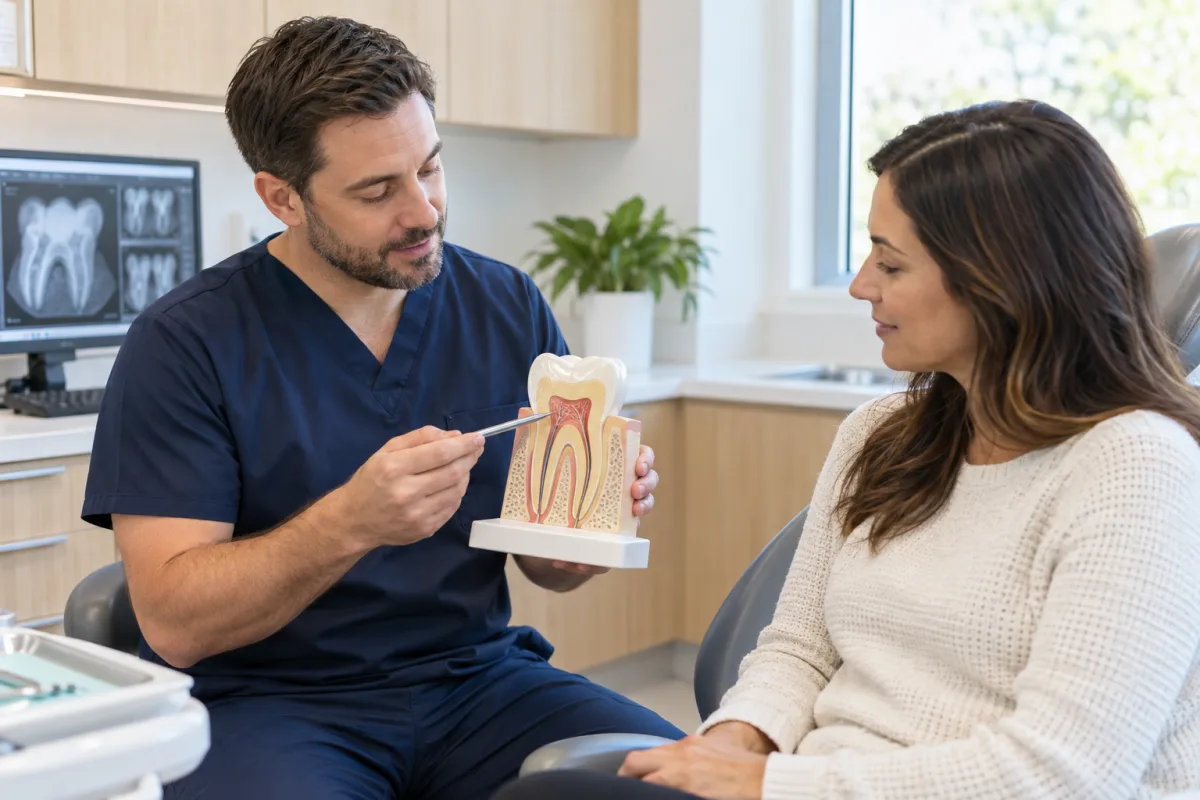
Lingering sensitivity to hot or cold, a deep throbbing ache, pain when biting, swelling of the gum, a pimple on the gum or a tooth that has darkened can suggest pulp problems. Some infected teeth cause no pain at all and are found on x-rays. Describe your symptoms in detail to help the dentist narrow down the cause.
The dentist may tap the tooth, apply cold, check gum pockets and take x-rays to look at the root and surrounding bone. These findings help determine whether the pulp is inflamed, infected or no longer alive. Not every toothache needs a root canal, so a careful diagnosis comes before any recommendation is made to you.
Considering options
A natural tooth, even one treated with a root canal, helps maintain your bite, keeps neighbouring teeth from shifting and preserves the bone around it. Successful root canal treatment can allow the tooth to function for many years. The dentist will explain the expected outlook for your specific tooth based on its condition and the x-rays.
The main alternative is extraction, which may be followed by an implant, bridge or partial denture to replace the tooth. Some teeth are too damaged to save. Ask the dentist to compare the options, including what each involves, so you can make an informed choice that suits you, including the number of visits and the recovery each option needs.
The treatment
The tooth is numbed and isolated with a small sheet called a dental dam. The dentist makes an opening to reach the pulp, removes the affected tissue and cleans and shapes the canals. Treatment may be completed in one visit or spread over two, depending on infection and complexity. Some cases are referred to a specialist.
Once the canals are clean, they are filled and sealed. A temporary or permanent filling closes the opening. Back teeth in particular often need a crown afterward because they can become brittle. The dentist will explain when the final restoration should be placed and why delaying it can put the treated tooth at risk of cracking.
Recovery
The tooth may feel tender for a few days, especially when biting. Over-the-counter pain relief may help if it is safe for you. Avoid chewing hard foods on that side until the final restoration is in place. Contact the office if swelling develops, pain worsens or the temporary filling comes out before your next appointment.
Have the recommended crown or filling placed promptly to protect the tooth from breaking. Brush, floss and keep up regular checkups. A root-treated tooth can still develop decay or gum disease. X-rays at follow-up visits help confirm healing around the root. If the tooth ever becomes tender again, swells or develops a gum bump, call the office so it can be checked.
Planning your appointment
Call our Port Dover office to book an assessment for a painful or concerning tooth. Describe your symptoms, including any swelling or sensitivity, so the team can plan an appropriate appointment.
If you have x-rays from another office showing the tooth, ask for them to be sent ahead to help with diagnosis.
Before you book
Have a question about your situation? Our team can help you plan a visit.
The tooth is numbed during treatment, and many people find it feels similar to having a filling. Some tenderness afterward is common and usually settles within a few days. Tell the dentist if you feel discomfort during the procedure.
Back teeth that have had root canal treatment can become more brittle and are prone to breaking. A crown helps protect the tooth. The dentist will explain whether a crown is recommended for your specific tooth.
It may be completed in one visit or require two, depending on the tooth, infection and complexity. The dentist will explain the plan for your case and what each appointment will involve from start to finish.
It is possible, though not common. Reinfection can happen if the seal breaks down or new decay develops. Regular checkups and a well-sealed final restoration help reduce this risk. Retreatment is sometimes possible if it happens.
It depends on the tooth. Saving a natural tooth has advantages, but some teeth are too damaged. The dentist will compare root canal treatment and extraction with replacement for your situation, so you can weigh both paths.
A crown covers and strengthens a tooth weakened by decay, cracks or large fillings. Boston patients can learn why one is suggested and how visits go.
A dental abscess is an infection that needs prompt care. Boston patients can call our Port Dover office for advice about swelling or throbbing pain.
Recognized year after year
Best Dentists in Norfolk
Proudly recognized among Norfolk’s top-rated dental practices for six consecutive years.

2021 Winner

2022 Winner

2023 Winner

2024 Winner

2025 Winner

2026 Winner
Stories from our patients
Watch a patient’s experience and browse more five-star reviews from people who have visited our Port Dover dental clinic.
Patient video
A patient shares the welcoming atmosphere and positive experience they found at our Port Dover office.
Google reviews
Swipe or use the arrows
Read all reviewsYour next visit can start today
New patients and CDCP patients are welcome. Tell us how we can help and our Port Dover dental team will follow up with you.
Evening appointments Monday and Tuesday