
Patient video
Welcoming and Wonderful Practice
A patient shares the welcoming atmosphere and positive experience they found at our Port Dover office.
★★★★★

Port Dover Family Dentistry
After gum disease treatment, regular maintenance visits help keep pockets stable. Pine Grove patients can learn what these cleanings involve and their timing.
Let’s get you smiling
Tell us how we can help. Our team will follow up to confirm a time.
Caring for Pine Grove patients at our Port Dover office
Browse every dental service for Pine GroveKeeping gums stable
Periodontitis can be brought under control with treatment, but the deeper pockets and bone changes it causes often remain. These areas are harder to keep clean and can quickly collect bacteria again. Periodontal maintenance is a schedule of specialized cleanings and assessments designed to keep the disease stable and catch any return of activity early.
Pine Grove patients who have completed gum treatment can continue maintenance visits at our Port Dover office. The team will suggest an interval based on how your gums responded and adjust it as your condition changes.
Why it matters
Bacteria can recolonize deep pockets within a few months, even with good home care. Without regular professional cleaning, inflammation may return and further bone loss can occur. Maintenance appointments interrupt this cycle, helping to keep the gums healthier and the teeth more stable over the long term.
A regular cleaning focuses mainly above the gumline. Periodontal maintenance goes deeper, cleaning below the gumline in pockets and around root surfaces. It also includes regular measurements to track changes. Because of this, these visits may take longer and are scheduled more frequently than standard cleanings.
The appointment
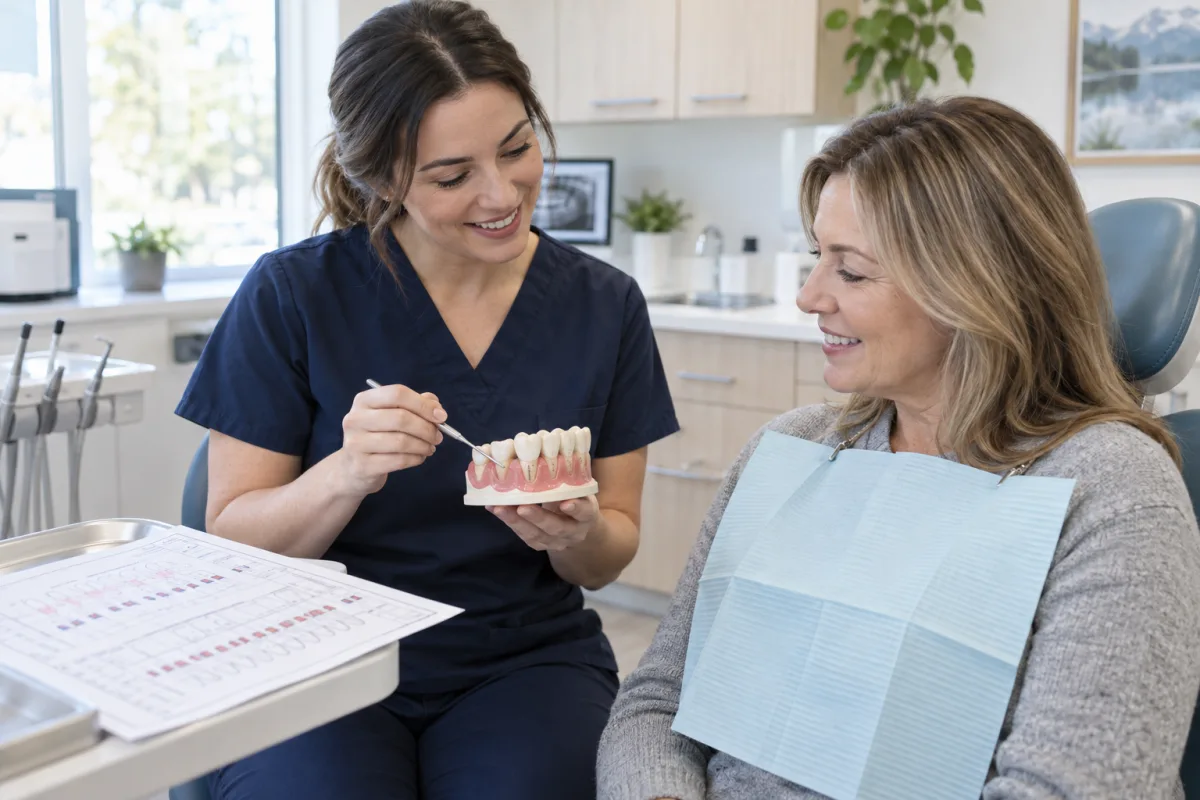
The hygienist measures pocket depths and checks for bleeding, recession and tooth mobility. These numbers are compared with previous visits to see whether the gums are stable or changing. X-rays may be taken periodically to monitor bone levels. Changes are discussed with you so you know where things stand.
Plaque and tartar are removed from above and below the gumline using hand instruments and ultrasonic scalers. Local anaesthetic can be used if areas are sensitive. Teeth are polished and any problem spots are pointed out. You may receive advice to target specific areas at home.
Home care
Brush twice daily with a soft brush, angling toward the gumline. Clean between teeth every day with floss, interdental brushes or a water flosser, focusing on areas the hygienist identified. Ask for demonstrations of tools that fit your spaces. Consistent cleaning reduces inflammation and helps keep pockets stable.
Smoking significantly increases the risk of gum disease returning, so quitting can make a big difference. Managing diabetes and other health conditions helps too. Stress, certain medications and hormonal changes can affect gums. Share health updates with the team so maintenance can be adjusted appropriately.
Staying on track
Many people need maintenance every three or four months, but the interval depends on how stable your gums are and your risk factors. If measurements improve and stay stable, the interval may be extended. If they worsen, it may be shortened or further treatment discussed.
Call the office if you notice persistent bleeding, swelling, a bad taste, loose teeth or pus around the gums between visits. These can indicate active disease. Early attention can prevent the need for more intensive treatment later. Do not wait for your scheduled appointment if symptoms appear.
Planning your appointment
Call our Port Dover office to schedule your periodontal maintenance. If your gum treatment was done elsewhere, ask for records to be sent so the team can compare measurements.
Mention health changes, new medications or smoking status. Ask which areas need the most attention so you can focus your home care.
Before you book
Have a question about your situation? Our team can help you plan a visit.
Many patients are seen every three to four months, though it varies. The team will set an interval based on your gum measurements and risk factors, and adjust it as your condition changes over time.
Once periodontitis has caused pocketing and bone loss, maintenance usually continues long term. Some patients with very stable gums may have intervals extended, but the type of care stays focused on gum health.
Most people tolerate it well. Some areas may feel sensitive, especially deeper pockets. Local anaesthetic or numbing gel can be used if needed. Let the hygienist know if anything is uncomfortable.
Measurements show whether gums are stable, improving or getting worse. Comparing numbers over time helps detect changes early so treatment can be adjusted before more damage occurs.
The team may recommend more frequent visits, additional deep cleaning or referral to a periodontist. Improving home care and addressing risk factors like smoking also help. The plan will be discussed with you.
Bleeding, receding or tender gums may signal gum disease. Pine Grove patients can learn how gingivitis and periodontitis are assessed, treated and kept stable.
A professional cleaning removes tartar brushing cannot reach. Pine Grove residents can learn what happens during a cleaning, how often to book and aftercare.
Recognized year after year
Best Dentists in Norfolk
Proudly recognized among Norfolk’s top-rated dental practices for six consecutive years.

2021 Winner

2022 Winner

2023 Winner

2024 Winner

2025 Winner

2026 Winner
Stories from our patients
Watch a patient’s experience and browse more five-star reviews from people who have visited our Port Dover dental clinic.
Patient video
A patient shares the welcoming atmosphere and positive experience they found at our Port Dover office.
Google reviews
Swipe or use the arrows
Read all reviewsYour next visit can start today
New patients and CDCP patients are welcome. Tell us how we can help and our Port Dover dental team will follow up with you.
Evening appointments Monday and Tuesday