
Patient video
Welcoming and Wonderful Practice
A patient shares the welcoming atmosphere and positive experience they found at our Port Dover office.
★★★★★

Port Dover Family Dentistry
After gum disease treatment, regular maintenance helps keep it from returning. Glen Meyer patients can learn what these visits involve and why timing matters.
Let’s get you smiling
Tell us how we can help. Our team will follow up to confirm a time.
Seeing patients from Glen Meyer and the surrounding countryside at our Port Dover office
Browse all dental services for Glen MeyerStaying ahead of gum disease
Once periodontitis has been treated, the bacteria that caused it can return to deep pockets and below the gum line. Periodontal maintenance is a programme of regular, more detailed cleanings and assessments designed to keep the disease stable, reduce the risk of further bone loss and help protect your teeth for as long as possible.
Glen Meyer patients who have had gum treatment can arrange ongoing maintenance at our Port Dover office. The team will explain how often visits are recommended, what each appointment covers and what you can do at home to support the results in the weeks and months between visits.
Why maintenance
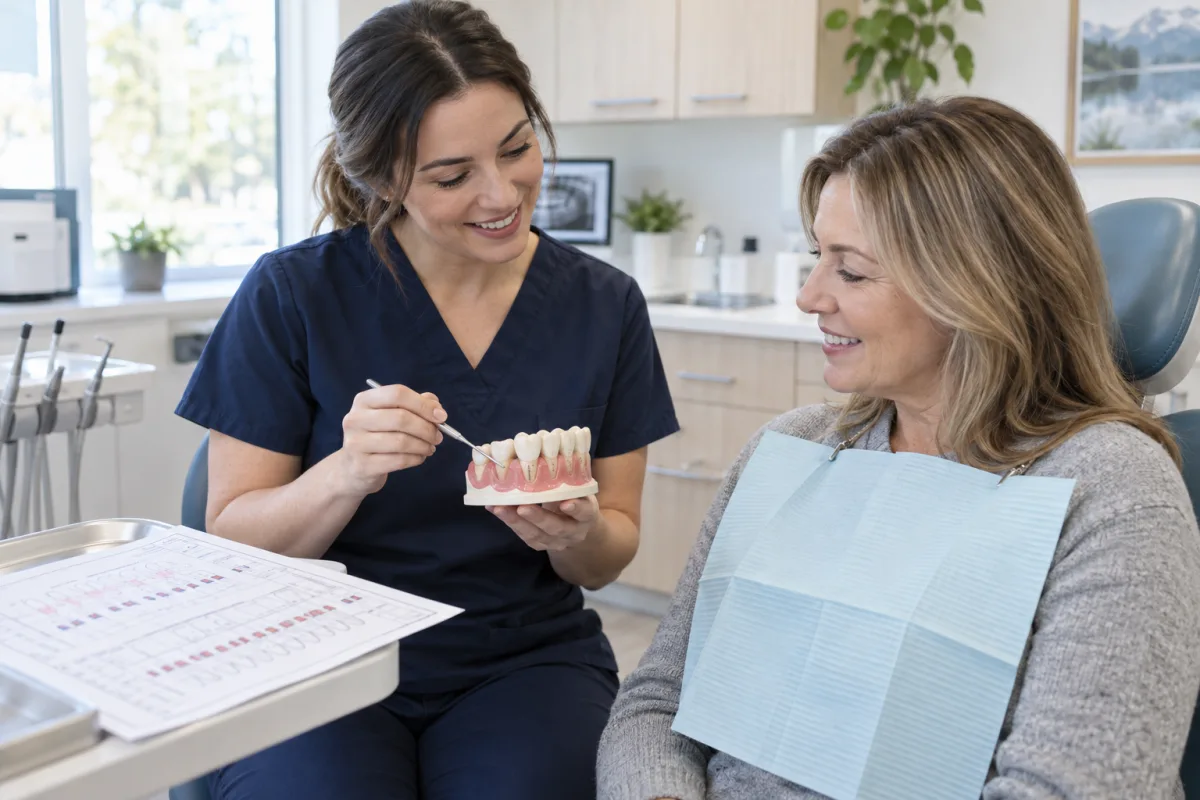
A routine cleaning focuses on plaque and tartar above and just below the gum line in a healthy mouth. Periodontal maintenance goes further, cleaning deeper pockets, monitoring bone and gum attachment and addressing areas where disease tends to recur. The hygienist and dentist track measurements over time to see whether the condition is stable or changing.
Bacteria can repopulate deep pockets within a few months of a thorough cleaning. For this reason, many people with a history of periodontitis are advised to have maintenance visits more often than a standard cleaning schedule. The interval is tailored to how your gums respond, the quality of your home care and risk factors such as smoking or diabetes.
At each visit
Pocket depths are measured around each tooth and compared with previous readings. Bleeding, recession and tooth mobility are checked as well. X-rays may be taken at intervals to monitor bone levels. Together, these measurements help identify areas that are getting worse, so they can be treated before the disease advances and more of the tooth’s support is lost.
Plaque and tartar are removed above and below the gum line, with extra attention to deeper pockets and areas that bleed. Local anaesthetic may be offered for particularly sensitive spots. The hygienist may also polish teeth and recommend products or techniques based on what they see. Let them know if any area feels tender, so they can adjust their approach.
Home care
Brush twice a day with a soft brush, angling the bristles toward the gum line, and clean between teeth every day with floss, interdental brushes or a water flosser. Gaps and recession left after gum disease can make interdental brushes especially helpful. Ask the hygienist to demonstrate the sizes and techniques that suit your mouth, and to check how you are doing.
Smoking is one of the strongest risk factors for gum disease and can reduce how well gums respond to treatment. Quitting can make a meaningful difference. Managing diabetes and other health conditions also supports gum health. Share any changes in medications or health with the team at each visit, as they may affect your gums and the recommended schedule.
When things change
Increased bleeding, swelling, gum tenderness, a bad taste, pus or a tooth that feels looser than usual can be signs that gum disease is becoming active again. Contact the office if you notice these changes between visits. Prompt attention may allow the problem to be managed before it causes more damage to the supporting bone.
If pockets continue to deepen or bone loss progresses despite regular maintenance, the dentist may recommend additional treatment or referral to a periodontist. They will explain the reasons and what further care might involve. Staying consistent with maintenance visits gives you the best chance of keeping your natural teeth healthy, comfortable and functional for many years.
Planning your appointment
Call our Port Dover office to schedule your periodontal maintenance visits. Booking several appointments ahead can make it easier to keep a consistent schedule around work, harvest season and family life.
Let the team know about any changes in your health, medications or smoking status, and mention areas of your gums that have felt sore.
Before you book
Have a question about your situation? Our team can help you plan a visit.
Many people with a history of periodontitis need visits more frequently than a standard cleaning schedule. The exact interval depends on how your gums respond and your risk factors. The dentist and hygienist will recommend a schedule tailored to you.
Not quite. Maintenance involves more detailed measuring and deeper cleaning of pockets affected by gum disease. It is designed to keep periodontitis stable over time, while regular cleanings are intended for people whose gums are already healthy.
Bone and attachment lost to periodontitis usually do not grow back fully, but the disease can often be kept stable with treatment and maintenance. Healthy, non-bleeding gums and stable pocket depths are signs that your care is working.
It is not recommended. Gum disease can progress without pain. Regular maintenance visits allow the team to detect and manage changes early, before they lead to bone loss or loose teeth that may be harder to save.
Some areas may feel tender, especially deeper pockets or inflamed spots. Local anaesthetic can be used if needed. Let the hygienist know if you feel discomfort, so they can adjust their approach and keep you comfortable.
Bleeding, puffy or receding gums can be early signs of gum disease. Glen Meyer patients can learn how it is measured, treated and kept under control over time.
A professional cleaning removes tartar that brushing cannot. Glen Meyer patients can learn what happens, how to ease sensitivity and how often to book.
Recognized year after year
Best Dentists in Norfolk
Proudly recognized among Norfolk’s top-rated dental practices for six consecutive years.

2021 Winner

2022 Winner

2023 Winner

2024 Winner

2025 Winner

2026 Winner
Stories from our patients
Watch a patient’s experience and browse more five-star reviews from people who have visited our Port Dover dental clinic.
Patient video
A patient shares the welcoming atmosphere and positive experience they found at our Port Dover office.
Google reviews
Swipe or use the arrows
Read all reviewsYour next visit can start today
New patients and CDCP patients are welcome. Tell us how we can help and our Port Dover dental team will follow up with you.
Evening appointments Monday and Tuesday