
Patient video
Welcoming and Wonderful Practice
A patient shares the welcoming atmosphere and positive experience they found at our Port Dover office.
★★★★★

Port Dover Family Dentistry
A cavity is not a punishment. Our dental education page for Waterford families explores explaining care without blame and helping children understand treatment.
Let’s get you smiling
Tell us how we can help. Our team will follow up to confirm a time.
Dental learning and care for Waterford children at our Port Dover practice
All dental services for WaterfordHelp a child understand as well as participate
A child may remember the sound of an instrument but not why a tooth was being checked. Parents may leave with advice they understand in principle but find difficult to use at home. Treatment and education work best when the explanation connects the clinical need with something the child and caregiver can recognize and practise.
Waterford families can bring these questions to our Port Dover practice. Tell the team what your child already understands, what worries them and where daily care becomes difficult. The discussion can be adapted to age and communication needs while keeping the parent or guardian informed about decisions and follow-up.
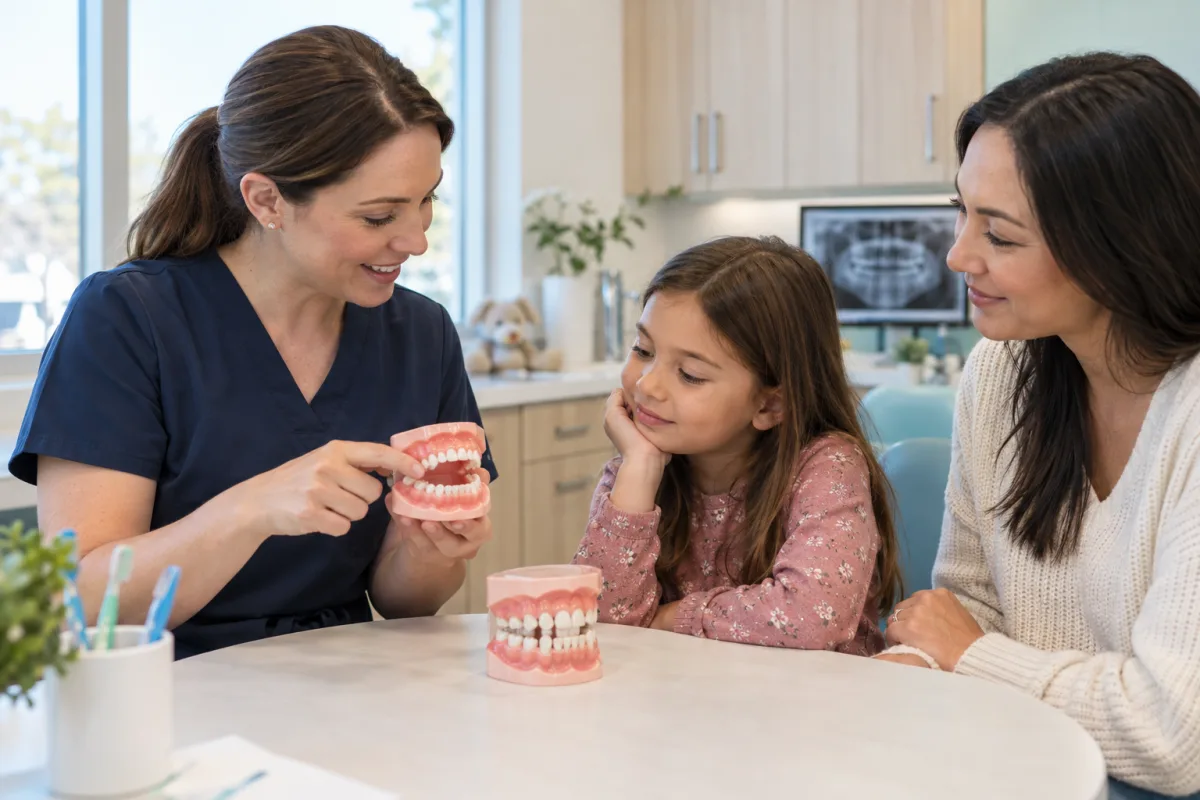
Begin with the child's perspective
Children may arrive with ideas from siblings, videos or an earlier appointment. Share any particular expectation or worry with the team. A simple question from the child can reveal what needs explaining and help avoid preparing them for a different experience from the care actually planned.
Explain whether your child finds spoken instructions, a demonstration or visual information easier to understand, and whether they need time before responding. Ask which support can be arranged for this visit. A description of how they learn gives the clinician something practical to work with and helps avoid explanations that sound reassuring to an adult but remain confusing to the child.
Connect treatment with its purpose
If a tooth needs care, ask the dentist to explain what has been found and what the proposed treatment is intended to do. The child can receive an age-appropriate explanation while the parent or guardian discusses the clinical details, alternatives and consent. Both conversations have a role.
If your child believes a cavity means they have been bad, share that worry with the team. Keep the explanation focused on the finding, the care proposed and the help available rather than using treatment as a consequence. If distress prevents necessary care, discuss how the approach or setting should be reconsidered while keeping the dental need clear.
Turn advice into a skill
Ask for a demonstration tied to your child's mouth or developmental stage, such as reaching a back tooth or cleaning an awkward space. Let the child practise when appropriate and have the caregiver check their own understanding. Participation can build familiarity while adult help remains part of effective care.
Describe the moment where the morning or bedtime routine becomes difficult, such as reaching a back tooth or keeping the child engaged long enough for help. Ask which change to try first and how another caregiver can use the same method. The goal is an instruction that translates into a familiar daily task, with room to adjust it if the obstacle remains.
Adapt the conversation as the child grows
Ask for updated guidance when new teeth arrive, an appliance is added or your child takes on more of the routine. Discuss which areas they can clean reliably and where an adult still needs to assist or check. Independence can grow with demonstrated skills; enthusiasm or age alone does not show that every part of the mouth is being managed effectively.
At follow-up, explain what worked and what did not. Ask the child which questions remain and tell the clinician about changes in symptoms or behaviour. Education is useful when it can be adjusted through experience, not treated as a one-time lesson that must fit every later stage.
Planning your appointment
When arranging care at our Port Dover office, describe the treatment or home-care issue you want explained. Mention learning, communication and support needs so the appointment can be planned thoughtfully.
Bring relevant health information and questions from other caregivers when appropriate. Before leaving, confirm the priority at home and the purpose of the next visit so the discussion leads to an understandable action.
Before you book
Have a question about your situation? Our team can help you plan a visit.
Ask for an explanation suited to the child's understanding and communication needs. The parent or guardian still needs the information required for decisions and consent. Involving the child can help them ask questions without expecting them to manage the clinical choices alone.
Keep the conversation focused on the finding, the care needed and the help available. Let the dental team know about that worry so explanations can avoid blame. The aim is to make the next appointment and daily routine understandable rather than use treatment as a consequence.
Discuss what they actually manage and ask the clinician to review technique and missed areas. Ability and consistency matter, not only age or willingness. The team can advise which parts still need adult help and how to build skills gradually.
Ask how the main instructions can be communicated with appropriate consent and involvement. Consistent information is helpful when different adults assist with appointments or home care. Make sure everyone understands the practical steps and knows which concerns should be reported.
Describe the obstacle at the next discussion rather than feeling you must hide it. The clinician can review technique, tools and priorities in light of your circumstances. Ask for a manageable adjustment and how its effect will be checked over time.
A loose baby tooth needs context from age, symptoms and any injury. Waterford families can discuss whether the change fits development during a child's dental exam.
If a first dental exam is limited, what has been learned? Our Waterford page helps parents ask what still needs checking and what advice can be used at home now.
Recognized year after year
Best Dentists in Norfolk
Proudly recognized among Norfolk’s top-rated dental practices for six consecutive years.

2021 Winner

2022 Winner

2023 Winner

2024 Winner

2025 Winner

2026 Winner
Stories from our patients
Watch a patient’s experience and browse more five-star reviews from people who have visited our Port Dover dental clinic.
Patient video
A patient shares the welcoming atmosphere and positive experience they found at our Port Dover office.
Google reviews
Swipe or use the arrows
Read all reviewsYour next visit can start today
New patients and CDCP patients are welcome. Tell us how we can help and our Port Dover dental team will follow up with you.
Evening appointments Monday and Tuesday