
Patient video
Welcoming and Wonderful Practice
A patient shares the welcoming atmosphere and positive experience they found at our Port Dover office.
★★★★★

Port Dover Family Dentistry
Children cope better when treatment is explained in words they understand. St. Williams families can learn how our Port Dover team prepares kids for dental care.
Let’s get you smiling
Tell us how we can help. Our team will follow up to confirm a time.
Caring for St. Williams patients at our office in Port Dover
Every dental service for St. WilliamsUnderstanding builds confidence
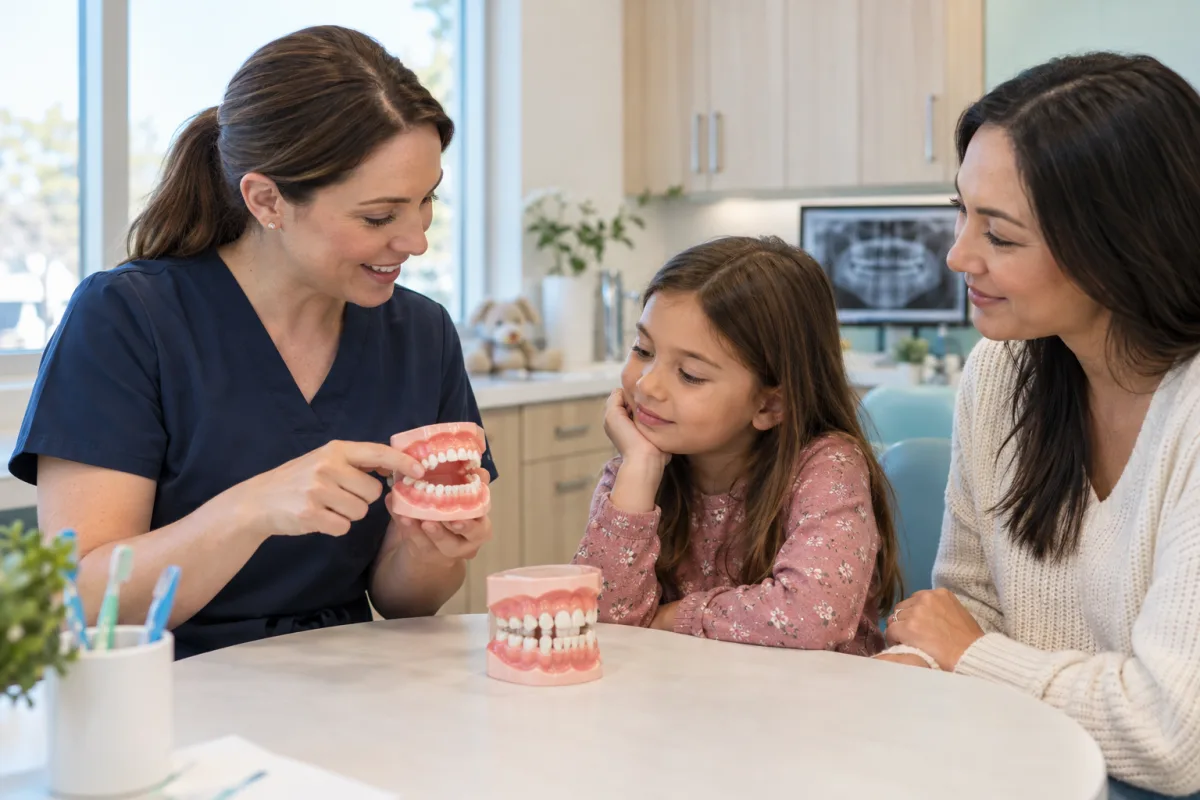
Pediatric treatment education means explaining dental care to children in ways that match their age and understanding. It can include showing instruments, using simple words for each step and helping children practise what they will be asked to do. When a child understands what is happening, fear of the unknown often eases, and cooperation tends to improve.
St. Williams parents can work with our Port Dover team to prepare their child for a filling, sealants or any other treatment. We will explain the plan to you first and then help your child understand it in a calm, reassuring way during the visit.
Explaining at home
Use simple, positive language. For a filling, you might say the dentist will clean a spot on the tooth and fill it so it stays strong. Avoid words like hurt, shot or drill. Let the dental team use their own child-friendly terms, which are often designed to sound less intimidating.
Children may ask whether something will hurt. A good answer is that the dentist will make sure the tooth feels sleepy so it is comfortable. Do not promise that nothing will be felt, as pressure or vibration may be noticed. If you are unsure how to answer, say the dentist will explain.
Show and tell
Many children feel better when they can see and touch instruments before they are used. The team may show the mirror, let your child feel the air from the water syringe on their hand or demonstrate the suction on a finger. Familiar names, like tooth counter or tooth vacuum, help make tools less strange.
Children can practise opening wide, keeping still and signalling for a break. The team may count teeth together or use a mirror so the child can watch. These small rehearsals give children a sense of control and help them understand what will happen when treatment begins.
During treatment
A common approach is to tell the child what will happen, show them, then do it. This predictable pattern helps children trust that there will be no surprises. The team watches for signs of worry and adjusts the pace. Parents can help by staying calm and letting the team guide the conversation.
Praise for effort, not just outcome, helps children feel proud. Short breaks can be offered if a child needs to rest. If the child becomes too upset, the team may recommend stopping and trying again another day, or discussing other comfort options for future appointments.
After the visit
Ask your child what they liked and what was hard. Listen without dismissing their feelings. Remind them of what they did well. If they had freezing, explain that their lip may feel funny for a while and help them avoid biting it. A calm debrief makes the next visit easier.
Use the visit as a chance to talk about brushing, healthy snacks and why teeth matter. Children who understand why they brush are often more willing to do it. Keep regular checkups so dental visits become a normal, familiar part of life.
Planning your appointment
When you call our Port Dover office, let us know what treatment your child needs and how they usually handle new experiences. The team can suggest how to prepare.
Choose an appointment time when your child is usually rested, and consider bringing a favourite toy or comfort item along for the visit.
Before you book
Have a question about your situation? Our team can help you plan a visit.
Give a simple, positive explanation suited to their age. Too much detail can increase anxiety. Let the dental team explain specifics in child-friendly language during the visit.
Parents are often welcome to stay. Some children do better with a parent present, while older children may prefer independence. Discuss what works best for your child with the team.
Avoid words like hurt, pain, needle, shot and drill. Even reassuring phrases such as it will not hurt can introduce worry. Neutral, positive language is usually more helpful.
Some children need more time and repeated positive visits. The team can adjust the pace, offer breaks or discuss other comfort options if needed.
Yes. Encouraging children to ask questions helps them feel involved. The dentist can answer in age-appropriate terms and explain why each step is needed.
Wondering when to book your toddler’s first dental visit and what it involves? St. Williams parents can learn how our Port Dover team keeps that visit gentle.
Some children worry before a dental visit. St. Williams parents can plan gentle introductions, calm routines and comfort options with our Port Dover team.
Recognized year after year
Best Dentists in Norfolk
Proudly recognized among Norfolk’s top-rated dental practices for six consecutive years.

2021 Winner

2022 Winner

2023 Winner

2024 Winner

2025 Winner

2026 Winner
Stories from our patients
Watch a patient’s experience and browse more five-star reviews from people who have visited our Port Dover dental clinic.
Patient video
A patient shares the welcoming atmosphere and positive experience they found at our Port Dover office.
Google reviews
Swipe or use the arrows
Read all reviewsYour next visit can start today
New patients and CDCP patients are welcome. Tell us how we can help and our Port Dover dental team will follow up with you.
Evening appointments Monday and Tuesday