
Patient video
Welcoming and Wonderful Practice
A patient shares the welcoming atmosphere and positive experience they found at our Port Dover office.
★★★★★
Port Dover Family Dentistry
A sore that will not heal or a new patch in the mouth deserves a look. Walsingham patients can learn what oral cancer screening involves and what happens if something is found.
Let’s get you smiling
Tell us how we can help. Our team will follow up to confirm a time.
Serving Walsingham households from our Port Dover office
See every dental service for WalsinghamA careful look
Oral cancer screening is a visual and physical check of the lips, tongue, cheeks, gums, palate, floor of the mouth and neck. The dentist looks for sores, patches, lumps or areas of colour change that could need further investigation. Most findings turn out to be harmless, but catching unusual changes early gives the best chance of effective treatment.
For Walsingham patients, an oral cancer screening is usually part of a regular exam at our Port Dover office. If you have noticed something new in your mouth, you can also call to arrange a visit sooner. The dentist will explain what they see and whether monitoring or referral is the right next step.
Risk factors
Smoking, chewing tobacco and heavy alcohol use significantly increase the risk of oral cancer, especially when combined. Long-term sun exposure raises the risk of lip cancer, which is relevant for anyone who spends a lot of time working or relaxing outdoors. Sharing your habits honestly helps the dentist assess your risk.
Infection with certain types of human papillomavirus is linked to cancers at the back of the mouth and throat. Age, a weakened immune system and a previous history of oral cancer also matter. Oral cancer can occur in people without obvious risk factors, which is why screening is offered to adults generally.
The screening
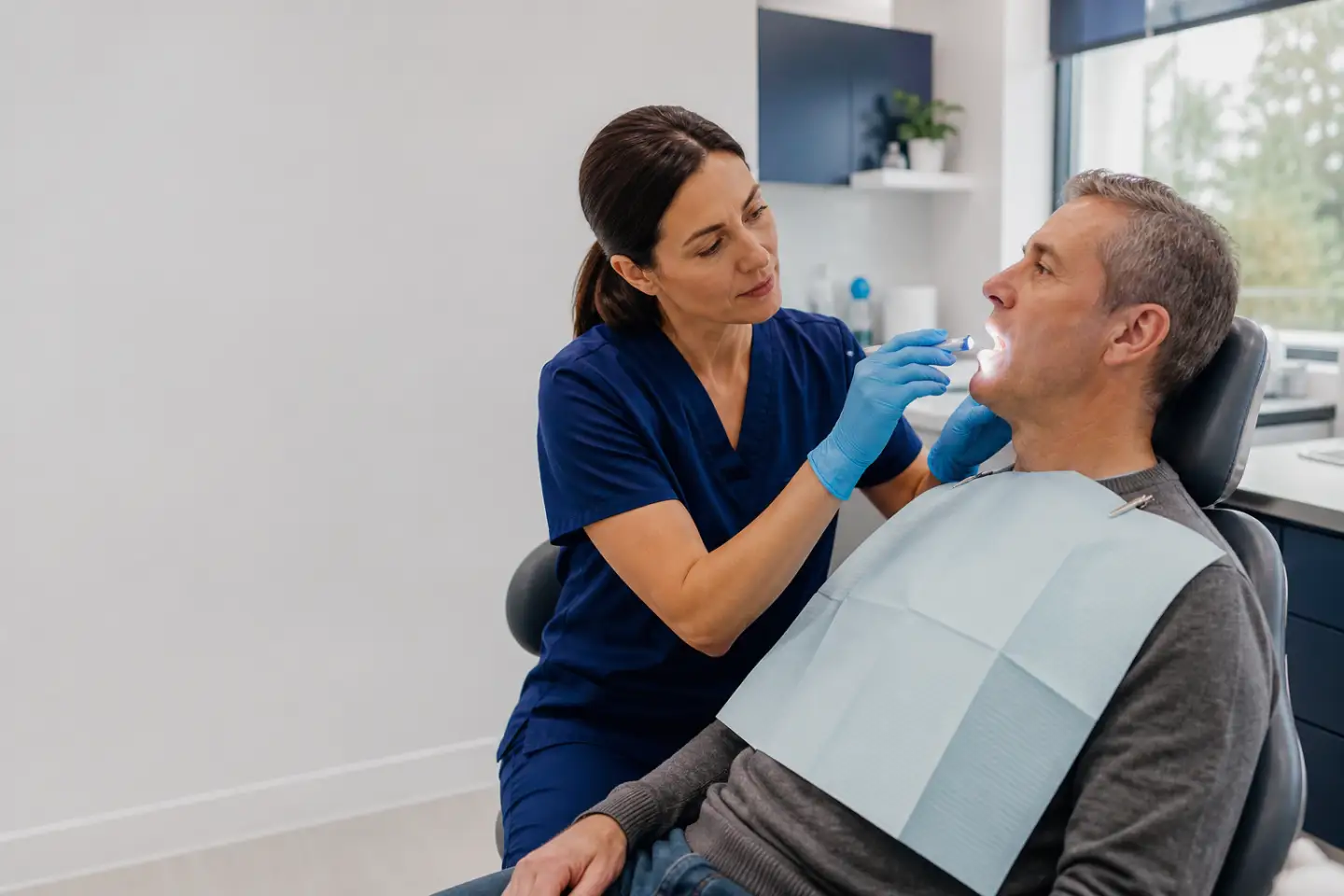
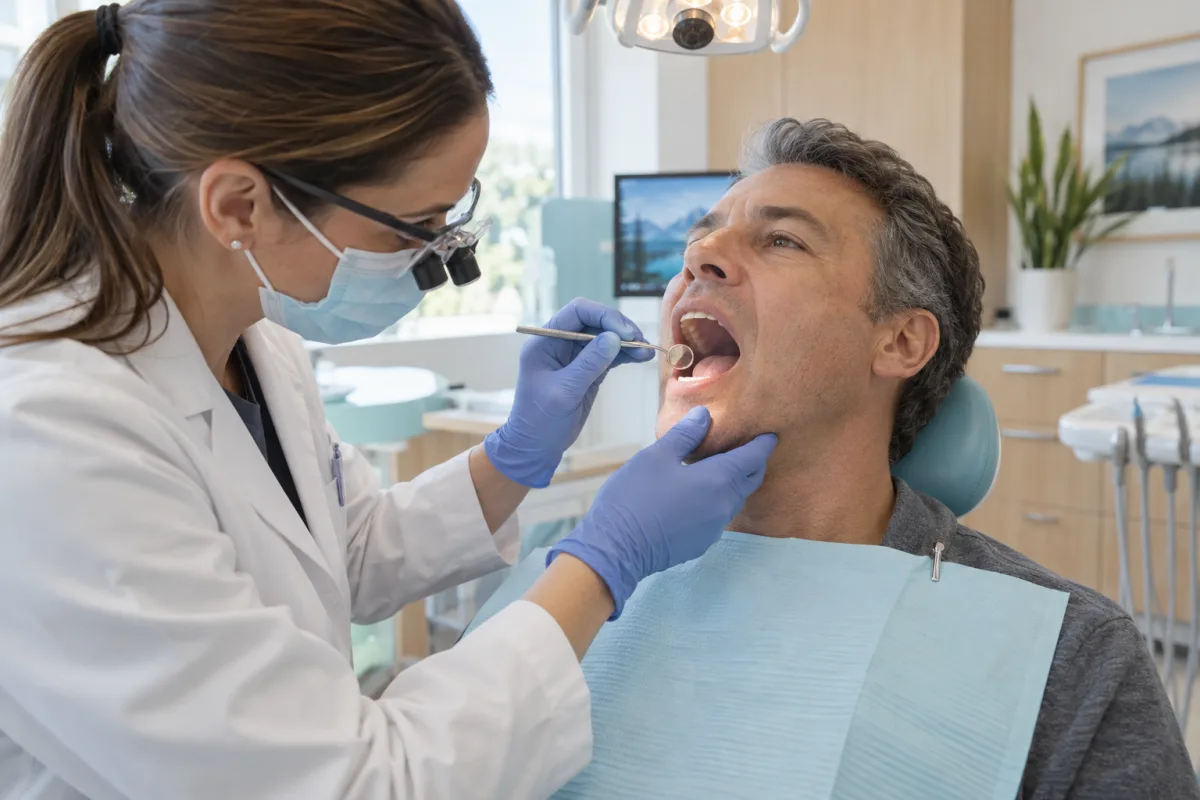
The dentist uses a light and mirror to examine every surface inside your mouth. They may gently hold your tongue with gauze to see its sides and underside. Areas that look red, white, rough or ulcerated are noted. If you wear dentures, you will be asked to remove them so the tissues underneath can be checked.
The dentist also feels the lymph nodes in your neck and under your jaw for lumps or tenderness. They may check your lips and the inside of your cheeks by touch. The whole process usually takes just a few minutes. Let the dentist know about any area you have noticed that feels different.
If something is found
Many sores and patches are caused by irritation, infection or injury and heal on their own. The dentist may ask you to return in a couple of weeks to see whether an area has changed. Photos or notes help compare. If an irritant like a sharp tooth or denture edge is involved, it may be adjusted.
If an area does not heal or looks concerning, the dentist may refer you to a specialist for further assessment, which can include a biopsy. A referral does not mean cancer has been found. It means a closer look is needed. The dentist will explain why the referral is suggested and what to expect.
Self-checks
Once a month, look inside your mouth with good light and a mirror. Check your lips, gums, cheeks, tongue and the roof and floor of your mouth. Feel your neck for lumps. Knowing what your mouth normally looks like makes it easier to notice something new.
Contact the office if you have a sore, lump or patch that lasts more than two weeks, unexplained bleeding, numbness, difficulty swallowing or a persistent hoarse voice. These symptoms do not necessarily mean cancer, but they should be checked. Quitting tobacco and limiting alcohol reduce your risk.
Planning your appointment
If you have noticed a new spot, lump or sore, Walsingham patients can call our Port Dover office and describe it. The team can advise whether to wait for your next exam or come in sooner.
Note when you first noticed the change and whether it has grown, bled or become painful. Bring a list of medications.
Before you book
Have a question about your situation? Our team can help you plan a visit.
No. It involves a visual check and gentle touch of the tissues in your mouth and neck. It takes only a few minutes during a regular exam.
Screening is typically done at routine dental exams. People with higher risk may be checked more carefully. The dentist will advise based on your history.
It may be a red or white patch, a sore that does not heal, a lump or a rough area. Many such findings are harmless, but persistent changes should be assessed.
No. A referral means a closer look is needed, often including a biopsy. Many referred areas turn out to be benign. The dentist will explain the reason for referral.
Yes. While tobacco greatly increases risk, oral cancer can affect people without known risk factors. That is why screening is part of regular adult exams.
Regular dental exams catch decay, gum disease and other changes early. Walsingham residents can see what a checkup includes and how often to plan one in Port Dover.
Patients with medical, developmental or cognitive needs deserve a plan built around them. Walsingham families can learn what to share and how care is coordinated in Port Dover.
Recognized year after year
Best Dentists in Norfolk
Proudly recognized among Norfolk’s top-rated dental practices for six consecutive years.

2021 Winner

2022 Winner

2023 Winner

2024 Winner

2025 Winner

2026 Winner
Stories from our patients
Watch a patient’s experience and browse more five-star reviews from people who have visited our Port Dover dental clinic.
Patient video
A patient shares the welcoming atmosphere and positive experience they found at our Port Dover office.
Google reviews
Swipe or use the arrows
Read all reviewsYour next visit can start today
New patients and CDCP patients are welcome. Tell us how we can help and our Port Dover dental team will follow up with you.
Evening appointments Monday and Tuesday