
Patient video
Welcoming and Wonderful Practice
A patient shares the welcoming atmosphere and positive experience they found at our Port Dover office.
★★★★★
Port Dover Family Dentistry
An oral cancer screening looks for unusual changes in the mouth and throat. La Salette patients can learn what is checked and which signs to report.
Let’s get you smiling
Tell us how we can help. Our team will follow up to confirm a time.
Caring for La Salette patients at our Port Dover office
See every dental service for La SaletteA careful look at soft tissue
Oral cancer can affect the lips, tongue, cheeks, floor of the mouth, palate and throat. Early changes are often painless and easy to overlook. A screening involves looking at and feeling these tissues to identify anything unusual that may need closer evaluation. Most findings turn out to be harmless.
Screening is typically included in dental exams at our Port Dover office, and La Salette patients can also call to report a specific concern. If something unusual is found, the dentist will explain the next steps, which may include monitoring or referral for further assessment.
Know the signs
Watch for sores that do not heal within two weeks, red or white patches, lumps, thickened areas or rough spots. Changes may appear on the tongue, gums, cheeks or floor of the mouth. Bleeding without an obvious cause or numbness in part of the mouth should also be reported.
Persistent hoarseness, difficulty swallowing, a feeling that something is stuck in the throat, ear pain on one side or a lump in the neck may also warrant evaluation. These symptoms have many causes, most of them not cancer, but they should be checked rather than ignored.
Risk factors
Tobacco use in any form and heavy alcohol consumption are among the strongest risk factors, especially in combination. Prolonged sun exposure increases the risk of lip cancer, which is worth keeping in mind for people who spend long hours working or playing outdoors. Using lip balm with sunscreen can help protect the lips.
Certain types of human papillomavirus are linked to some throat cancers. Age, a weakened immune system and previous oral cancer can also increase risk. However, oral cancer can occur in people without obvious risk factors, which is why routine screening is valuable for everyone.
The screening
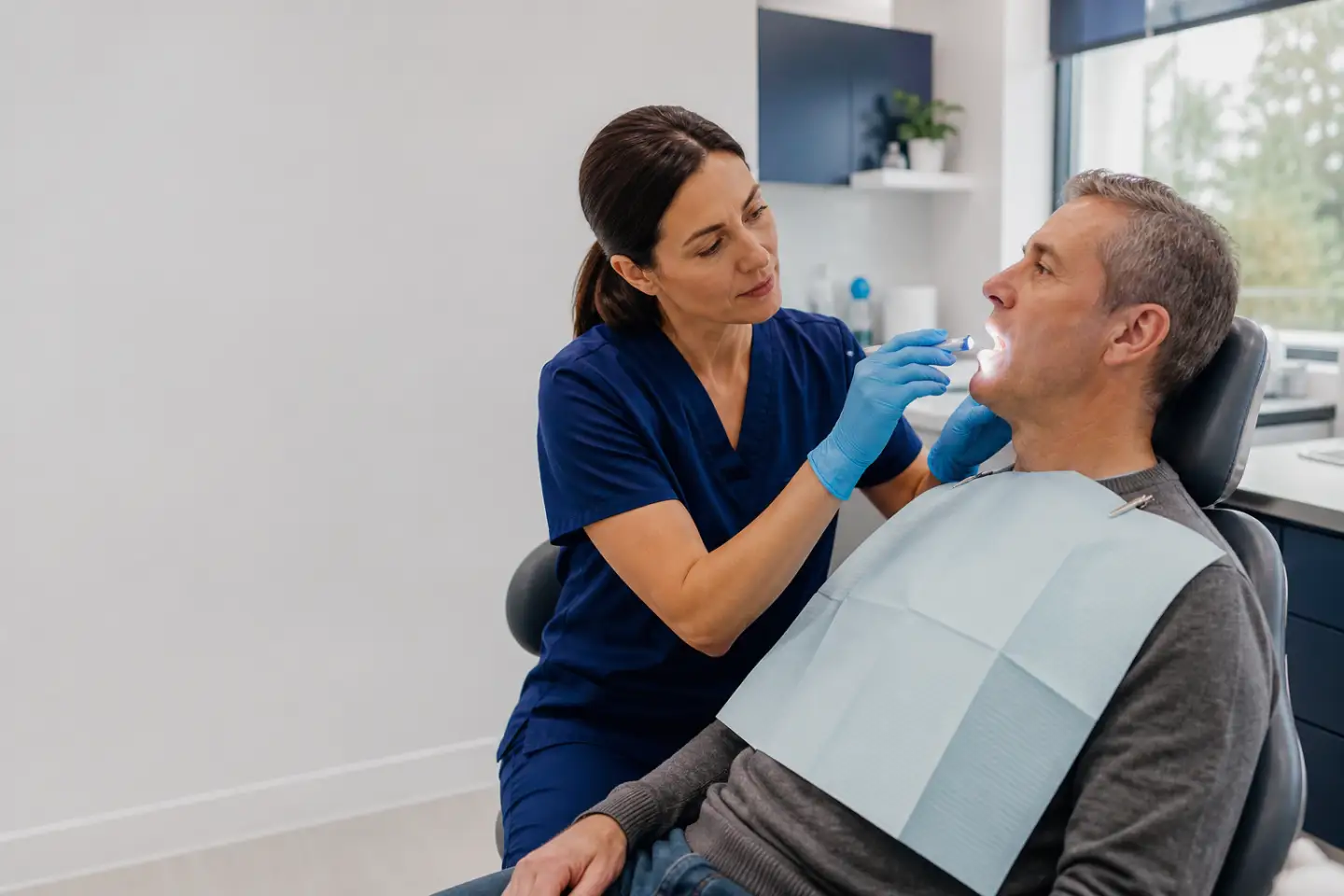
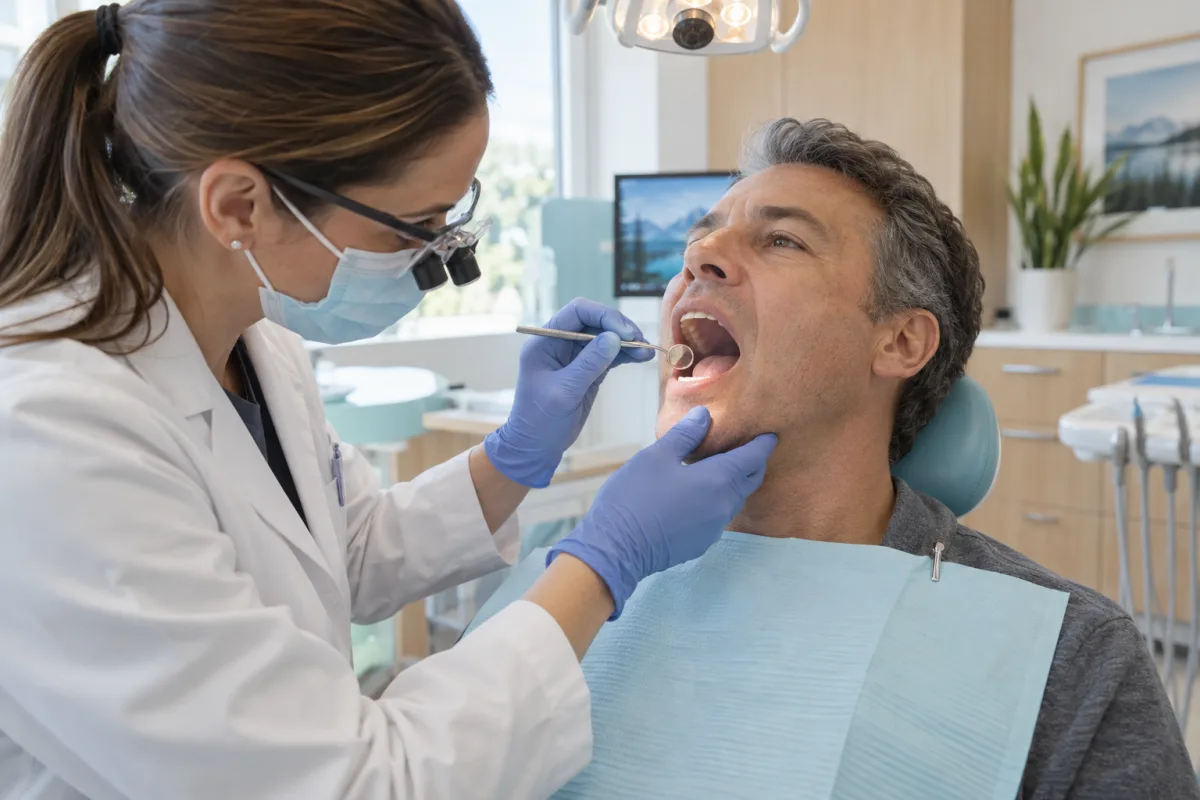
The dentist looks at your lips, gums, tongue, cheeks, palate and throat, using a light and mirror. The tongue may be gently held to see its sides and underside. The dentist also feels the jaw and neck for lumps or swollen lymph nodes. The process takes only a few minutes.
If everything looks normal, screening continues at future checkups. If a change is found, the dentist will describe it, explain possible causes and recommend next steps. Many changes are caused by irritation, infection or harmless conditions, but some need further investigation.
Follow-up
For some changes, the dentist may suggest removing a possible source of irritation, such as a sharp tooth edge, and re-checking the area in a couple of weeks. Keep this appointment. If the change resolves, no further action may be needed. If it persists, additional evaluation is usually recommended.
When a change looks suspicious or does not resolve, the dentist may refer you to a specialist for evaluation, which may include a biopsy. Referral does not mean cancer has been diagnosed. It means further testing is needed to understand what the change is.
Planning your appointment
Oral cancer screening is part of regular exams at our Port Dover office. If you notice a sore, lump or patch that has lasted more than two weeks, call and describe it.
Let the team know about tobacco use, alcohol intake and any previous history of oral lesions so they have full context.
Before you book
Have a question about your situation? Our team can help you plan a visit.
No. Screening involves looking at and gently feeling the tissues of your mouth, jaw and neck. It takes only a few minutes and is usually part of a regular dental exam.
Screening is commonly done at routine dental checkups. People with higher risk may need closer monitoring. The dentist will advise based on your history and risk factors.
Most findings are not cancer. The dentist may monitor the area, remove an irritant or refer you for further evaluation. Follow-up is important to understand the cause.
Yes. While tobacco and alcohol increase risk, oral cancer can occur in people without these risk factors. HPV and other factors are also associated with some cases.
If a sore, lump or patch lasts more than two weeks or you notice other concerning symptoms, call the office rather than waiting. Early evaluation is helpful.
Routine dental exams catch small problems early. Here is what a checkup at our Port Dover office covers for La Salette patients and how often to return.
For La Salette patients with medical, developmental or sensory needs, plan care in Port Dover around communication, support people and realistic home care.
Recognized year after year
Best Dentists in Norfolk
Proudly recognized among Norfolk’s top-rated dental practices for six consecutive years.

2021 Winner

2022 Winner

2023 Winner

2024 Winner

2025 Winner

2026 Winner
Stories from our patients
Watch a patient’s experience and browse more five-star reviews from people who have visited our Port Dover dental clinic.
Patient video
A patient shares the welcoming atmosphere and positive experience they found at our Port Dover office.
Google reviews
Swipe or use the arrows
Read all reviewsYour next visit can start today
New patients and CDCP patients are welcome. Tell us how we can help and our Port Dover dental team will follow up with you.
Evening appointments Monday and Tuesday