
Patient video
Welcoming and Wonderful Practice
A patient shares the welcoming atmosphere and positive experience they found at our Port Dover office.
★★★★★
Port Dover Family Dentistry
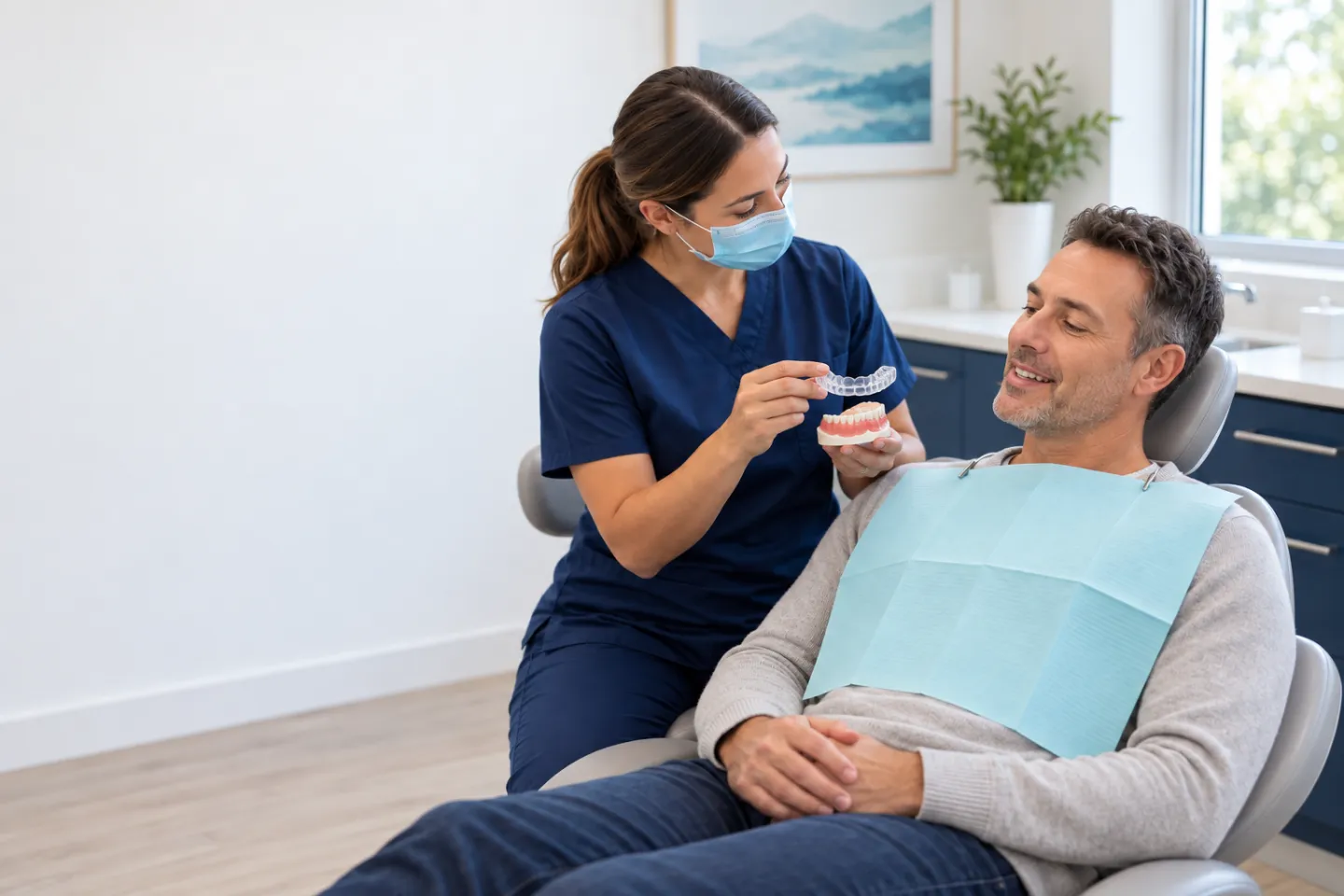
Night guard care includes assessment, records, fitting and later review. Our Port Dover guide helps you understand each appointment and prepare to discuss grinding.
Let’s get you smiling
Tell us how we can help. Our team will follow up to confirm a time.
Dental care at our Port Dover practice on Norfolk County Highway 6
All Port Dover dental servicesProtection begins with assessment
Worn edges or damage to restorations may prompt a discussion about grinding. A night guard can be considered for appropriate protection, but the signs need assessment and the appliance’s purpose should be clear.
At our Port Dover practice, explain what you notice on waking, whether someone has heard grinding and any previous device you have tried. Those details help guide the discussion without assuming a guard answers every related symptom.

Investigate the wear
The examination considers tooth surfaces, restorations and bite alongside the history of changes. Include jaw discomfort during the day, sensations on waking and reports of grinding during sleep. Wear can have more than one contributing factor, so those observations help the dentist assess the concern without relying on appearance alone.
Ask which findings support considering a guard and whether advice or further assessment is needed alongside it. Bring an older device and explain why you stopped using it or what changed while wearing it. That experience helps define the purpose of a new recommendation rather than treating every worn appliance as a simple replacement order.
Set expectations
A guard may be considered to help protect teeth from contact-related damage. That purpose differs from guaranteeing that grinding stops or every jaw symptom resolves. Discuss the intended benefit for your findings and how it will be reviewed, so expectations match the role of the appliance being prescribed.
Raise sleep concerns or other relevant health issues during planning and ask whether medical coordination is appropriate. An appliance discussion should not leave those questions outside the care plan. Clarify which clinician will assess each concern and how any resulting information will be brought back to the dental review.
Fit and instructions
Records guide fabrication, followed by a fitting that checks seating and contact with opposing teeth. Practise the handling and mention pressure, looseness or difficulty removing the device. Clarify whether your booking is for assessment, records, delivery or adjustment, since each appointment has a different purpose in the sequence.
Obtain instructions for wearing, cleaning and storing the prescribed appliance. Follow that guidance rather than copying someone else's routine or substituting a sports guard. Different devices serve different purposes, and knowing how yours should be used is part of making the protective plan workable at home.
Monitor use
Ask when the condition and fit should be checked, and bring the guard when advised so it can be reviewed directly. Tell the dentist about planned restorative work before treatment, then have fit reconsidered afterward as recommended. Changes to teeth can matter even when the device itself appears unchanged.
Contact the practice about an altered bite, worsening discomfort, damage or a guard that no longer seats normally. Describe when it happens and how you have used the appliance. Do not force it or modify it yourself; the symptoms and device need to be considered together before deciding how to proceed.
Planning your appointment
Tell our Port Dover team why you are considering a guard and whether you have received a previous diagnosis or recommendation. Bring an older device even if you stopped using it.
Ask whether the appointment is for assessment, records, delivery or adjustment so the correct time is reserved.
Before you book
Have a question about your situation? Our team can help you plan a visit.
It should not be assumed to eliminate the behaviour. Ask what benefit is intended for your teeth and what other management may be appropriate. Protection and treatment of contributing factors are different considerations.
Devices made for sport and grinding have different purposes. Discuss an appropriate appliance with the dentist rather than substituting one based on appearance. Fit, bite and instructions need individual consideration.
Contact the practice for advice and describe the timing and fit. Do not keep forcing a poorly fitting device or alter it yourself. The appliance and symptoms may need reassessment together.
Ask about the review schedule and bring the guard when advised. Examining wear and fit helps the clinician assess how it is functioning and whether changes in your teeth affect it.
It can. Tell the dentist you wear an appliance before restorative treatment and have its fit checked afterwards as advised. Do not assume it remains suitable if it no longer seats normally.
Which teeth will your custom night guard cover, and why? Discuss the design and intended benefit in Port Dover before records are taken and fabrication is arranged.
Mention new medicines and their timing during a bruxism assessment in Port Dover. The dentist can consider medical coordination alongside clenching or grinding care.
Recognized year after year
Best Dentists in Norfolk
Proudly recognized among Norfolk’s top-rated dental practices for six consecutive years.

2021 Winner

2022 Winner

2023 Winner

2024 Winner

2025 Winner

2026 Winner
Stories from our patients
Watch a patient’s experience and browse more five-star reviews from people who have visited our Port Dover dental clinic.
Patient video
A patient shares the welcoming atmosphere and positive experience they found at our Port Dover office.
Google reviews
Swipe or use the arrows
Read all reviewsYour next visit can start today
New patients and CDCP patients are welcome. Tell us how we can help and our Port Dover dental team will follow up with you.
Evening appointments Monday and Tuesday