
Patient video
Welcoming and Wonderful Practice
A patient shares the welcoming atmosphere and positive experience they found at our Port Dover office.
★★★★★
Port Dover Family Dentistry
Grinding at night can wear and crack teeth over time. Peacock Point patients can learn how a dentist-fitted night guard helps protect enamel at our Port Dover office.
Let’s get you smiling
Tell us how we can help. Our team will follow up to confirm a time.
Caring for Peacock Point residents and cottagers at our Port Dover office
Browse every dental service for Peacock PointProtection while you sleep
Many people grind or clench their teeth at night without knowing it. Over months and years, this can flatten biting surfaces, chip enamel, crack teeth and wear down fillings and crowns. A night guard is a thin appliance worn over the teeth while you sleep, acting as a cushion that absorbs and spreads the forces of grinding.
If you or your partner suspect nighttime grinding, Peacock Point residents and seasonal visitors can be assessed at our Port Dover office. The dentist will look for signs of wear and explain whether a night guard is the right first step.

Signs
Waking with a sore jaw, tired facial muscles, headaches at the temples or teeth that feel tender are common clues. A partner may hear grinding noises at night. You might notice your teeth look shorter or have small chips. Sensitivity without an obvious cavity can also be linked to enamel worn away by grinding.
During an examination, the dentist may see flattened or shiny wear spots, cracks, notches at the gumline, broken restorations or enlarged jaw muscles. These findings help confirm grinding. The dentist will combine them with your symptoms and history to decide whether a night guard and other measures are recommended.
Why a guard
A night guard places a barrier between upper and lower teeth, reducing direct tooth-on-tooth wear. It can protect enamel, crowns, veneers and fillings from chipping. Some people find that jaw muscle soreness eases while wearing one. A well-fitted guard is comfortable enough to wear every night, which is essential for it to be effective.
A guard does not necessarily stop the grinding habit itself. Contributing factors such as stress, sleep disturbances, caffeine, alcohol and certain medications may also need attention. If you snore loudly or feel tired despite sleeping, mention it, as grinding can accompany sleep-disordered breathing that should be assessed by a physician.
Getting fitted
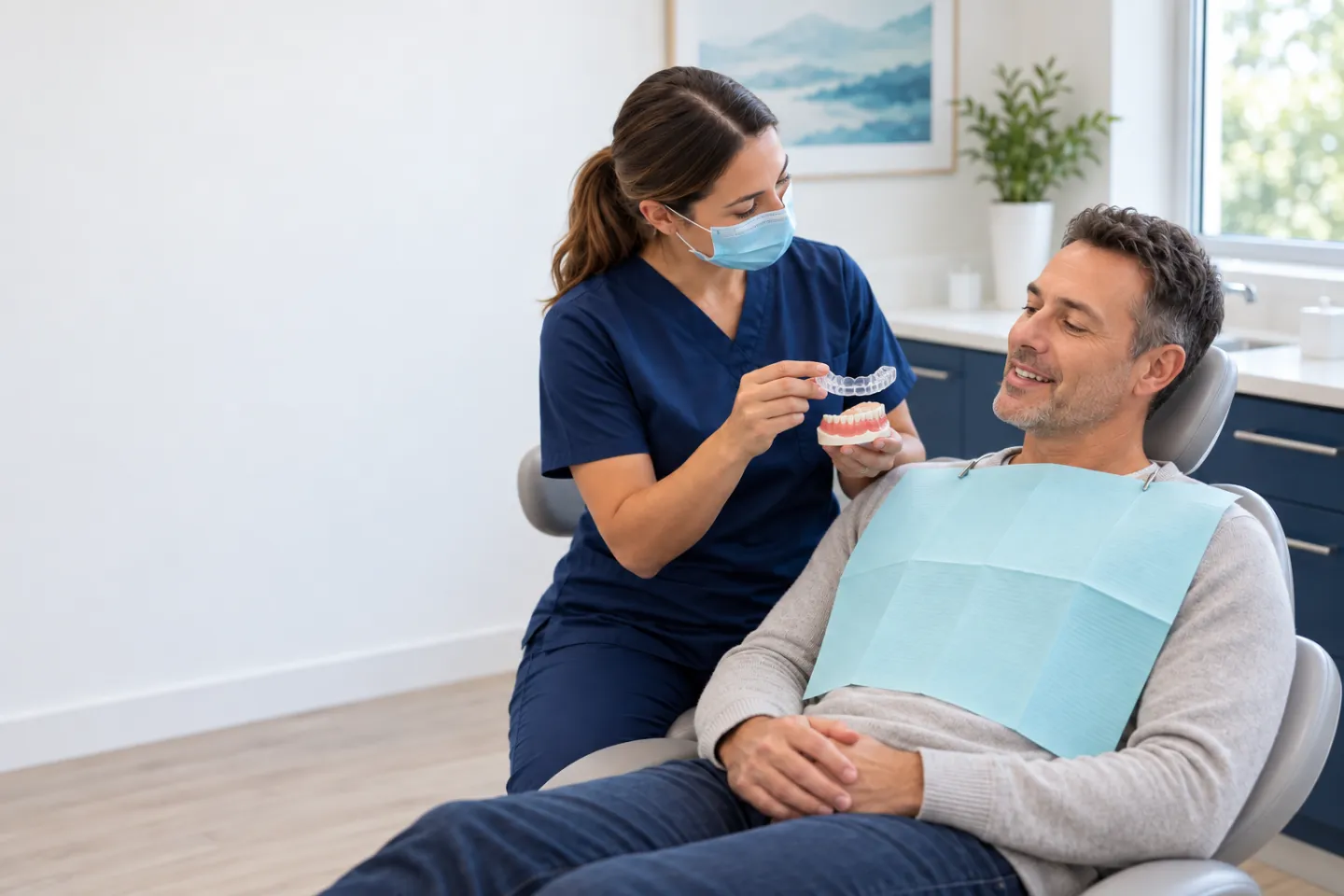
The dentist examines your teeth to check for any problems that should be treated first. Impressions or a digital scan of your teeth are taken, along with a record of your bite. These are used to make a guard that fits closely and meets your opposing teeth evenly when your jaw closes.
When the guard is ready, the dentist checks that it seats properly, does not press on the gums and allows a balanced bite. Adjustments are made as needed. You will learn how to insert, remove and clean it. It may feel unusual for the first few nights, but most people adapt quickly.
Caring for it
Rinse the guard each morning and brush it gently with cool water. Avoid hot water, which can warp it. Let it air dry and store it in its case. Keep it away from pets and direct sunlight. If you travel between home and the cottage, make sure the case comes with you so the guard is not forgotten.
Bring the guard to dental checkups so the dentist can check its condition and fit. Over time, wear, cracks or changes in your teeth may require adjustment or replacement. If the guard becomes uncomfortable, loose or damaged, contact the office rather than continuing to wear it or trying to modify it yourself.
Planning your appointment
Call our Port Dover office to arrange an assessment for grinding. Mention jaw soreness, headaches, noise reported by a partner or worn teeth you have noticed.
Bring any guard you currently use and mention recent dental work that might need protecting from grinding.
Before you book
Have a question about your situation? Our team can help you plan a visit.
Common signs include waking with jaw soreness or headaches, worn or chipped teeth and a partner hearing grinding sounds. The dentist can look for wear patterns during an exam and help confirm whether grinding is likely.
A guard mainly protects teeth rather than stopping the habit. Some people notice fewer symptoms while wearing one. Addressing stress, sleep problems and other factors may also help reduce grinding.
Custom guards are made to fit your teeth closely and are adjusted for your bite. Over-the-counter guards may be bulky or shift during sleep. The dentist can advise which option is suitable for you.
Most people adjust within a few nights. A well-fitted guard should feel snug without pressure. If it causes soreness or affects your bite, contact the office for an adjustment.
It depends on how heavily you grind and the material used. Some guards last years, while heavy grinders may need replacement sooner. Bring it to checkups so wear can be monitored.
A guard made from your own impressions can help protect teeth from nighttime grinding. Peacock Point patients can ask about fittings at our Port Dover dental office.
Worn edges, sore jaw muscles or morning headaches may point to bruxism. Peacock Point patients can discuss grinding and clenching at our Port Dover dental office.
Recognized year after year
Best Dentists in Norfolk
Proudly recognized among Norfolk’s top-rated dental practices for six consecutive years.

2021 Winner

2022 Winner

2023 Winner

2024 Winner

2025 Winner

2026 Winner
Stories from our patients
Watch a patient’s experience and browse more five-star reviews from people who have visited our Port Dover dental clinic.
Patient video
A patient shares the welcoming atmosphere and positive experience they found at our Port Dover office.
Google reviews
Swipe or use the arrows
Read all reviewsYour next visit can start today
New patients and CDCP patients are welcome. Tell us how we can help and our Port Dover dental team will follow up with you.
Evening appointments Monday and Tuesday