
Patient video
Welcoming and Wonderful Practice
A patient shares the welcoming atmosphere and positive experience they found at our Port Dover office.
★★★★★

Port Dover Family Dentistry
A knocked-out adult tooth is time-sensitive. Walsingham patients can learn how to handle, store and possibly replant it, and why a baby tooth should never be put back.
Let’s get you smiling
Tell us how we can help. Our team will follow up to confirm a time.
Serving Walsingham households from our Port Dover office
See every dental service for WalsinghamMinutes count
When an adult tooth is knocked out completely, the cells on its root surface begin to dry and die. Replanting the tooth quickly, or keeping it moist in the right liquid, can improve the chance that it will reattach. How the tooth is handled in the first minutes can matter as much as the treatment that follows.
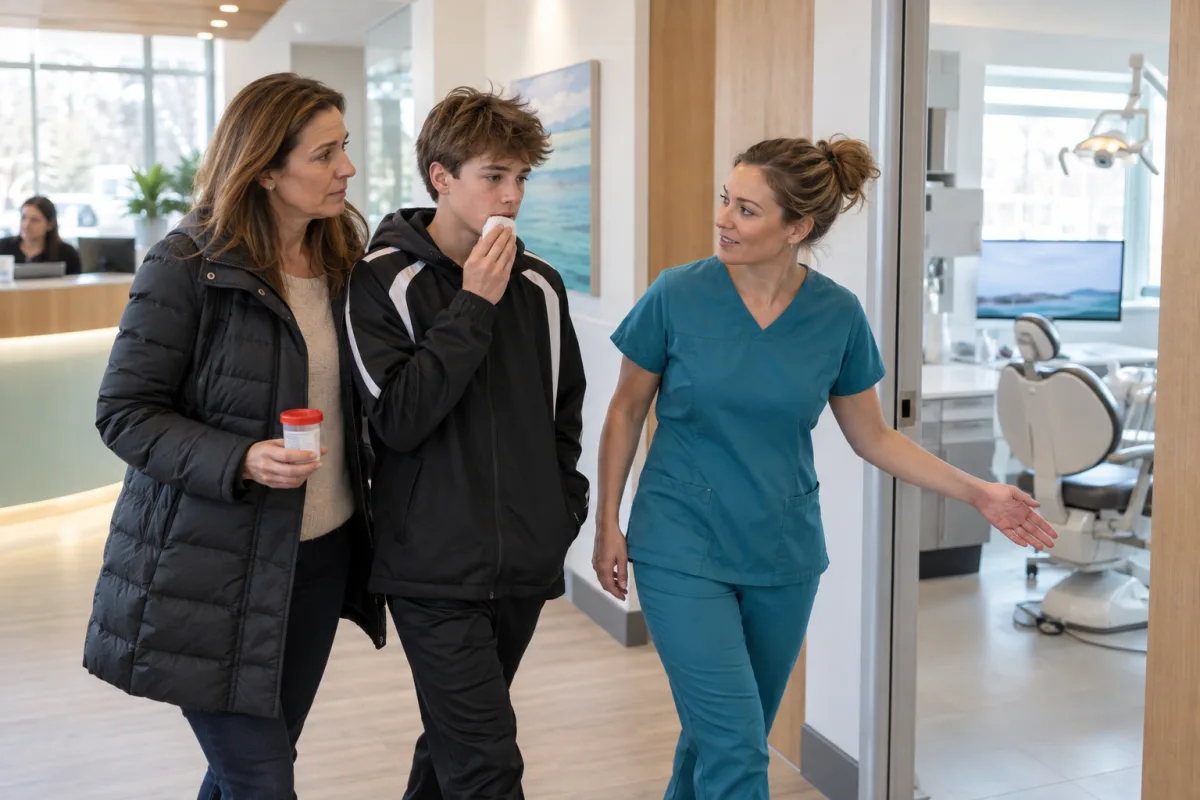
If someone in Walsingham has a tooth knocked out, check for any medical emergency, then call our Port Dover office right away for guidance. The team will tell you what to do with the tooth and arrange to see the patient as soon as appropriate at the Port Dover practice.
Right away
Find the tooth and pick it up by the crown, the white part you normally see, not by the root. If it is dirty, rinse it briefly in milk or with cold water for a few seconds. Do not scrub it, wipe it with cloth or remove any tissue attached to the root. These steps help protect the delicate root surface.
If the person is old enough and calm enough, try to place the tooth gently back into its socket, facing the right way, and have them bite softly on clean gauze to hold it. If that is not possible, store the tooth in milk, saline or the person’s own saliva, such as inside the cheek for an older child or adult. Avoid storing it in water.
Baby or adult?
Adult front teeth usually come in around ages six to eight. If an adult tooth is knocked out, quick replanting or proper storage and prompt dental care offer the best chance of keeping it. Even if it seems too late, call the office, as the dentist can advise on the options.
Do not put a knocked-out baby tooth back in. Replanting can damage the adult tooth developing underneath. Instead, control bleeding, keep the child comfortable and call the office. The dentist will check the area, look for other injuries and discuss whether anything is needed to protect spacing.
At the office
If the tooth has been replanted or brought in moist, the dentist cleans the area, places the tooth in the correct position if needed and checks it with an X-ray. A flexible splint is often bonded to neighbouring teeth to hold the tooth steady while it heals. This splint usually stays in place for a short period.
The dentist also examines the gums, lips and surrounding teeth for fractures or other damage. Antibiotics or a tetanus check may be suggested depending on the injury. Because the nerve is often damaged when a tooth is knocked out, root canal treatment is commonly planned within the following weeks for adult teeth.
Follow-up
Eat soft foods, avoid biting with the injured tooth and keep the area clean with gentle brushing and any rinse recommended. Avoid contact sports until the dentist confirms the tooth has healed enough. Contact the office if the splint loosens, swelling increases or pain worsens after the first few days.
Replanted teeth need regular check-ups with X-rays to watch for root changes, infection or the tooth fusing to the bone. Some replanted teeth last many years, while others eventually need replacing. Early detection of problems gives more options. For future sports, a custom mouthguard can help prevent another injury.
Planning your appointment
Call our Port Dover office immediately when an adult tooth is knocked out. Explain what happened, the person’s age and how the tooth is being stored, so the team can advise and arrange urgent care.
Bring the tooth in milk, saline or saliva, any fragments and information about medical care already given for the injury.
Before you book
Have a question about your situation? Our team can help you plan a visit.
As soon as possible, ideally within minutes. If you cannot replant it, keep it moist in milk or saliva and get professional care quickly. Time out of the mouth affects the outcome.
Water is not ideal because it can damage root cells. Milk, saline or the person’s saliva are better short-term storage options until the tooth can be replanted or seen by a dentist.
Replanting a baby tooth can harm the developing adult tooth beneath it. Instead, the dentist will check the area and monitor the child’s teeth as they grow.
Some replanted teeth last for many years, especially if handled well and treated quickly. Others may develop problems over time. Regular monitoring helps manage complications early.
If replanting is not successful, the dentist will discuss replacement options such as an implant, bridge or partial denture, considering the patient’s age and growth.
A fall, farm mishap or sports hit can loosen, push or break teeth. Walsingham patients can learn what to do first and how injured teeth are assessed and followed in Port Dover.
A child with a knocked tooth, toothache or swollen face needs a calm plan. Walsingham parents can learn what to do first and when to call our Port Dover office or 911.
Recognized year after year
Best Dentists in Norfolk
Proudly recognized among Norfolk’s top-rated dental practices for six consecutive years.

2021 Winner

2022 Winner

2023 Winner

2024 Winner

2025 Winner

2026 Winner
Stories from our patients
Watch a patient’s experience and browse more five-star reviews from people who have visited our Port Dover dental clinic.
Patient video
A patient shares the welcoming atmosphere and positive experience they found at our Port Dover office.
Google reviews
Swipe or use the arrows
Read all reviewsYour next visit can start today
New patients and CDCP patients are welcome. Tell us how we can help and our Port Dover dental team will follow up with you.
Evening appointments Monday and Tuesday