
Find The Tooth
Pick it up by the crown—the part normally visible in the mouth—and avoid the root surface.
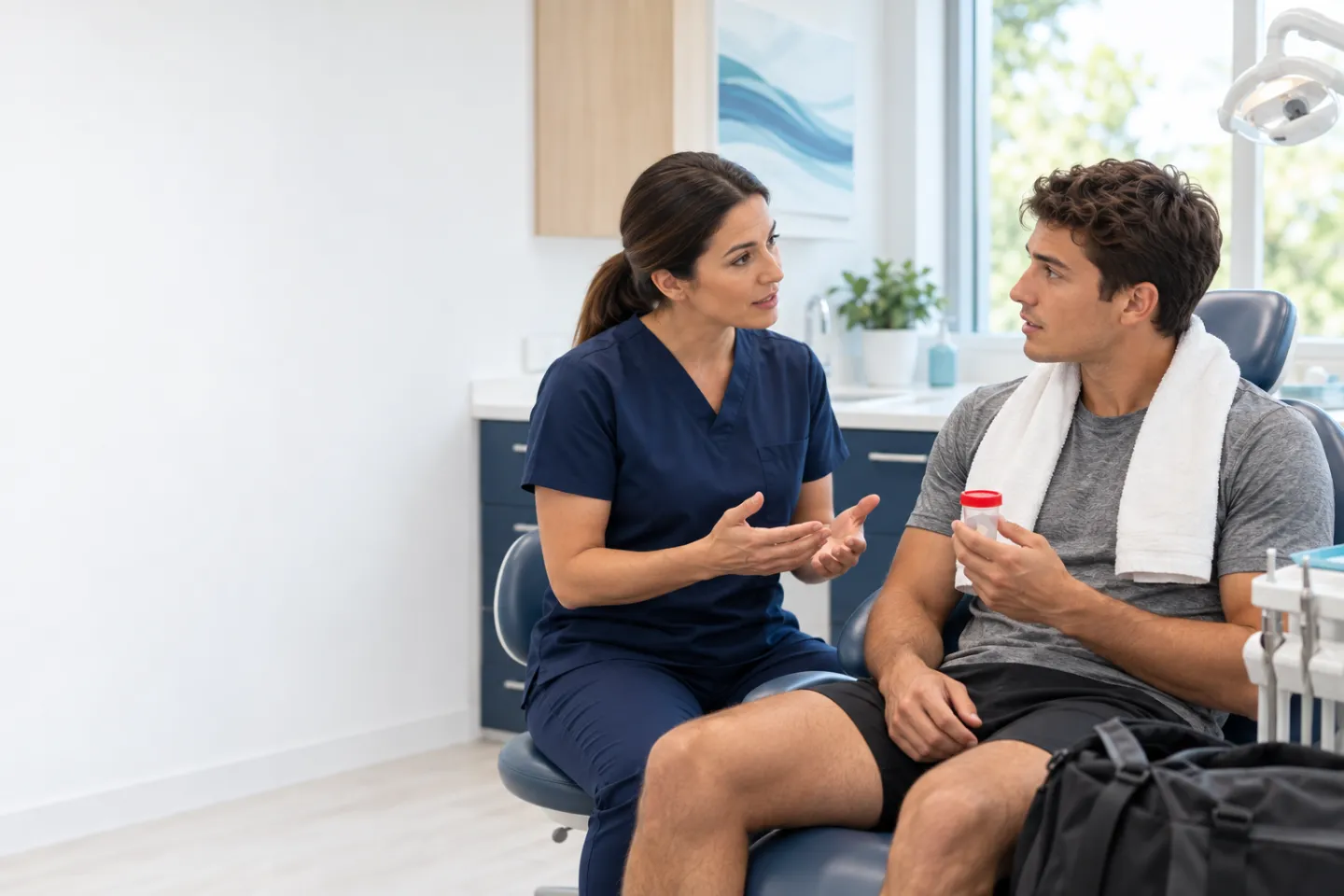
Port Dover Family Dentistry
Knocked-out tooth treatment in Port Dover is time-sensitive. Call immediately and protect a permanent tooth by handling only its crown and keeping it moist.
Let’s get you smiling
Tell us how we can help. Our team will follow up to confirm a time.
A permanent tooth was knocked out?
Call immediately. Hold it by the white crown, not the root. If dirty, rinse briefly and gently, then reinsert if safe or keep it moist in milk or a tooth-preservation solution.
Knocked-out tooth treatment in Port Dover
A permanent tooth that has been completely displaced from its socket needs immediate action. The chance of successful replantation generally improves when the tooth is handled correctly and returned to the socket—or placed in a suitable storage liquid—without delay.
A knocked-out primary tooth is managed differently and should not be put back because replantation can harm the developing permanent tooth. If you are uncertain which type it is, call a dentist immediately and do not force it into the socket.
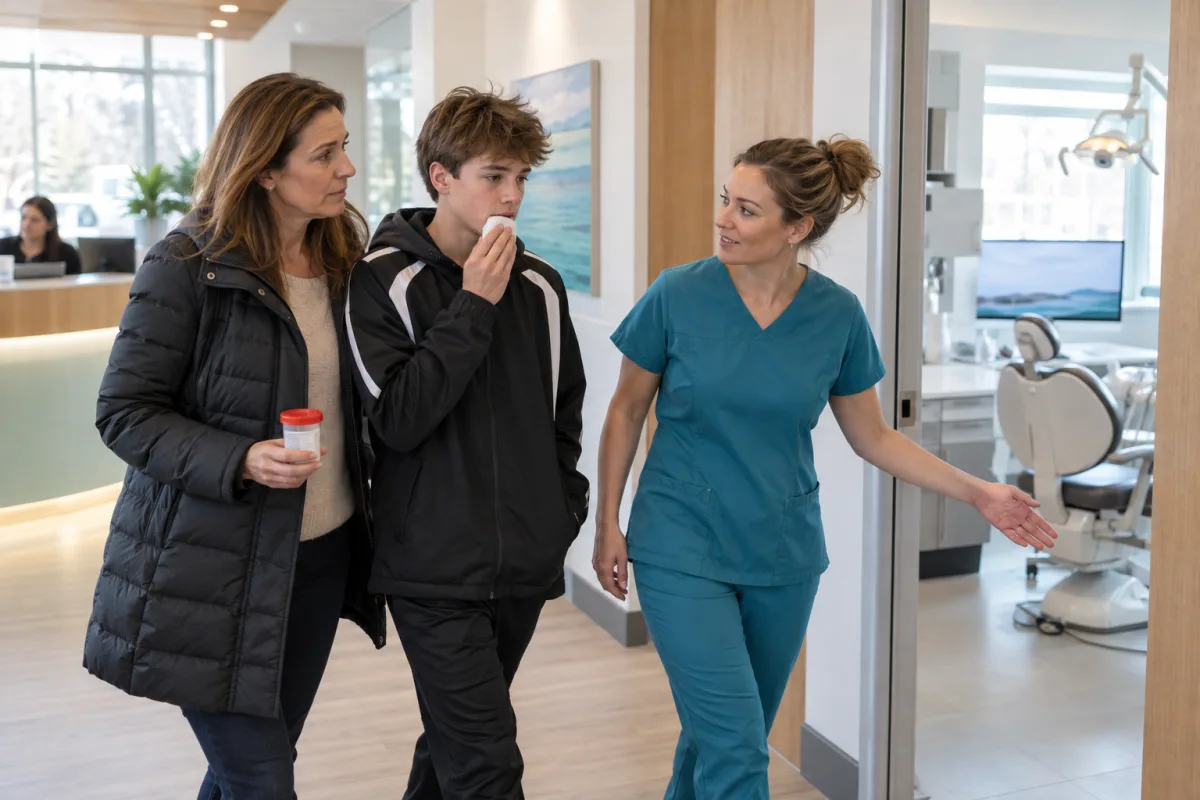
Handle only the crown
Do not touch, scrub or scrape the root. Avoid letting the permanent tooth dry out and do not wrap it in tissue.
Never reinsert a knocked-out baby tooth. Call 911 for loss of consciousness, vomiting, confusion, breathing difficulty, uncontrolled bleeding, or suspected serious head, neck or jaw injury.
Immediate first aid
Pick it up by the crown—the part normally visible in the mouth—and avoid the root surface.
If dirty, briefly rinse with milk, saline or cool running water. Do not use soap or scrub it.
For a permanent tooth, gently replace it if safe and have the person hold it in place, or keep it in milk or a tooth-preservation solution.
Call a dentist and leave right away. Bring the tooth and give the exact injury time and details.
Urgent professional care
The dentist evaluates the socket, tooth, adjacent teeth, soft tissues and bite, and checks for signs of jaw or head injury.
When appropriate, a permanent tooth is repositioned and supported with a flexible splint. Other care depends on root development and injury details.
Replanted teeth require ongoing checks and often root canal care. Follow-up monitors healing, infection, root changes and supporting tissues.
Protect the root surface
Cells on the root surface are easily damaged by drying, scrubbing or harsh chemicals. Handle a permanent tooth only by its white crown and keep the root moist while arranging immediate care.
Immediate gentle replantation is preferred when it can be done safely and the person is alert and cooperative. If that is not possible, use a tooth-preservation solution or cold milk and leave for urgent dental care without delay.
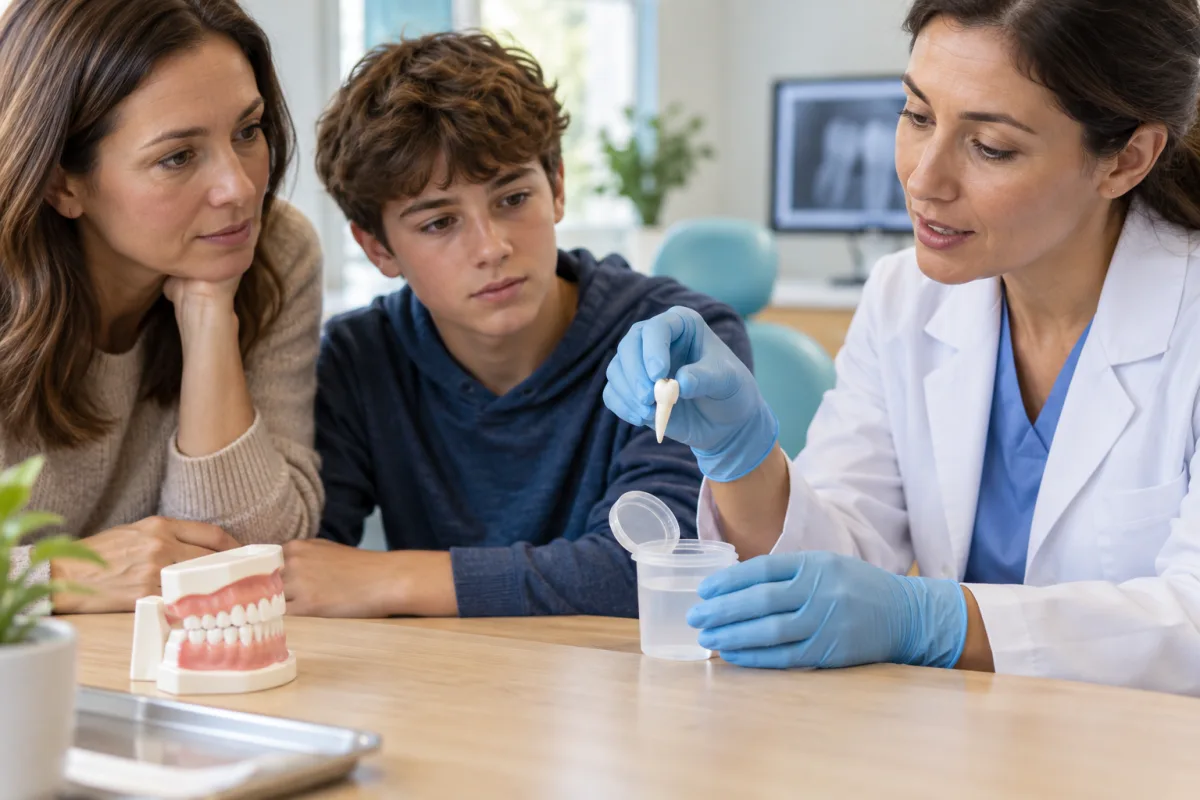
Only a permanent tooth is replanted. A knocked-out primary tooth must not be returned to the socket.
If dirty, rinse briefly with milk, saline or cool running water without touching or scraping the root.
Do not wrap the tooth in tissue or leave it dry; use an appropriate storage liquid while travelling.
Outcome depends on the injury
Even prompt, careful first aid cannot guarantee the outcome. Several injury and treatment factors influence healing over time.
The length of time outside the mouth—especially dry time—and the storage medium affect root-surface cell survival.
A tooth with an open, developing root may follow a different pulp-management pathway from a mature tooth.
Socket fracture, tooth displacement, soft-tissue injury and head or jaw trauma can change immediate priorities.
Regular clinical and X-ray reviews look for pulp infection, root resorption, ankylosis and supporting-tissue healing.
Attend every recommended review even when the replanted tooth feels normal. Complications can develop without early symptoms.
After urgent treatment
Use a soft diet, protect the injured area and clean as instructed. Take prescribed or recommended medication exactly as directed, and ask whether tetanus status requires medical review.
Attend every follow-up even if the tooth feels fine. Report renewed pain, swelling, increasing mobility, bad taste, fever or a change in tooth colour promptly.
Time-sensitive dental trauma
We will provide first-aid instructions and direct you to the fastest appropriate care.
Knocked-out tooth questions
No. Replanting a primary tooth can damage the developing permanent tooth. Contact a dentist promptly so the child and socket can be assessed.
Yes, if it is visibly dirty, rinse it very briefly and gently. Do not scrub, scrape, dry or disinfect the root.
A tooth-preservation solution or cold milk is preferred when immediate replantation is not safe. Keep the tooth moist and seek dental care immediately.
Water can damage the delicate cells on the root surface during prolonged storage. Use milk or a suitable tooth-preservation solution when available.
Replantation gives the tooth a chance, but complications can still occur. The outcome depends on injury and handling, and careful long-term follow-up is essential.
Recognized year after year
Best Dentists in Norfolk
Proudly recognized among Norfolk’s top-rated dental practices for six consecutive years.

2021 Winner

2022 Winner

2023 Winner

2024 Winner

2025 Winner

2026 Winner
Stories from our patients
Watch a patient’s experience and browse more five-star reviews from people who have visited our Port Dover dental clinic.
Patient video
A patient shares the welcoming atmosphere and positive experience they found at our Port Dover office.
Google reviews
Swipe or use the arrows
Read all reviewsOur community
Your next visit can start today
New patients and CDCP patients are welcome. Tell us how we can help and our Port Dover dental team will follow up with you.
Evening appointments Monday and Tuesday