
Patient video
Welcoming and Wonderful Practice
A patient shares the welcoming atmosphere and positive experience they found at our Port Dover office.
★★★★★
Port Dover Family Dentistry
Too much damage for a filling, not enough for a crown? Walsingham patients can learn how inlays and onlays restore back teeth while keeping more natural tooth structure.
Let’s get you smiling
Tell us how we can help. Our team will follow up to confirm a time.
Serving Walsingham households from our Port Dover office
See every dental service for WalsinghamBetween a filling and a crown
When a back tooth has a large cavity or a broken cusp, a regular filling may not be strong enough, but a full crown might remove more healthy tooth than necessary. Inlays and onlays are custom-made restorations, usually of porcelain, composite or gold, that fit precisely into or over the damaged part of the tooth and are bonded or cemented in place.
Walsingham patients who have been told a tooth needs more than a filling can ask about inlays and onlays at our Port Dover office. The dentist will examine the tooth, explain whether a partial restoration is suitable and compare it with a large filling or a crown so you can make an informed choice.
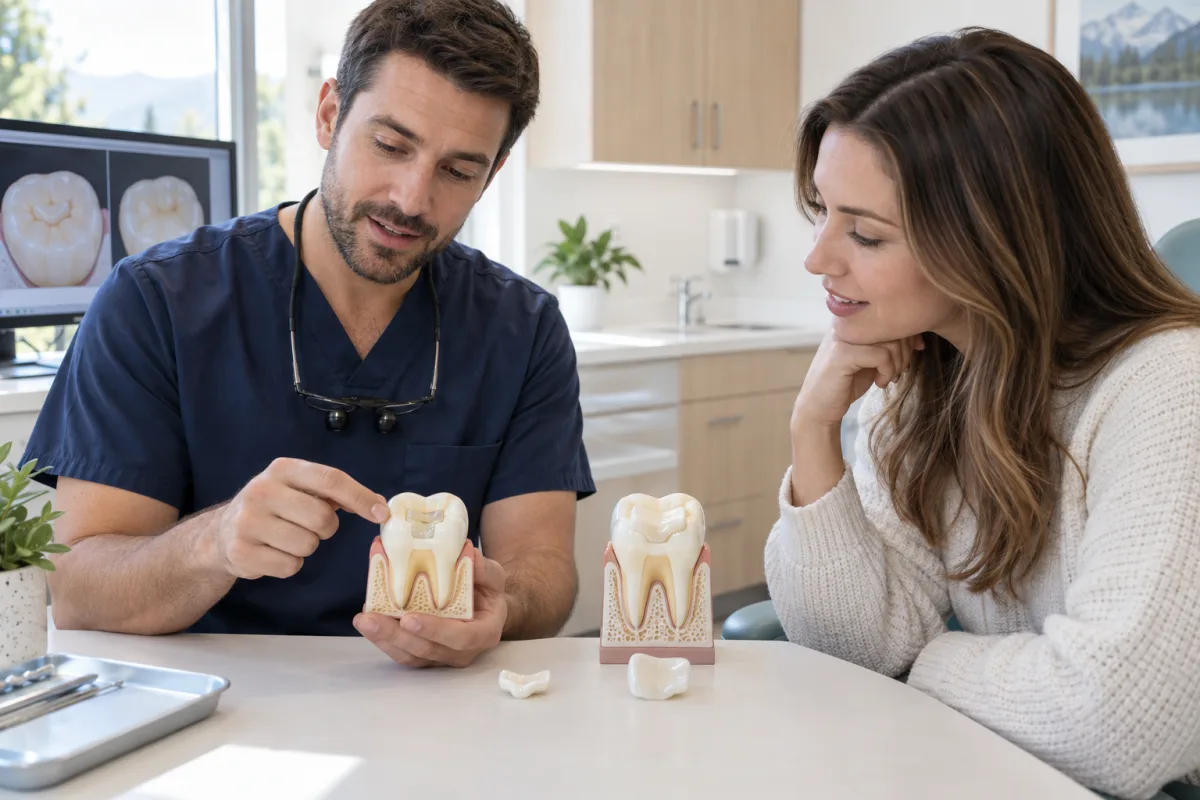
Inlay or onlay
An inlay fits within the grooves and hollows of a tooth’s chewing surface, replacing damaged tooth structure between the cusps. It is used when the outer walls and cusps are still strong. Because it is made outside the mouth, it can be shaped precisely and is often more durable than a large direct filling.
An onlay extends over one or more cusps, covering a larger part of the biting surface. It is used when cusps are weakened, cracked or missing. An onlay can protect the tooth much like a crown but usually preserves more natural tooth structure. The dentist explains which design fits your tooth.
Is it right?
Inlays and onlays can restore strength and shape while removing less healthy tooth than a crown. Their precise fit can help seal the tooth. Tooth-coloured materials can blend in well, while gold offers excellent durability. They may be a good choice for moderate to large cavities, failing fillings or cracked cusps.
If the tooth has very little structure left or has had root canal treatment, a crown may offer better protection. For smaller damage, a direct filling may be enough. The dentist will look at your bite, grinding habits and the tooth’s condition before recommending the most appropriate restoration.
The process
After freezing, the dentist removes decay or old filling material and shapes the tooth. An impression or digital scan is taken and sent to a laboratory, or the restoration may be made in another way. A temporary filling protects the tooth until the final restoration is ready. Avoid sticky or hard foods on that tooth meanwhile.
At the second visit, the temporary is removed and the inlay or onlay is tried in. The dentist checks fit, contacts with neighbouring teeth and your bite. Once everything is right, the restoration is bonded or cemented. Final adjustments and polishing complete the treatment.
Care
Some temperature sensitivity is common after treatment and usually fades. If the bite feels uneven after numbness wears off or sensitivity persists, contact the office for a check. A temporary restoration that comes loose before your second visit should be reported so the tooth stays protected.
Brush twice daily, clean between your teeth and keep regular checkups so the dentist can monitor the margins for decay. Avoid chewing ice and hard objects. If you grind your teeth, ask about a night guard to protect the restoration. With good care, inlays and onlays can serve well for many years.
Planning your appointment
When you contact our Port Dover office, mention which tooth has been flagged and whether it is sensitive or painful. Ask how much time typically passes between the two visits so you can plan the trips.
Bring any treatment plans or X-rays from another dentist and let the team know about grinding habits or previous problems with that tooth.
Before you book
Have a question about your situation? Our team can help you plan a visit.
They are made outside the mouth from durable materials and can be more resistant to wear and fracture than large direct fillings. Longevity still depends on the tooth, bite and care.
A crown covers the entire tooth and requires more reshaping. If enough healthy structure remains, an onlay can protect the tooth while preserving more of it. The dentist will recommend what suits your tooth.
Porcelain, composite resin and gold are common. Porcelain and composite are tooth-coloured, while gold is very durable. The dentist will discuss the pros and cons of each for your situation.
The tooth is frozen during preparation, so you should feel pressure rather than pain. Mild sensitivity after treatment is normal and usually settles.
With good care, many last for years. Regular checkups help monitor the edges and catch any problems early. Grinding and poor hygiene can shorten their lifespan.
Composite fillings repair decay and small breaks with tooth-coloured material. Walsingham patients can see how the dentist decides on one and how to care for it afterwards.
A crown covers and strengthens a tooth weakened by a large filling, crack or root canal. Walsingham patients can learn about materials, visits and long-term care.
Recognized year after year
Best Dentists in Norfolk
Proudly recognized among Norfolk’s top-rated dental practices for six consecutive years.

2021 Winner

2022 Winner

2023 Winner

2024 Winner

2025 Winner

2026 Winner
Stories from our patients
Watch a patient’s experience and browse more five-star reviews from people who have visited our Port Dover dental clinic.
Patient video
A patient shares the welcoming atmosphere and positive experience they found at our Port Dover office.
Google reviews
Swipe or use the arrows
Read all reviewsYour next visit can start today
New patients and CDCP patients are welcome. Tell us how we can help and our Port Dover dental team will follow up with you.
Evening appointments Monday and Tuesday