
Patient video
Welcoming and Wonderful Practice
A patient shares the welcoming atmosphere and positive experience they found at our Port Dover office.
★★★★★
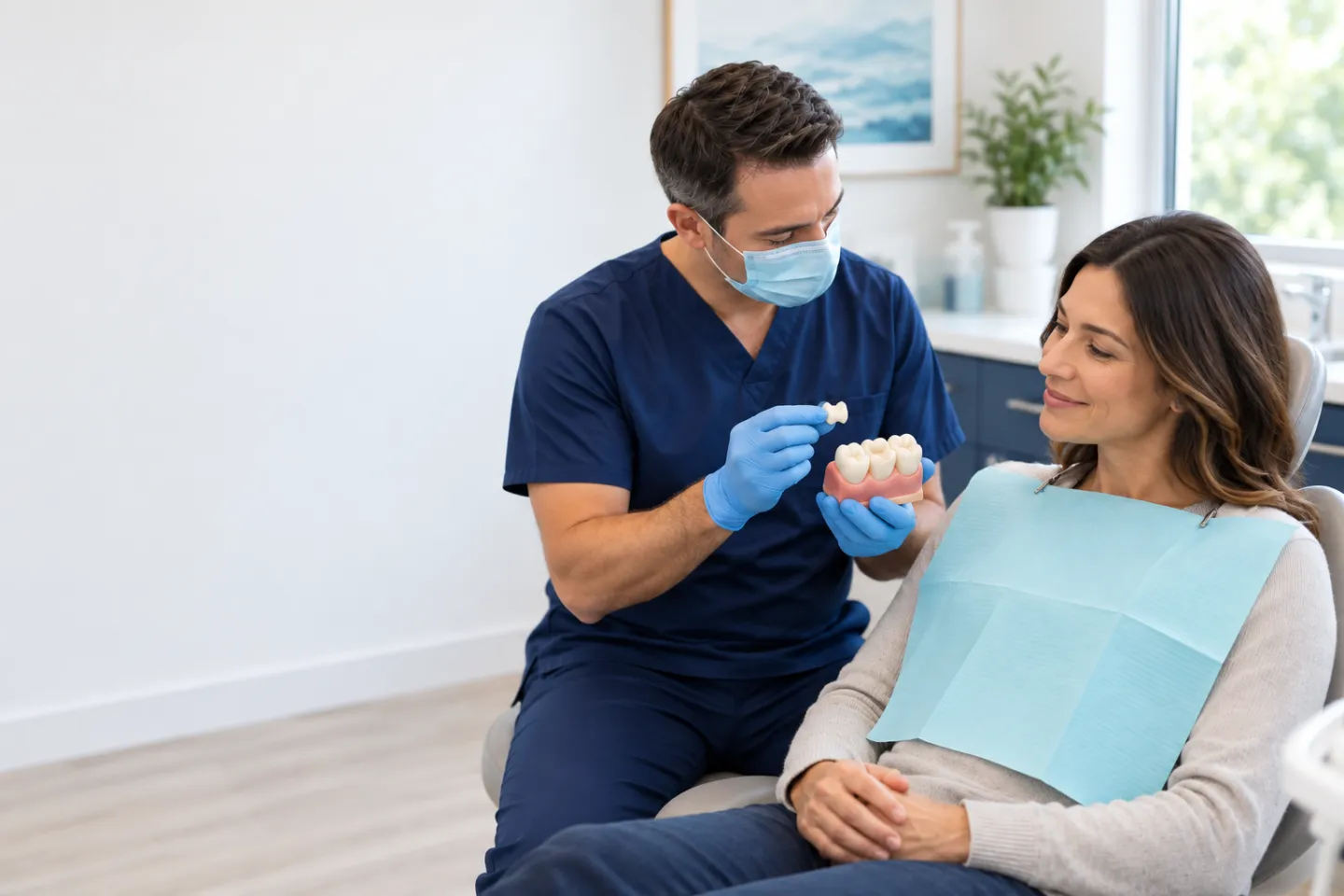
Port Dover Family Dentistry
When a cavity is too big for a filling but a crown seems excessive, an inlay or onlay may fit. St. Williams patients can learn how these work at our Port Dover office.
Let’s get you smiling
Tell us how we can help. Our team will follow up to confirm a time.
Caring for St. Williams patients at our office in Port Dover
Every dental service for St. WilliamsThe middle ground
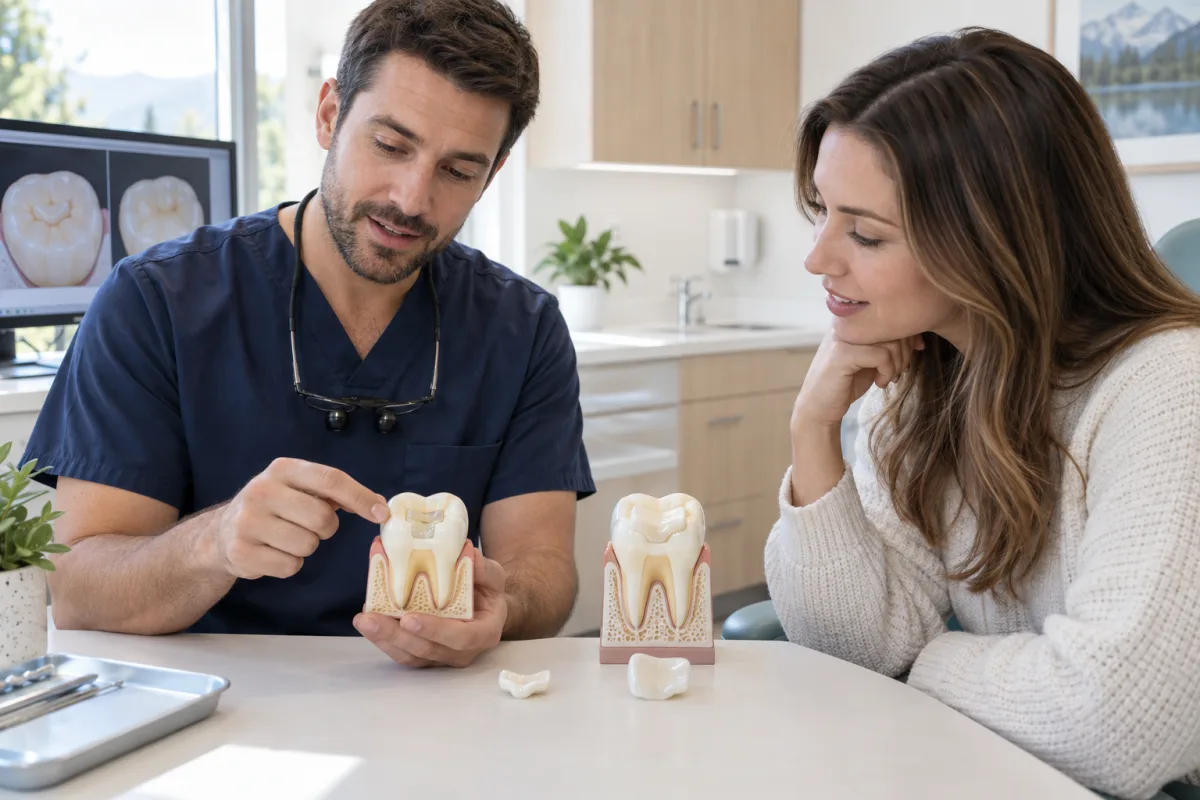
Inlays and onlays are custom-made restorations used to repair back teeth with moderate to large areas of damage. An inlay fits within the cusps of the tooth, while an onlay covers one or more cusps. They are made outside the mouth, often from ceramic or gold, and bonded or cemented in place. They can preserve more natural tooth than a full crown.
St. Williams residents with a large cavity, a failing old filling or a broken cusp can be assessed at our Port Dover office. The dentist will explain whether an inlay, onlay, filling or crown best suits the tooth and how many visits the chosen approach is likely to require.
When they help
Inlays and onlays are often considered when decay or an old filling is too large for a direct filling to be strong and durable, but enough healthy tooth remains that a crown is not necessary. Onlays can protect weakened cusps that might otherwise fracture under biting forces.
If a tooth has very little structure left, cracks extending deeply or has had root canal treatment, a crown may offer better protection. The dentist will consider the amount of remaining tooth, your bite and grinding habits when recommending the most appropriate restoration.
Materials
Ceramic inlays and onlays are tooth-coloured and can blend well with natural teeth. They are bonded to the tooth, which may help strengthen it. Laboratory-made composite is another option in some cases. The dentist will discuss how each material handles wear and biting forces.
Gold is durable, gentle on opposing teeth and has a long track record, though its appearance is a consideration for some people. It may be recommended for teeth under heavy forces. Ask the dentist about the pros and cons of each material for your tooth.
Treatment
At the first appointment, the tooth is numbed and decay or old filling material is removed. The tooth is shaped, and impressions or a scan are taken. A temporary restoration protects the tooth while the inlay or onlay is made by a laboratory. Avoid sticky foods on the temporary.
At the second visit, the temporary is removed and the custom restoration is tried in to check fit and colour. It is then bonded or cemented, and the bite is adjusted. The dentist polishes the margins so the restoration feels smooth. You can usually eat normally once numbness wears off.
Aftercare
Brush and floss carefully, paying attention to the edges where the restoration meets the tooth. Avoid chewing ice or very hard objects. If you grind, ask about a night guard. Some sensitivity right after placement is normal and usually settles within a few weeks.
Regular checkups allow the dentist to inspect the margins, check for decay and confirm the bite remains comfortable. Report a rough edge, a change in your bite or persistent sensitivity. Catching problems early may allow simpler repairs rather than replacement.
Planning your appointment
Call our Port Dover office if you have a large cavity, broken filling or cracked cusp. The team will book an assessment and explain whether an inlay or onlay is suitable.
Plan for two appointments with time between them for the laboratory, and ask how long to allow for each visit.
Before you book
Have a question about your situation? Our team can help you plan a visit.
An inlay sits within the grooves between the cusps of a tooth. An onlay extends over one or more cusps to protect them. Both are custom-made and bonded or cemented in place.
For larger areas of damage, they can be more durable and better at protecting the tooth than a large direct filling. For small cavities, a regular filling is usually sufficient.
With good care, they can last many years. Longevity depends on material, bite forces, grinding and home care. Regular checkups help detect problems early.
Generally less than a full crown, as only the damaged areas are prepared. The exact amount depends on the extent of decay or damage.
Sometimes. If an old filling is failing and the tooth needs more protection, an onlay may be a good option. The dentist will assess whether it suits that tooth.
Composite fillings repair cavities with resin shaded to match your tooth. Learn what St. Williams patients can expect from a filling visit at our Port Dover office.
A crown covers a weakened, cracked or root-canal-treated tooth to restore its shape. St. Williams patients can learn how crowns are planned and fitted in Port Dover.
Recognized year after year
Best Dentists in Norfolk
Proudly recognized among Norfolk’s top-rated dental practices for six consecutive years.

2021 Winner

2022 Winner

2023 Winner

2024 Winner

2025 Winner

2026 Winner
Stories from our patients
Watch a patient’s experience and browse more five-star reviews from people who have visited our Port Dover dental clinic.
Patient video
A patient shares the welcoming atmosphere and positive experience they found at our Port Dover office.
Google reviews
Swipe or use the arrows
Read all reviewsYour next visit can start today
New patients and CDCP patients are welcome. Tell us how we can help and our Port Dover dental team will follow up with you.
Evening appointments Monday and Tuesday