Patient video
Welcoming and Wonderful Practice
A patient shares the welcoming atmosphere and positive experience they found at our Port Dover office.
★★★★★
Port Dover Family Dentistry
Floss catching around an inlay or onlay is worth mentioning. Our Port Dover guide covers fitting, cleaning access and changes to report after a partial restoration.
Let’s get you smiling
Tell us how we can help. Our team will follow up to confirm a time.
Dental care at our Port Dover practice on Norfolk County Highway 6
All Port Dover dental servicesMatch coverage to the damage
An inlay or onlay restores a defined part of a tooth. These options may be discussed when the damage needs a more substantial restoration but assessment supports retaining other sound areas.
Our Port Dover dentist can explain how the remaining tooth and bite influence the recommendation. The name matters less than understanding which surfaces need protection and why that amount of coverage is appropriate.
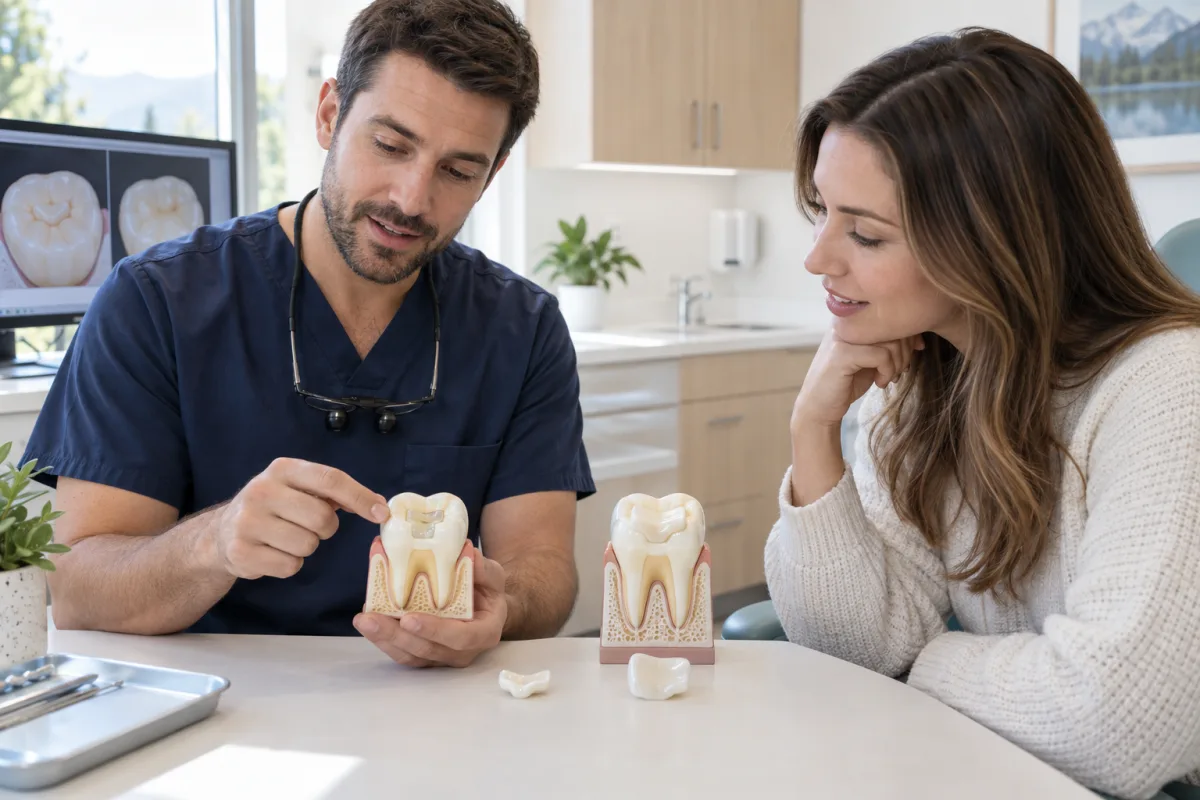
Assess the structure
An older filling, a weakened edge and the location of damage can each affect the repair options. Have the dentist show which areas need restoration and which sound structure can be retained. Partial coverage needs to suit the assessment; the size of a visible filling alone does not establish that an inlay or onlay is appropriate.
Compare the proposed design with a direct filling or crown where those are reasonable alternatives. Discuss the preparation and protection each would involve, together with any uncertainty about the remaining tooth. Less coverage is useful when it meets the clinical need, rather than serving as a goal separate from the findings.
Plan the restoration
The selected material and fabrication arrangements influence preparation and the number of visits. Ask whether records, laboratory work or a temporary restoration are part of the proposed sequence. If a temporary stage is needed, obtain its care instructions and confirm how the final fitting will be arranged.
When more than one tooth needs attention, confirm which is being treated first and why. Match the estimate and booking to that sequence so the scope of each appointment is clear. Scheduling makes more sense when you understand which stages are connected and which restorations remain separate decisions.
Fit and function
At fitting, the clinician assesses the restoration against the prepared tooth, neighbouring contacts and your bite. Tell the dentist about an unfamiliar pressure point or the way the teeth meet. This feedback belongs alongside the appearance review because the restored surface needs to function within the surrounding mouth.
Ask how to clean the restored area and what to report if floss catches or food begins collecting between teeth afterward. Explain any part of the method that is difficult to manage. The contact should be considered as a daily cleaning space as well as a feature checked at the fitting appointment.
Future care
An inlay or onlay becomes part of a tooth that still needs daily cleaning and professional review. The restoration and retained natural structure function together, and both remain relevant at future examinations. Follow advice for the area rather than assuming the portion covered by restorative material ends the preventive-care discussion.
Report persistent discomfort, looseness or a chipped edge and describe when the change began. An intact-looking surface cannot establish that the underlying tooth has no further concern. Assessment should guide the next step, including whether the issue is with the restoration, the remaining structure or another finding.
Planning your appointment
Bring an existing recommendation or explain the damaged restoration when contacting our Port Dover practice. Assessment establishes whether an inlay or onlay is suitable.
Clarify the estimate, expected visits and instructions for any temporary stage before treatment is arranged.
Before you book
Have a question about your situation? Our team can help you plan a visit.
They differ in the tooth surfaces they restore and cover. Ask the dentist to show which areas of your tooth need treatment and why the proposed design addresses that damage.
No. Suitability depends on the tooth’s condition and the protection required. Compare appropriate options with the dentist rather than assuming less coverage will meet every tooth’s needs equally well.
That depends on the planned fabrication and appointment sequence. Ask before preparation and obtain care instructions if a temporary is used. Report problems during that stage instead of waiting automatically for fitting.
It may be considered after assessment of the remaining tooth and existing restoration. The size of the old filling alone does not determine the answer; damage, symptoms and bite also influence planning.
Follow the cleaning and review advice provided for the area. Ask about access between neighbouring teeth and report new sensitivity or food trapping. The natural tooth remains part of ongoing preventive care.
A composite filling should be shaped with neighbouring teeth in mind. Discuss contacts, cleaning and any food trapping after a repair at our Port Dover practice.
Does a crown also mean root canal treatment? Our Port Dover crown guide explains why each procedure needs its own assessment and how the stages are planned.
Recognized year after year
Best Dentists in Norfolk
Proudly recognized among Norfolk’s top-rated dental practices for six consecutive years.

2021 Winner

2022 Winner

2023 Winner

2024 Winner

2025 Winner

2026 Winner
Stories from our patients
Watch a patient’s experience and browse more five-star reviews from people who have visited our Port Dover dental clinic.
Patient video
A patient shares the welcoming atmosphere and positive experience they found at our Port Dover office.
Google reviews
Swipe or use the arrows
Read all reviewsYour next visit can start today
New patients and CDCP patients are welcome. Tell us how we can help and our Port Dover dental team will follow up with you.
Evening appointments Monday and Tuesday