
Patient video
Welcoming and Wonderful Practice
A patient shares the welcoming atmosphere and positive experience they found at our Port Dover office.
★★★★★
Port Dover Family Dentistry
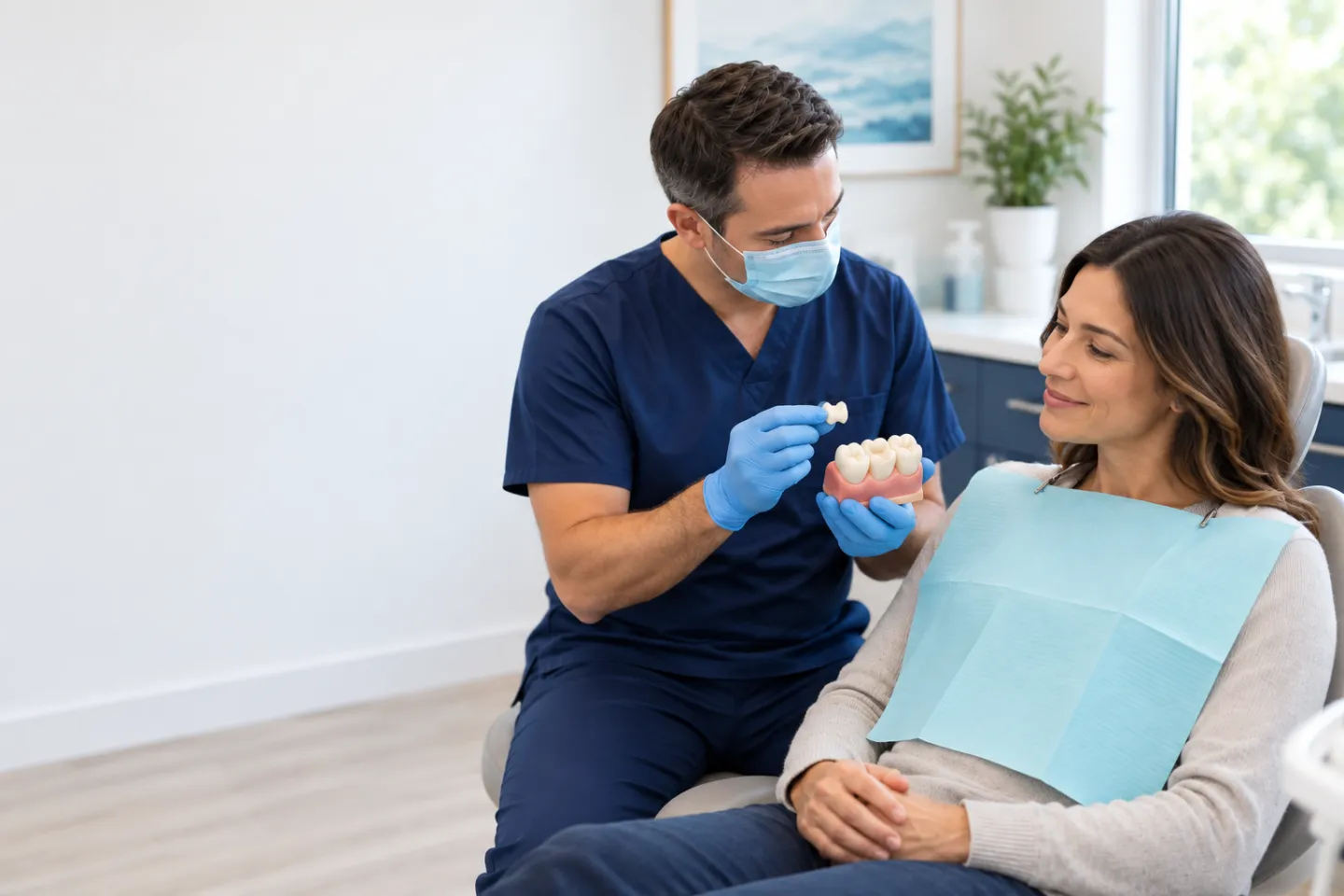
Inlays and onlays repair damaged back teeth with less reduction than a crown. Normandale patients can learn when they fit and how they are placed in Port Dover.
Let’s get you smiling
Tell us how we can help. Our team will follow up to confirm a time.
Caring for Normandale residents and seasonal visitors at our Port Dover office
See every dental service for NormandaleBetween a filling and a crown
Inlays and onlays are custom restorations made outside the mouth, usually from ceramic, composite or gold, and bonded into a prepared tooth. An inlay fits within the cusps of a back tooth, while an onlay extends over one or more cusps. They can restore moderate damage while preserving more natural tooth than a full crown.
If you are in Normandale and have a back tooth with a large old filling, a fracture or moderate decay, our Port Dover dentist can assess whether an inlay or onlay is suitable. We will compare it with fillings and crowns so you understand the options.
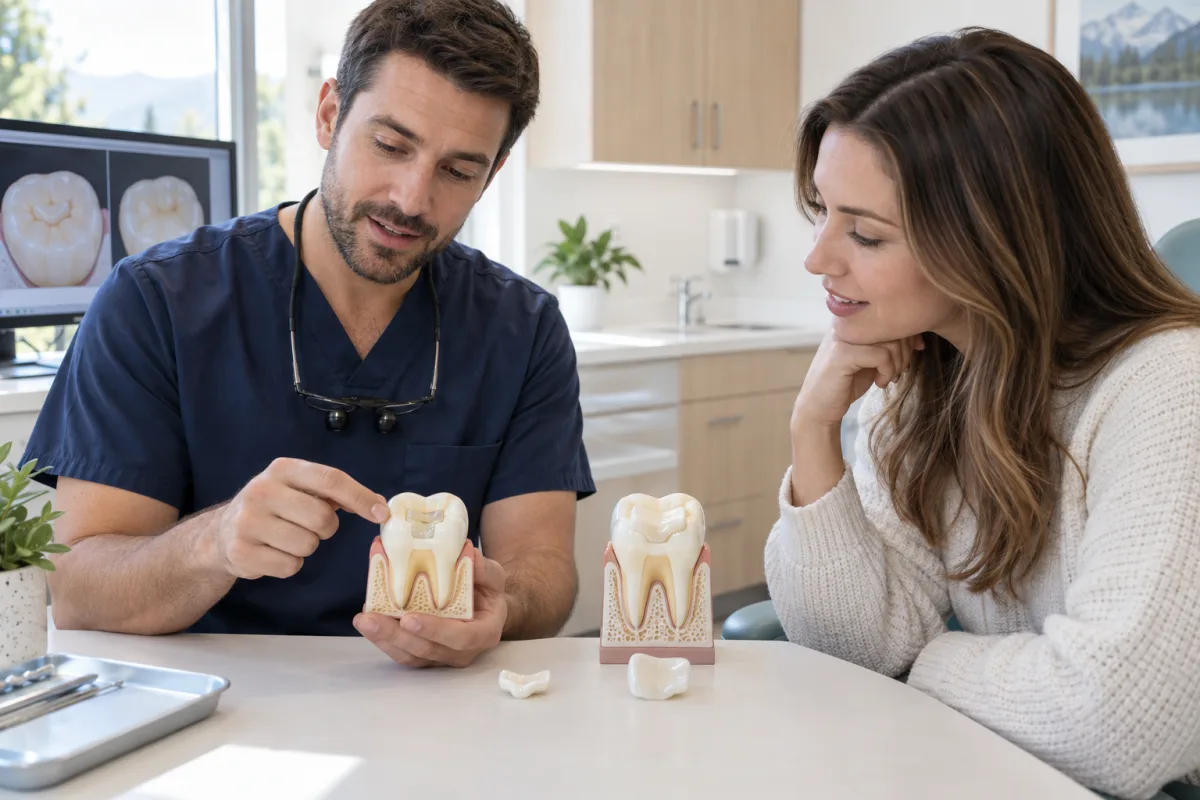
When they help
Inlays and onlays are often considered for back teeth with decay or fractures that are too large for a direct filling but where enough healthy tooth remains to avoid a crown. They can also replace old fillings that have failed or broken. The dentist will look at the size and location of damage.
A direct filling is placed in one visit and suits smaller cavities. A crown covers the entire tooth and may be needed for extensive damage or after root canal treatment. An onlay can protect weakened cusps while removing less tooth than a crown. The dentist will explain the trade-offs.
Materials
Ceramic and composite inlays and onlays are tooth-coloured and can blend well with surrounding teeth. Ceramic is generally stain-resistant and durable. Composite may be easier to repair. The dentist will consider your bite, grinding habits and appearance preferences when recommending a material.
Gold is highly durable and gentle on opposing teeth, and it may require less tooth reduction in some cases. Its colour is visible, so it is often chosen for back teeth where appearance is less of a concern. The dentist can explain the advantages and limits of each option.
Treatment
After numbing, the dentist removes decay or old filling material and shapes the tooth. Impressions or a scan are taken, and a temporary restoration protects the tooth while the inlay or onlay is made. Avoid sticky or hard foods on the temporary to prevent it from loosening.
At the second visit, the temporary is removed and the final restoration is tried in. The dentist checks fit, contacts and bite before bonding it into place. Adjustments ensure it feels comfortable when you chew. You can ask about care and any restrictions before leaving.
Aftercare
Some sensitivity to temperature or pressure can occur after placement and usually settles. If the bite feels high, pain increases or sensitivity lingers, contact the office so the restoration can be checked. Avoid chewing very hard foods on the tooth until it feels completely normal.
Brush and clean between teeth daily, paying attention to the margins where the restoration meets the tooth. Regular checkups allow the dentist to monitor the edges for decay or wear. If you grind your teeth, a night guard may help protect the restoration and surrounding teeth.
Planning your appointment
Call our Port Dover office to book an assessment of the tooth. Mention whether it is painful, sensitive or has a broken filling so the team can allow enough time.
If you have a temporary restoration that loosens before your second visit, call the office for advice.
Before you book
Have a question about your situation? Our team can help you plan a visit.
An inlay sits within the cusps of a back tooth, while an onlay covers one or more cusps. Both are custom-made and bonded into the prepared tooth.
They can be more durable for moderate damage, but they require more appointments. Small cavities are often well served by direct fillings. The dentist will recommend what suits your tooth.
Lifespan varies with material, bite and care. Many last for years. Regular checkups help monitor the margins and catch problems early.
Some sensitivity is common and usually fades. If it worsens or persists, contact the office so the restoration and bite can be checked.
In some cases, an onlay protects weakened cusps while preserving more natural tooth. Extensive damage may still require a crown. The dentist will explain the options.
Composite fillings repair decay with a tooth-coloured material. Normandale patients can learn when they suit, how they are placed and how to care for them.
A crown covers a weakened tooth to restore strength and shape. Normandale patients can learn when crowns are advised and what fitting involves at our Port Dover office.
Recognized year after year
Best Dentists in Norfolk
Proudly recognized among Norfolk’s top-rated dental practices for six consecutive years.

2021 Winner

2022 Winner

2023 Winner

2024 Winner

2025 Winner

2026 Winner
Stories from our patients
Watch a patient’s experience and browse more five-star reviews from people who have visited our Port Dover dental clinic.
Patient video
A patient shares the welcoming atmosphere and positive experience they found at our Port Dover office.
Google reviews
Swipe or use the arrows
Read all reviewsYour next visit can start today
New patients and CDCP patients are welcome. Tell us how we can help and our Port Dover dental team will follow up with you.
Evening appointments Monday and Tuesday